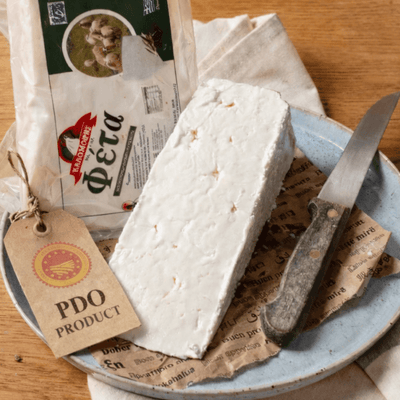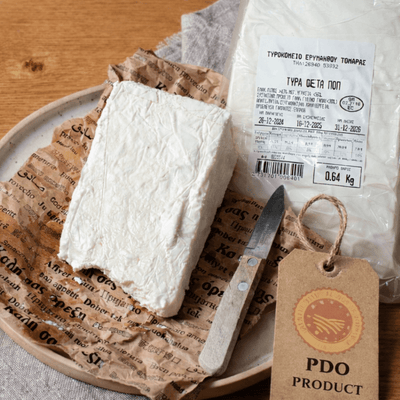
Greek feta cheese is one of the most iconic products of Greece and of the Mediterranean diet. With its Protected Designation of Origin (PDO) status, authentic feta is made exclusively in specific Greek regions using sheep’s milk or a blend of sheep and goat milk. This guarantees its unique tangy flavor, crumbly texture, and genuine character. Let’s explore the most common formats of feta cheese (blocks, in brine, and crumbled) and discover how to select, use, and store them properly.

Authentic Production and PDO Recognition
Feta is much more than a cheese; it’s part of Greece’s cultural heritage. PDO recognition ensures that authentic feta can only be produced in 7 specific Greek regions, following strict traditional methods. These regions include Macedonia, Thrace, Epirus, Thessaly, Sterea Ellada, Peloponnese, and the island of Lesvos. Each area contributes subtle differences in flavor and in texture, depending on the local pastures, climate, and milk composition.
Made exclusively with sheep’s milk or a blend of sheep and goat milk, PDO feta is distinguished by its tangy taste, crumbly yet creamy texture, and authentic quality. This protection not only guarantees that consumers are enjoying the real product but also safeguards the craft and knowledge passed down through generations of Greek cheesemakers.
Feta Blocks: The Classic Format
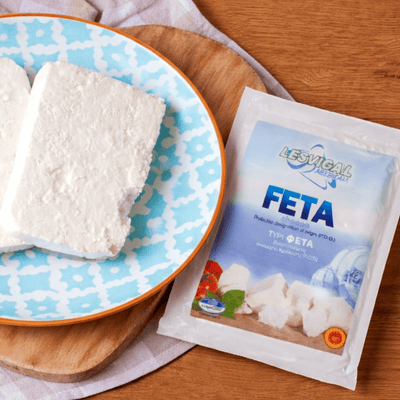
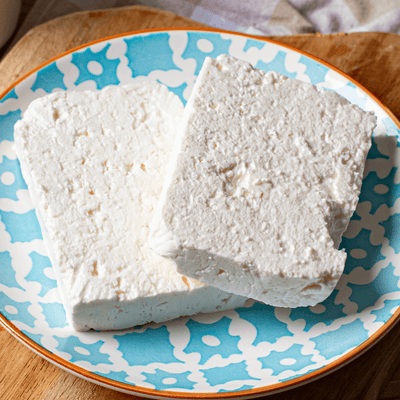
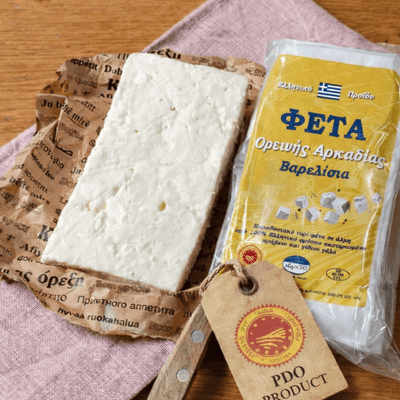
Feta blocks are the most widely recognized format, often exported internationally. Sold in rectangular slabs, they are easy to slice, cube, or crumble by hand. Blocks preserve feta’s firm yet creamy texture and are ideal for classic recipes such as a Greek salad or baked dishes like spanakopita.
In most European supermarket chains, feta is usually found in 200g or 400g vacuum-sealed packages, designed for freshness and practicality. These are perfect for households looking for convenient, ready-to-use cheese.
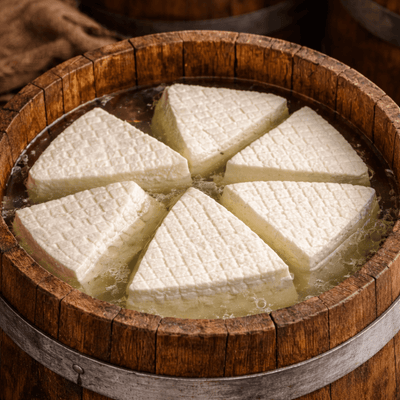
By contrast, authentic Greek barrel-aged feta often comes in larger formats. It can be purchased in pieces starting from 500g and going up to 3kg wheels. These larger blocks deliver a more complex, rich flavor and creamier consistency, enjoyed in Greece directly from the barrel, perfect for sharing around the family table.

Feta in Brine: Tradition Preserved
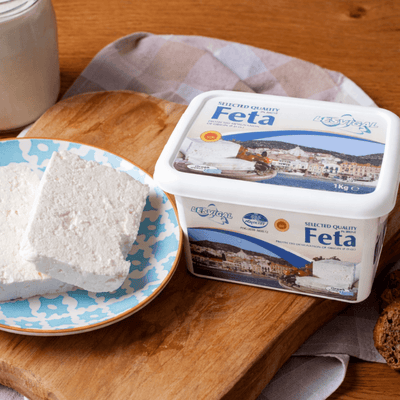
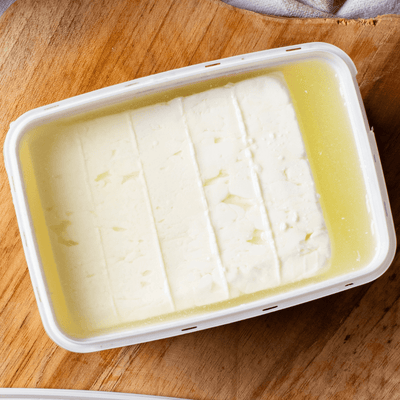
In Greece, feta is traditionally stored in brine. This salty liquid acts as a natural preservative, maintaining its authentic flavor and freshness. Buying feta in brine ensures a longer shelf life and an experience closer to its origin.
On the Greek domestic market, feta in brine is commonly sold in tupper-style containers ranging from 400g up to 1kg or even 2kg. These formats are ideal for families or frequent consumers, remembering the way tavernas and households use feta daily.
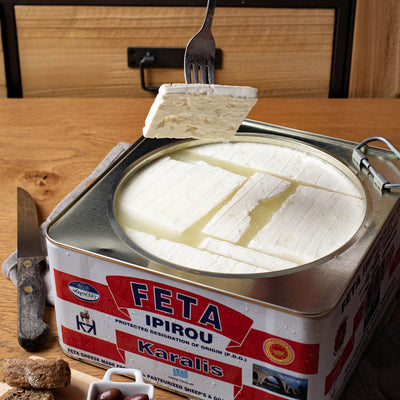
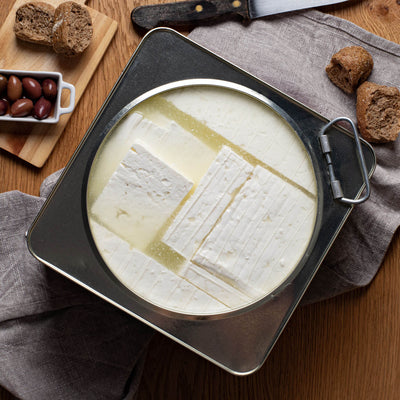
Another unique option is the 3-4kg tin filled with brine, where the feta comes precut, usually into 200g slices. This combines traditional preservation with modern convenience, ensuring each piece stays perfectly fresh: ideal for professional kitchens and large families alike.
Storage Tips for Feta in Brine
To maintain its quality, always keep the feta fully submerged in brine once opened. If the brine becomes cloudy or insufficient, prepare a replacement at home with water and salt (around 10%). Store it in a sealed container in the fridge to prevent drying.
For larger tupper packs (400g-2kg), reseal tightly after each use and ensure the cheese stays covered with brine. If handling a big pack daily is inconvenient, transfer smaller portions into a clean jar with fresh brine for easier consumption.
For 3-4kg tins with precut slices, keep the tin refrigerated and only remove the slices you need. Transfer those slices into a smaller container with brine to keep them fresh for short-term use, while preserving the rest of the tin from air exposure.

Crumbled Feta: Practical and Versatile
Crumbled feta offers convenience and versatility. Perfect for topping salads, pasta, or baked vegetables, it is often the result of leftover block pieces in Greek households. Nothing goes to waste: crumbles are sprinkled into omelets, pies, or roasted dishes to add bursts of flavor.
Explore More About Feta
- Complete guide to Greek feta
- Classic Greek Salad recipe
- Spanakopita with feta
- Fried feta with honey recipe
- Authentic Feta Cheese collection
- Differences Between Feta and Other Similar Cheeses
By exploring the different formats of feta (blocks, brined, and crumbled) you’ll discover how to select and store this authentic cheese in the best possible way. Connect to recipes and guides that expand your culinary experience, while also ensuring that you enjoy feta as Greeks do: fresh, versatile, and always genuine.