The simplest no-cook Greek dinner is an assembled one: a few good ingredients prepared by someone else, brought together on the table in minutes. In a Greek summer, dinner is rarely cooked from scratch in the evening heat. It is built from things that keep, things that are already made, and one or two fresh items cut at the last minute. If you want a real dinner without turning on the stove, the Greek summer table is the most practical template there is.
This guide gives you five no-cook Greek dinners, each one a complete evening meal rather than a snack. They share the same logic: a base of bread, a protein, something to spread or dip, and a fresh element, with good olive oil tying it together. For the fuller picture of how a Greek summer table is built, see the complete Greek summer table guide. Here, the focus is narrower and entirely practical: five dinners you can put together in the time it takes to set the table.
How a no-cook Greek dinner works
A no-cook Greek dinner is an assembly, not a recipe. The skill is in choosing well and combining, not in cooking. Four parts cover a complete meal: a base, a protein, a spread or dip, and something fresh and raw. Hit those four, and the plate is balanced and filling without anything touching a pan.
The base is pita or another good bread. The protein is most often feta, sometimes an aged cheese, sometimes a legume. The spread is a ready dip, such as fava, the silky yellow split pea purée, or tzatziki, where you have it. The fresh element is whatever is ripe: tomato, cucumber, a handful of herbs. Olive oil is not optional. It is the ingredient that makes the assembly read as a meal rather than a collection of cold items.
Five no-cook Greek dinners
Each of these is a full dinner for one to two people, scaled up by adding more of the same. None requires a stove. The only warm touch any of them benefits from is thirty seconds of pita in a hot, dry pan, which you can skip if you prefer.
1. Fava, feta, and tomato
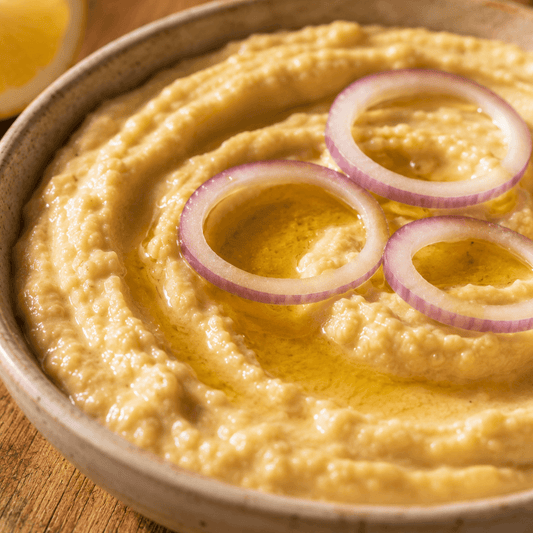
The most complete of the no-cook dinners and the one to start with. Spoon ready fava onto a plate, make a well in the centre and fill it with olive oil, then top with raw red onion. Add a block of feta broken into rough pieces with oregano, thick slices of ripe tomato with salt, and warm pita to scoop with. The fava carries the plate: it is a plant protein, substantial and satisfying, and it needs nothing done to it. The ready fava from the Paltsidis line is exactly this dish, prepared and chilled so it arrives ready to spoon.
2. The meze dinner
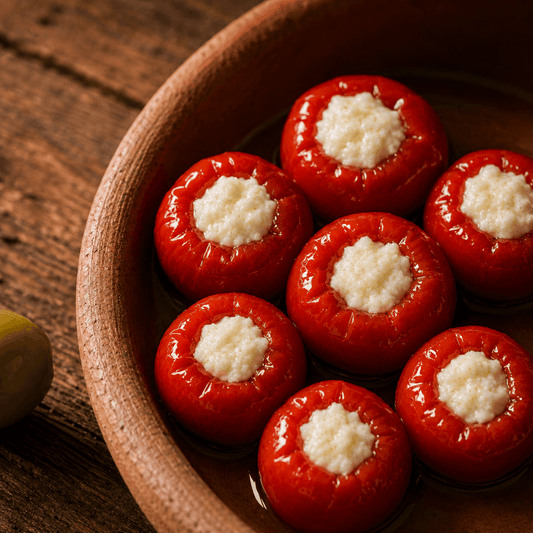
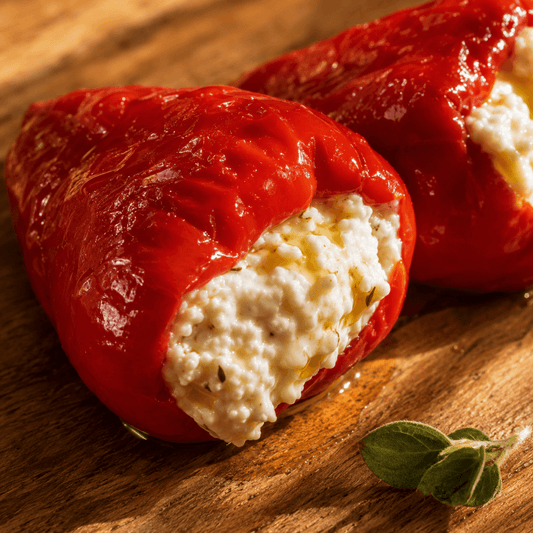
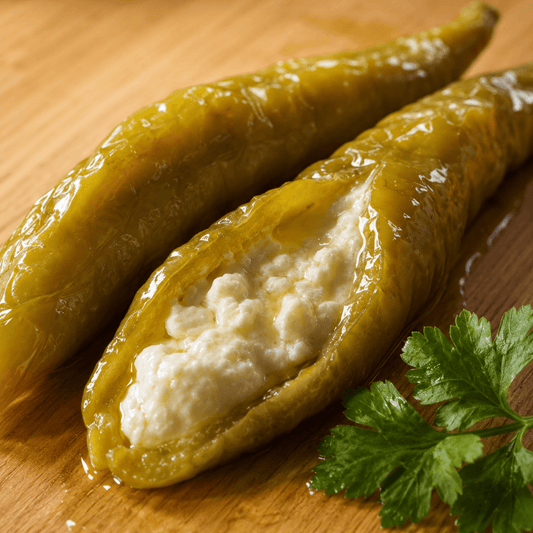
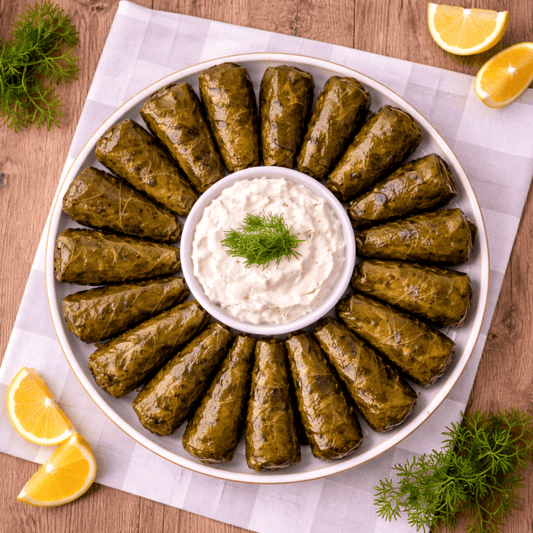
Three or four jarred mezedes turned into a meal. Stuffed vine leaves, peppers stuffed with cheese, roasted red peppers in oil: open them, drain lightly, and arrange each in its own small dish. Add olives, a wedge of feta, and pita. The variety is the point, and because every element comes ready in a jar, the whole dinner is a matter of opening and plating.
3. Olives, cheese, and bread, done properly
The simplest of all, and a real dinner when the parts are good. Two kinds of olives in separate bowls, dark Kalamata and green Halkidiki, a wedge of aged cheese, a block of feta with oil and oregano, a basket of warm pita, and a plate of sliced tomato and cucumber. It looks like the start of something larger, but with good ingredients and enough of them, it is a complete meal on its own.
4. The summer salad plate, scaled up
A generous Greek salad is treated as the main event rather than a side. Tomato, cucumber, green pepper, red onion, and olives, a thick slab of feta on top, oregano, and a heavy pour of olive oil, with no lettuce and no fuss. Serve it with pita and a second dip on the side, and a salad becomes dinner. This is the closest a no-cook plate comes to a cooked meal in substance.
5. The spread and dip board
Two or three dips with bread and raw vegetables are built for sharing. Fava, tzatziki, and a roasted pepper dip, each in its own bowl, surrounded by warm pita, cucumber batons, cherry tomatoes, and a bowl of olives. It is the most casual of the five and the easiest to put in front of guests, because everything is ready and nothing needs timing.
Five no-cook dinners at a glance
| Dinner | What's in it | Prep |
|---|---|---|
| Fava, feta, and tomato | Fava, feta, tomato, raw onion, pita | 10 min |
| The meze dinner | 3 to 4 jarred mezedes, olives, feta, pita | 10 min, open and plate |
| Olives, cheese, and bread | Two olives, aged cheese, feta, tomato, cucumber, pita | 10 min |
| Summer salad plate | Greek salad with extra feta, pita, and a dip | 15 min, knife work |
| Spread and dip board | 2 to 3 dips, raw vegetables, olives, pita | 15 min |
What to keep stocked for no-cook dinners
The reason these dinners work on a weeknight is that almost everything keeps. Build a small standing stock, and any of the five is possible without a special trip. Jarred mezedes, olives, olive oil, and honey hold for months unopened. Feta and ready dips keep in the fridge. Pita freezes well and reheats straight from frozen, so you are never without a base.
Start with the two things that anchor every dinner here, the ready dips and mezedes from the Greek meze and preserves selection, and a stock of Greek pita bread. Add olives and a wedge of cheese, keep good olive oil on the table, and the no-cook dinner stops being a plan and becomes a default. Everything is shipped from Greece and delivered across Europe, so a single order can stock several evenings rather than one.
Frequently asked questions about no-cook Greek dinners
What can I make for dinner without cooking?
A complete no-cook dinner needs four parts: a base such as pita, a protein such as feta or a legume, a spread or dip such as fava, and something fresh like tomato or cucumber, with olive oil over everything. Greek summer eating is built almost entirely this way. Ready dips, jarred mezedes, olives, and cheese come prepared, so dinner is a matter of assembling rather than cooking.
Is fava eaten cold?
Fava, the Greek yellow split pea purée, is served at room temperature or lightly chilled, topped with olive oil and raw onion. It is a plant protein and substantial enough to anchor a meal on its own. Ready fava comes already cooked and cooled, so it goes straight from the tub to the plate with no further preparation.
Do I need to heat the pita?
No, but it is better warm. Real Greek pita is soft and pliable and comes alive in thirty seconds in a hot, dry pan or a few minutes in a warm oven. If you keep pita in the freezer, there is no need to thaw it first: heat it straight from frozen, giving it an extra minute. Served cold, it is fine; served warm, it is the difference between supermarket bread and a taverna basket.
How do I turn a Greek salad into a full dinner?
Scale it up and add substance. Use a generous amount of tomato, cucumber, pepper, onion, and olives, put a thick slab of feta on top rather than crumbling it in, and pour over plenty of olive oil. Serve it with warm pita and a dip such as fava on the side, and the salad becomes a meal rather than a starter. No lettuce is needed.
What Greek foods are best to keep for easy summer dinners?
Jarred mezedes such as stuffed vine leaves and peppers, olives, olive oil, and honey keep for months unopened. Feta and ready dips keep in the fridge, and pita freezes well. A small standing stock of these means a no-cook Greek dinner is possible on any evening without a special trip to the shop.