Skip to content

Agoureleo is the olive oil of the first weeks of the Greek harvest: pressed from olives picked while still green and sold soon after pressing, usually unfiltered. It is cloudy, bright green, bitter and markedly peppery, and it is meant to be poured raw. The olive oil a kitchen uses for the rest of the year is a different product with a different job. It has settled, its bitterness and pepper have softened, and it goes into the pot and the pan as readily as onto the plate. One is not a better version of the other. They are two oils for two uses.
This guide explains what agoureleo is and why it tastes the way it does, what happens to every olive oil in the months after pressing, which oil belongs to which job in a Greek kitchen, and how to buy and keep each one.
What agoureleo actually is
The name comes from agouros, the Greek word for unripe, and ladi, oil. It describes two things at once: the olives, picked early while they are still green, and the moment, the first weeks after the oil leaves the mill.
Green olives give less oil than ripe ones, and they give an oil with more of everything that makes olive oil taste sharp: grassiness, bitterness, and the peppery catch at the back of the throat. Agoureleo is usually bottled without filtering, so it still carries tiny particles of olive flesh and water that make it cloudy and give it its vivid colour.
Because the yield from green olives is lower, and because the oil is sold in a short window, agoureleo costs more per litre than the same producer's everyday oil. That price reflects scarcity and timing, not a promise that it is the right oil for every use.
Agoureleo and new-harvest oil overlap but are not identical. Every agoureleo is a new oil, but not every new oil is an agoureleo: an oil pressed from riper olives in the same weeks is new, yet rounder from the start.
What happens to olive oil after the first weeks
An olive oil is not finished when it leaves the mill. In an unfiltered oil the suspended particles slowly sink to the bottom, and the oil above them clears. Over the following months the intensity of a young oil calms down: the bitterness recedes, the pepper becomes a warmth rather than a sting, and the fruit comes forward.
This is why a new oil tastes livelier in November than the same oil does in May, and why an oil pressed from green olives is, a few months later, an oil you cook with. The harvest method shapes the character of the oil; time decides which job it is ready for.
Unfiltered oil also asks to be used sooner. The sediment that makes a new oil cloudy can spoil its flavour if it sits in the oil for too long, which is why agoureleo is finished within the season rather than stored like a staple.
Two oils side by side
| Agoureleo, the oil for the plate | Everyday extra virgin, the oil for the pot | |
|---|---|---|
| When | The first weeks after the harvest begins | All year |
| Look | Cloudy, vivid green | Clear, green-gold to gold |
| Taste | Grassy, bitter, strongly peppery | Fruity and rounded, with a milder pepper |
| Best use | Raw: on bread, beans, fava, greens | Pot, pan and oven, and the everyday salad |
| How long to keep | Finish within the season | Through the year, away from light and heat |
Which oil for which job
The rule in a Greek kitchen is to spend the character of an oil where it can be tasted. Heat flattens the sharp edges of a young oil, so putting agoureleo into a pot of beans pays for intensity that the pot then cooks away.
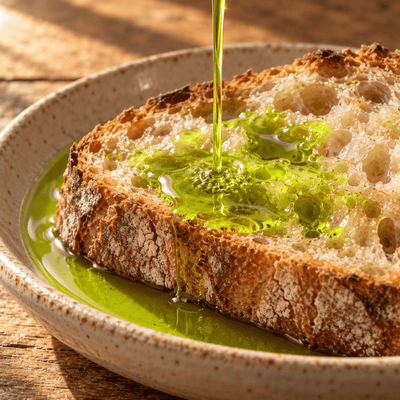
The oil for the plate goes on things that are already cooked or need no cooking: a slice of bread with salt, a bowl of warm gigantes, a plate of fava with raw onion, boiled wild greens with lemon. A spoonful is enough to change the dish.
The oil for the pot is used in quantity. Greek autumn cooking uses olive oil by the half cup, in ladera, legume dishes and braises, and a household cooking three pot dishes a week goes through well over a litre a month on those alone. That is the arithmetic behind the tin. When Greek cooking returns to the pot sets out the dishes and the quantities in full.
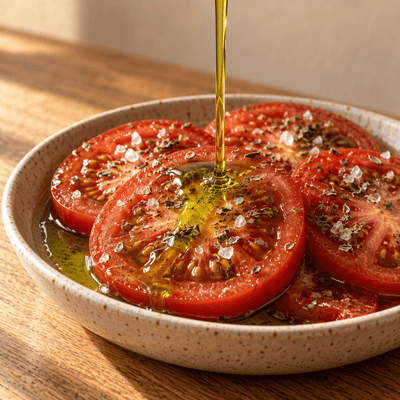
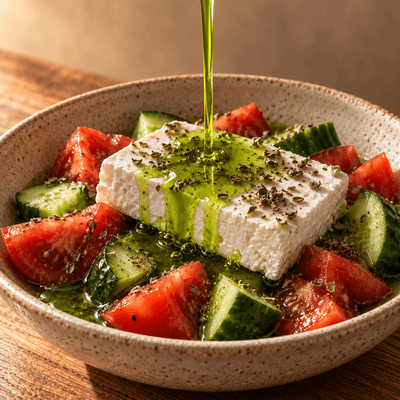
The everyday oil is not a lesser choice for raw use. A good extra virgin with a rounded profile dresses a salad every day without dominating it. What it does not do is the thing agoureleo is for: to be tasted on its own, as the point of the plate. Explore Greek extra virgin olive oil, in bottles and tins.
How to buy and keep each one
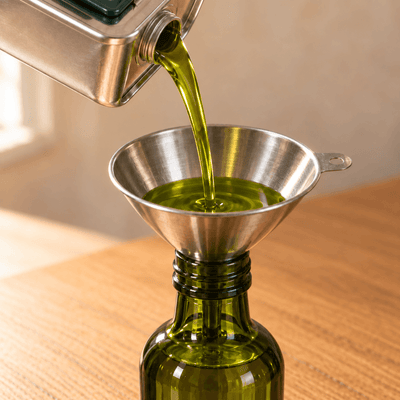
Agoureleo: open it and use it generously while it is at its most intense, and finish it within the season. Keep it cool and dark, and expect a little sediment at the bottom; it is a sign that the oil was not filtered, not a defect. With a larger format, decant a week's worth into a small bottle and leave the rest closed and still, so that the sediment stays at the bottom.
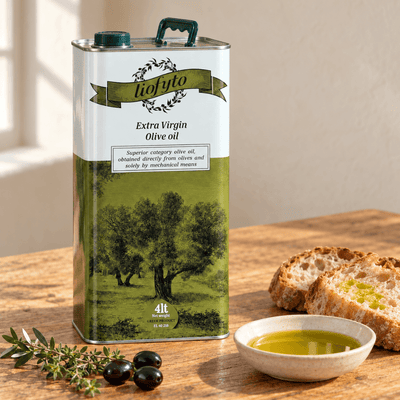
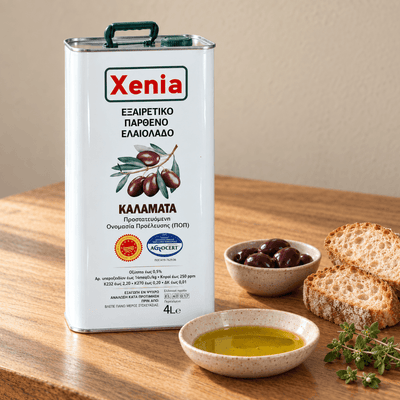
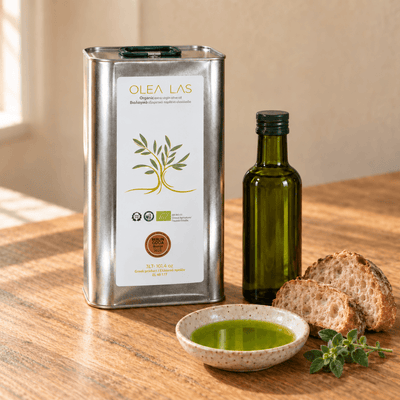
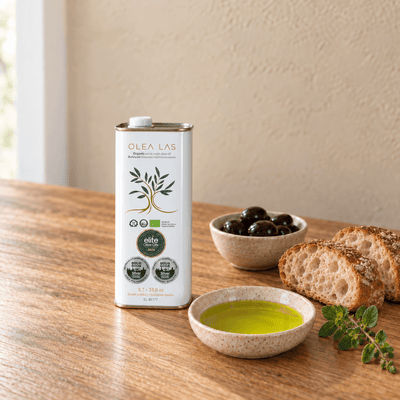
Everyday extra virgin: buy it in a tin. Light and heat are what age olive oil fastest, and a tin keeps light out entirely. Store it in a cool cupboard away from the cooker, and decant a week's worth into a small bottle with a pourer, so the tin is opened as little as possible.
Both: check the label for the harvest or bottling information and for the origin. A PDO or PGI name ties the oil to a defined area and its specification; a single variety such as Koroneiki tells you what to expect in the glass.
Frequently asked questions about agoureleo and everyday olive oil
Can you cook with agoureleo?
You can, but it is rarely the best use of it. Heat softens exactly the bitterness and pepper that make agoureleo distinctive, and it costs more per litre than an everyday extra virgin because green olives yield less oil. Greek households usually keep agoureleo for pouring raw, on bread, legumes, fava and greens, and cook with their everyday oil.
Is agoureleo the same as new-harvest olive oil?
Not exactly. Agoureleo is a new-harvest oil, pressed from olives picked while still green and sold in the first weeks after pressing, usually unfiltered. New-harvest oil is the broader term for any oil sold soon after milling, including oils pressed from riper olives, which are rounder from the start. Every agoureleo is a new oil; not every new oil is an agoureleo.
Why is agoureleo cloudy?
Agoureleo is usually bottled without filtering, so it still contains tiny particles of olive and droplets of water from the mill. They give the oil its cloudy look and vivid green colour. Over time they settle at the bottom of the bottle, which is normal. Because sediment left in the oil for months can spoil its flavour, unfiltered oil is best finished within the season.
Why does the same olive oil taste milder a few months after the harvest?
A freshly pressed olive oil is at its most intense, especially when the olives were picked green. In the months that follow, its bitterness and peppery sharpness soften and the fruit becomes more evident. This is a normal part of how olive oil evolves, and it is why the same oil suits raw pouring in the autumn and everyday cooking later in the year.