 Skip to content

















You might also love
-

Feta cheese PDO
Feta Cheese: The Authentic Taste of Greece Straight to Your Table If...
-

Greek Cheese
Discover Authentic Greek Cheeses Welcome to our curated collection of authentic Greek...
-

Greek Olives and EVOO
GREEK OLIVES AND OLIVE OIL: QUALITY, FLAVOUR AND CULTURE Greek olives and...
-

Greek Honey
Greek Honey: Pure Mediterranean Excellence Greek honey is one of the most...
-

Greek Coffee & Tea
GREEK COFFEE, THE FLAVOURS AND SCENTS OF THE TRADITION Greek coffee is...
-

Dips & Spreads
SPREADS - The best part of the traditional Greek cuisine, as it is...
-

Greek Yogurt
Greek Yogurt: Authentic Taste, Thick Texture & High-Protein Goodness Looking for real...


Greek extra virgin olive oil, in the format that matches how you use it: family-size tins from 1 to 5 litres, and bottles from 100ml to 750ml for the counter, the gift table, or a suitcase. The range spans several regions — Kalamata, Laconia, Arcadia, Sparta and beyond — with PDO, PGI and organic-certified groves, cold-extracted and bottled at origin. One line, Olea Las, is measured: every batch is lab-tested before it ships. Below: how to pick a format, where each oil comes from, and why the harvest date on the label matters.
Tin or bottle: which format to choose
Both are 100% extra virgin olive oil — the container changes how you'll use it, not what's inside.
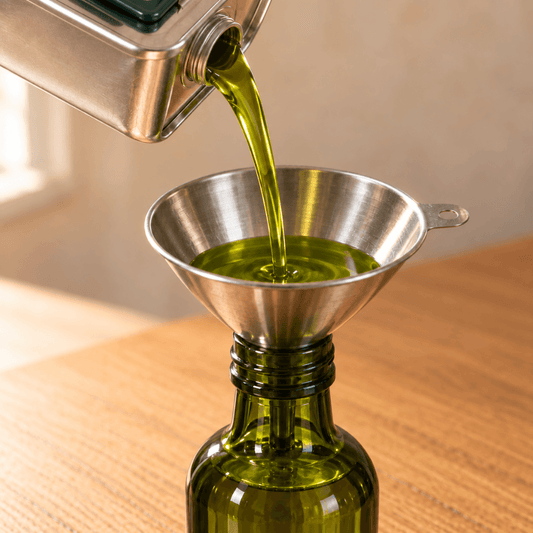
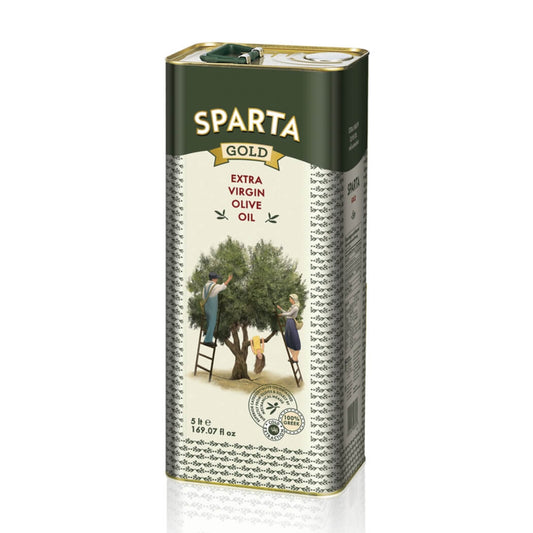
Tin (1L–5L). Opaque metal blocks light, which is what ages an oil fastest once it's opened. Large tins are the pantry format: sized for a household that cooks daily, priced by the litre for reordering, and the way olive oil has always travelled from a Greek press to a Greek kitchen. In tin: Xenia PDO Kalamata, Liofyto Arcadia, Sparta Gold and Olea Las.
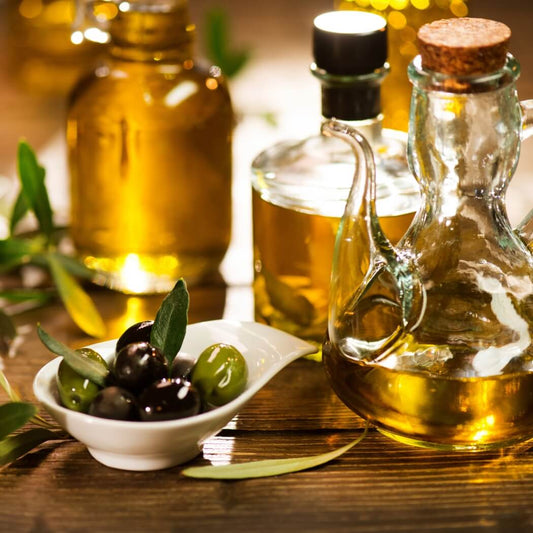
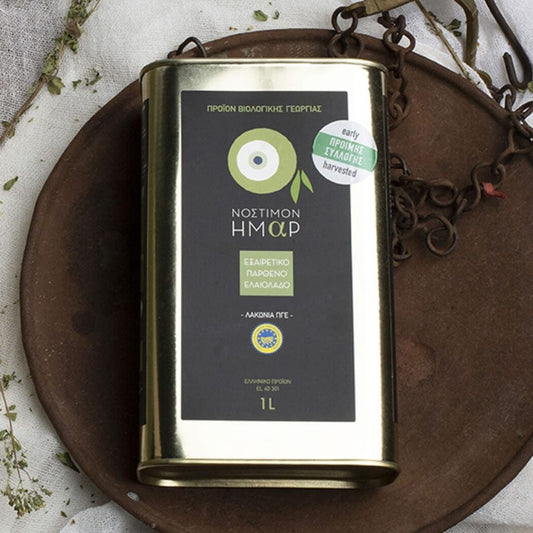
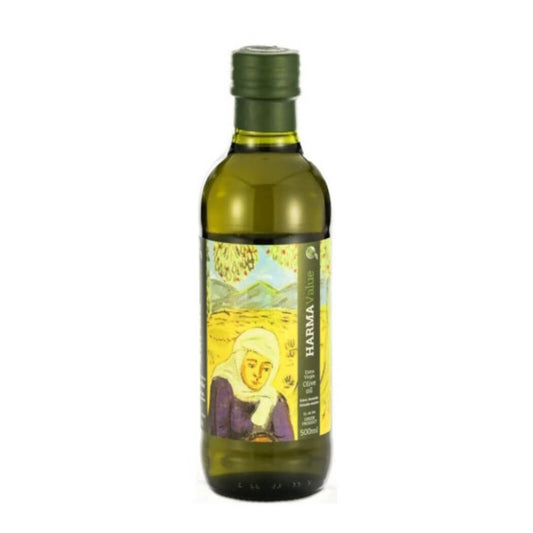
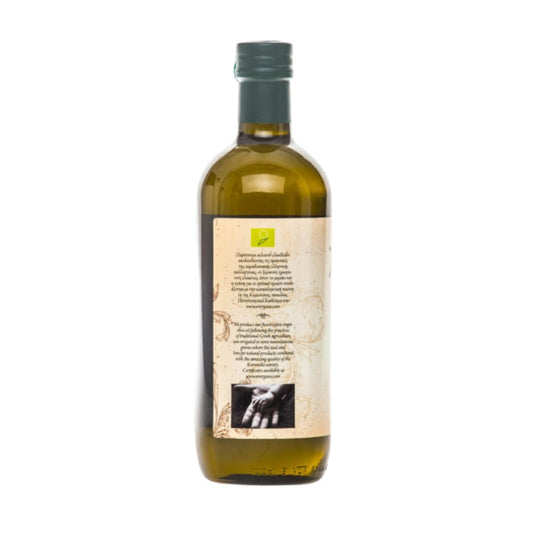
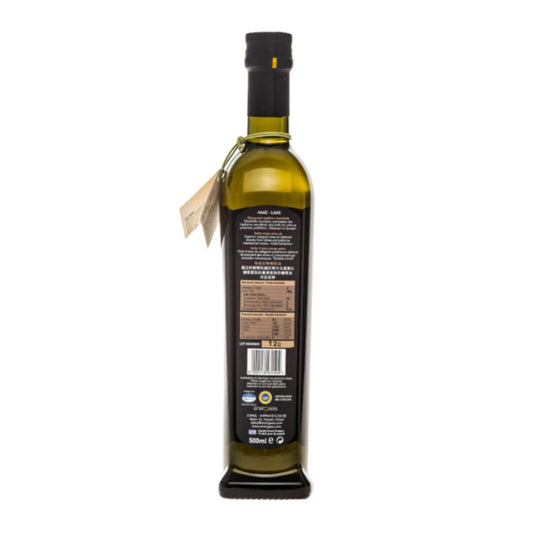
Bottle (100ml–750ml). For the counter, a gift, or a first taste of a line before committing to a tin. Glass also shows the oil's natural colour — which tells you about the harvest, not the quality (more on that below). In bottle: Olea Las, Karpea, Laas, Nostimon PGI Lakonia and others.
The measured oil: Olea Las
Olea Las is organic Koroneiki from Laconia, and the one line here is built around a single idea: every batch is lab-tested before it's bottled, and the results sit on file for anyone who asks. That's the difference between an oil we're measuring and one we're simply trusting.
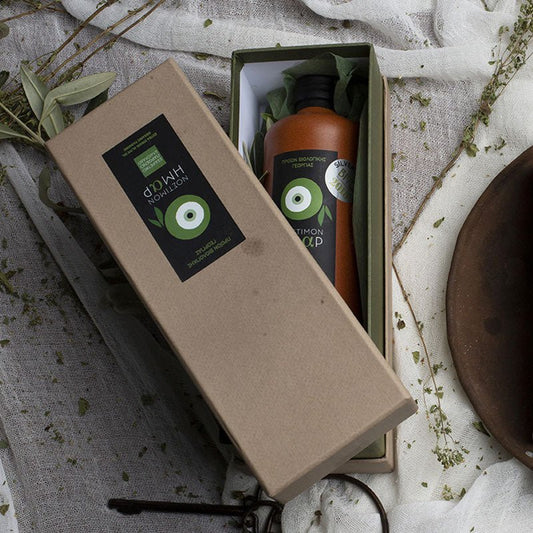
The line comes in four sizes, each built for a different point in the relationship: 100ml to try it, 1L for your first full purchase, 3L when you're ready to reorder, and a 500ml gift bottle in a presentation box. A new round of lab analysis arrives with this year's harvest — once it's certified, the fuller picture will be published here.
Where it comes from
Kalamata PDO for Xenia's cold-extracted oil from the Peloponnese. Laconia PGI for Olea Las and several of the bottled lines. Arcadia for Liofyto, green-harvested — agoureleo — from young, unripe olives, which is what gives an early oil its sharper, more peppery character. Organic certification, where a line carries it, is stated on the label of Olea Las, Liofyto and Karpea's organic bottlings.
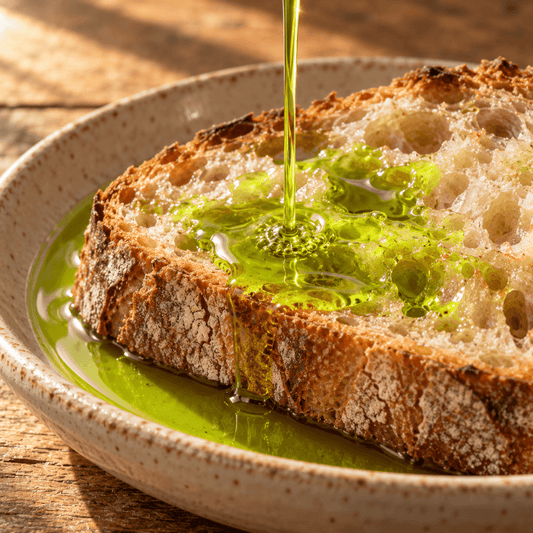
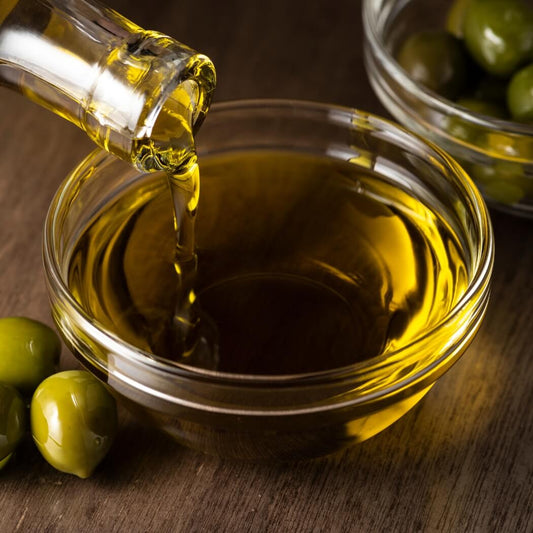
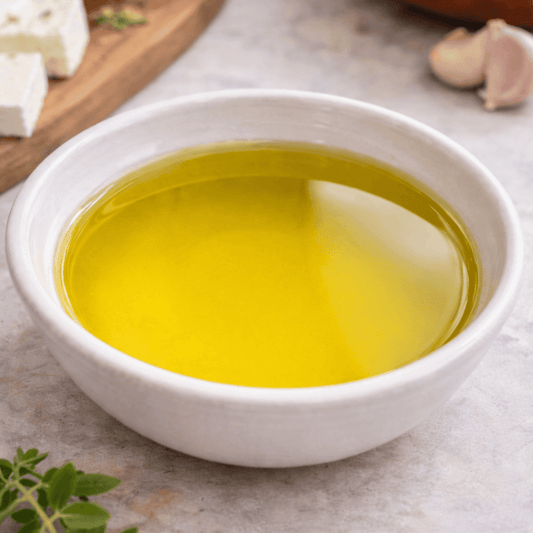
New to Greek olive oil: colour isn't a quality signal. Koroneiki, the most planted variety in the Peloponnese, ranges from pale gold to deep green depending on harvest timing and olive ripeness — Xenia's more golden oil and Olea Las's greener tone are both correct for their harvest, not for their rank.
One harvest a year — check the date.
Olive oil has a single harvest, pressed once the fruit turns — typically between December and February, depending on the region and how early it's picked. Freshly pressed oil tastes sharper and more peppery than one that's rested for months, which is why early-picked lines like Liofyto exist alongside the fuller, rounder profile of a later harvest. Whatever you buy, the harvest year is on the label: check it the way you'd check a vintage.
Common questions
What's the difference between the tin and bottle sizes?
Same oil inside, different container for different use: tins (1–5L) suit a kitchen that goes through oil daily and wants the lowest price per litre; bottles (100ml–750ml) suit the counter, a gift, or trying a line before committing to a tin.
What does "PDO" or "PGI" mean on a label?
Protected Designation of Origin and Protected Geographical Indication are EU certifications tied to where the olives were grown and, for PDO, how the oil was produced. Kalamata PDO and Laconia PGI both appear in this collection.
How should I store extra virgin olive oil?
Somewhere cool, dry and dark, away from the stove — heat and light age an oil fastest. A tin protects it by default; keep a bottle in a cupboard rather than on a sunny counter.
Why do some of these oils look more golden and others more green?
Colour follows olive variety and harvest timing, not quality. Xenia's Kalamata olives give a naturally more golden oil, while green-harvested lines like Liofyto and Olea Las run toward deeper green.
Explore the rest of the Greek delicatessen range, or browse Greek olives and EVOO together.


