Skip to content

Ohi Day, η επέτειος του Όχι, is the Greek national holiday of 28 October. It remembers the morning in 1940 when Greece refused an Italian ultimatum and entered the Second World War. Όχι means no. Today the day is kept with flags on every balcony, school and military parades, a doxology in church and, for many families, a long lunch at home.
If you grew up with it, in Greece or at a Greek school abroad, you know the poems, the songs and the walk behind the school flag. This is a short account of the day, for you and for whoever at your table asks what it is.
What happened on 28 October 1940
Before dawn on 28 October 1940, the Italian ambassador, Emanuele Grazzi, went to the house of the Greek prime minister, Ioannis Metaxas, in Kifissia, and handed him an ultimatum: Italian troops were to be allowed into Greece to occupy strategic points. Metaxas refused. The answer passed into memory as a single word, Όχι, and within hours Italian forces crossed the border from Albania.
What followed is the part every Greek child learns at school. Through the autumn and the winter, in the mountains of Epirus and southern Albania, the Greek army stopped the attack and pushed it back across the border. It was one of the first times in the war that an Axis offensive was turned back. In April 1941, Germany invaded, and the occupation that followed lasted until the autumn of 1944.
How Ohi Day is kept today
In Greece, 28 October is a public holiday, and the day has a shape that hardly changes from town to town.
- The flag. The blue and white flag goes up on balconies and shop fronts in the days before.
- At school. On the day before, schools hold a commemoration with poems, songs and short plays. On the 28th, pupils parade through every town and village, with the flag carried by the pupil with the best marks.
- The parades. The main military parade is in Thessaloniki, which on 26 October has just celebrated its patron saint, Agios Dimitrios, and the anniversary of its liberation in 1912. In Athens and the other cities, the schools parade.
- In church. A doxology is sung in the morning. In the Church of Greece, 28 October is also the feast of the Holy Protection of the Mother of God, Αγία Σκέπη.
- The songs of 1940. On the radio and at school, the songs of the war years come back, above all Sofia Vembo's Παιδιά της Ελλάδος παιδιά.
Ohi Day in Greek communities abroad
Wherever there is a Greek community, there is a 28 October. The Greek school puts on its celebration, the parish holds a doxology, and the children recite the same poems their parents learned. For families who live far from Greece, it is one of the two days of the year, along with 25 March, when the calendar is kept in Greek.
What goes on the table on Ohi Day
Ohi Day has no set dish, and we would rather say so than invent one. It is a holiday at the end of October, so the table is the autumn table: something that has been in the oven, a pot of beans or a slow stew, bread and cheese, and something sweet with the coffee. Many families keep the day simple and long rather than festive and short.
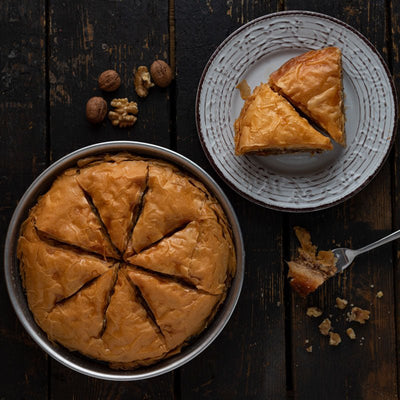
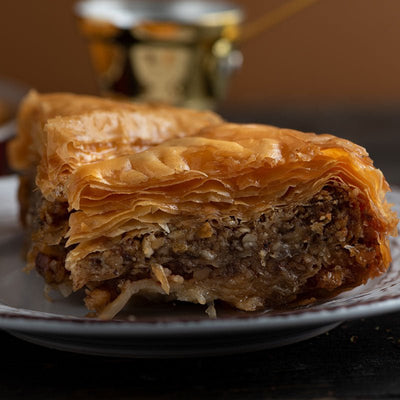
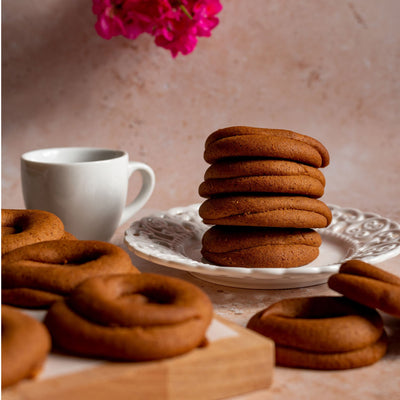
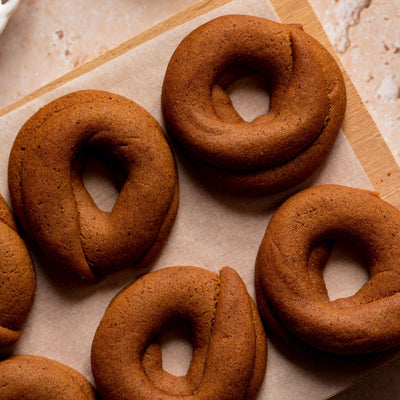
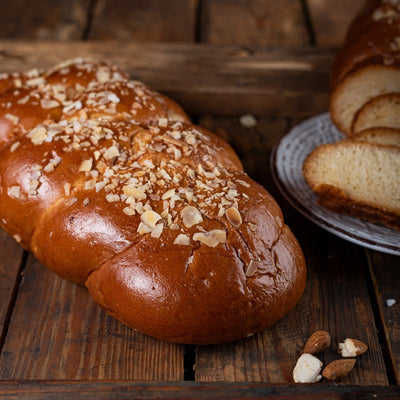
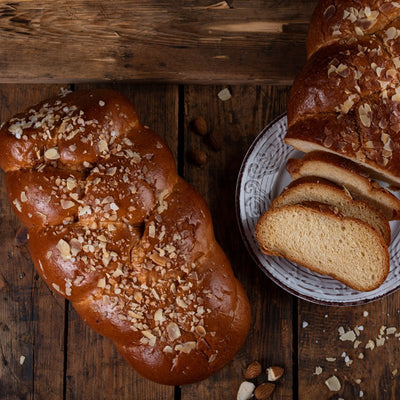
If the oven is on, gigantes plaki is the kind of dish the day is made for. For the coffee, the syrup pastries, biscuits and sweet breads that travel well, baklava, saragli, moustokouloura, and tsoureki, among them, are in our 28 October selection. Everything is shipped from Greece. Delivered across Europe.
Frequently asked questions about Ohi Day
What is Ohi Day?
Ohi Day is the Greek national holiday of 28 October. It commemorates the refusal by the Greek prime minister, Ioannis Metaxas, of the Italian ultimatum delivered before dawn on 28 October 1940, which brought Greece into the Second World War. It is kept with parades, flags, a doxology in church and family gatherings.
Why is it called Ohi Day?
Όχι is the Greek word for no. The refusal of the ultimatum on 28 October 1940 passed into Greek memory as that single word, and the anniversary took its name from it: η επέτειος του Όχι, the anniversary of the No.
Is 28 October a public holiday in Greece?
Yes. 28 October is one of the two national holidays of Greece, with 25 March. Schools and public services are closed, and the day is marked by school parades in every town, a military parade in Thessaloniki and a doxology in the churches.
Is there a traditional food for Ohi Day?
No. Unlike Easter or Christmas, 28 October has no dish of its own. Families gather for an ordinary autumn meal, often something baked or a pot of legumes, with bread, cheese, and a sweet with the coffee.