

By Greek Flavours
We live in a world full of nutritional "noise". We are told to count macronutrients, buy expensive supplements, and treat food like a mathematical equation to be solved.
But ultimately, health is not a maths problem. It is a relationship with nature.
Welcome to the Original Greek Mediterranean Reset. This is not a "fad diet" designed for New Year's resolutions that you will abandon by February. This is an "evergreen" custom: a return to the origins of one of the most studied and long-lived lifestyles in the world.
Whether it is a Tuesday in November or a Sunday in July, the best time to start is now.
Table of Contents
Why this Reset? Why now?
The modern Western diet has confused our biology. Industrial vegetable oils (processed seed oils), added sugars, and hyperpalatable artificial flavours have altered our metabolic signals. We feel tired, perpetually hungry, and never satisfied with our self-image.
This Reset is designed to eliminate the noise. By returning to the authentic Greek way of eating — based on whole grains, wild herbs (horta), sheep's dairy products, and high-phenolic olive oil — we do much more than lose weight. We reduce inflammation, rebalance the gut microbiome, and restore proper metabolic function.
The Goal: this is a manifesto for abundance, not deprivation.
Part I: The Philosophy and the 10 Rules
To reset your body, you must first reset your mindset. For the next 30 days, we stop counting calories and start counting nutrients. We stop eating on the run and start sitting at the table.
Here are the 10 Foundations of the Greek Reset:
- Liquid Gold Only: eliminate all industrial seed oils (rapeseed/canola, sunflower, soy). We use exclusively Extra Virgin Olive Oil (EVOO) for cooking, dressing, and finishing.
- No White Powders: zero added sugar and zero refined wheat flour. If you need sweetness, use raw honey. If you need bread, use wholemeal barley rusks (paximadia).
- Vegetables take centre stage: in Greece, vegetables are a main course (Ladera), not a side dish. Aim for 300g of vegetables per day.
- Sheep and goat over cow: prioritise A2 proteins found in sheep and goat dairy products (Feta, yogurt) over A1 cow dairy, which is often more inflammatory.
- Legumes 3 times a week: beans, lentils, and chickpeas are your primary source of fuel. They are the "meat of the poor" and the secret to longevity.
- Eat the Mediterranean Sea: small oily fish (sardines, anchovies) or wild-caught white fish (not farmed) twice a week.
- Wild Greens (Horta): bitter greens are essential for liver support. Eat them often, boiled and dressed with lemon and oil.
- Eat with the Sun: try to finish your last meal by 19:00. Give your digestion a break while you sleep.
- Move like a shepherd: we don't "exercise" to punish ourselves. We walk every day. Low-intensity movement is fundamental.
- Siga-Siga (Slowly-Slowly): stress is inflammatory. Eat slowly. Chew well. Never eat standing up.
Part II: The Ingredient Standard (The Secret Ingredient)
The Greek Mediterranean Diet is only as effective as the quality of its ingredients. You cannot obtain the benefits of the Blue Zones by eating processed imitations found in many supermarkets.
Here is your guide to shopping like a Greek grandmother (Yiayia).
1. Extra Virgin Olive Oil (EVOO)
The Cornerstone. EVOO is not a condiment; it is a food group.
- The Standard: it must be labelled "Extra Virgin" and "Cold Extracted".
- The Tingle Test: we look for oil with High Phenolic Content. These oils are rich in oleocanthal, a natural anti-inflammatory. When you swallow it raw, it should "sting" the back of your throat and make you want to cough. That burn is the medicine.
- Usage: use the previous harvest's oil for cooking and the new harvest oil (Agoureleo) for raw dressing.
2. The Yogurt Protocol
The Probiotic Powerhouse. Most "Greek-style" yogurts in the supermarket are simply milk puddings sweetened with thickeners. For the Reset, you have two authentic options:
- Strained Yogurt (Straggisto): this is yogurt from which the whey has been naturally removed. It must be thick enough to hold a spoon vertically. Ingredients: only milk and cultures. No thickeners (pectin, starch, milk powder).
- Traditional Yogurt (Paradosiako): usually sold in terracotta or plastic pots, made primarily from sheep's milk. Goat and sheep milk are more digestible than cow's milk thanks to more easily assimilable fats and proteins that form a softer curd, making digestion lighter and faster. It is not homogenised, which means it forms a thick skin or crust (petsa) on the surface. This skin is pure healthy fat and flavour: never throw it away!
Note: always buy Full Fat (5% - 10%). Low-fat yogurt (0%) spikes insulin and may prevent the absorption of vitamins A and D.
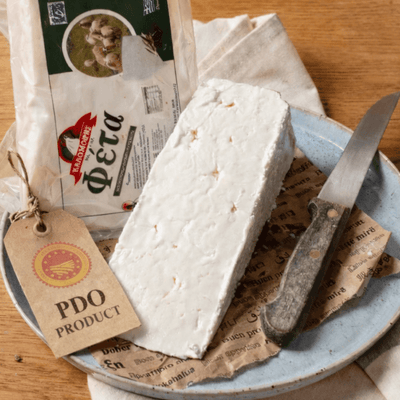
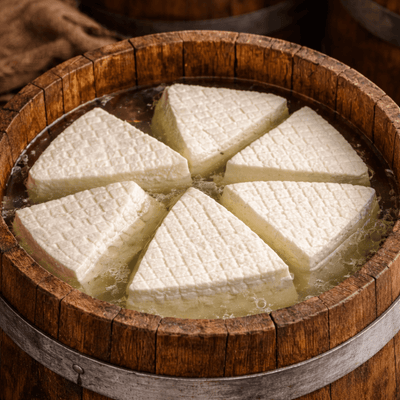
3. Feta: The Queen of the Table
Accept no imitations.
- The Law: real Feta is PDO (Protected Designation of Origin) and must be produced in Greece.
- The Composition: it is strictly 70% sheep's milk and 30% goat's milk.
- The Trap: never buy "Salad Cheese", "Feta Style", or white cheeses made with cow's milk. They lack the microbiome benefits and the correct flavour profile.
- Storage: always buy feta in brine, or place it in brine once opened (water and sea salt) to keep it moist and fresh.
4. The Cheese Matrix
Diversify your bacterial intake by looking beyond Feta:
| Cheese Type | Name | Profile | Usage |
|---|---|---|---|
| Hard / Aged | Graviera | Sweet, nutty notes. | Grated over pasta; snack. |
| Salty / Hard | Kefalotyri | Sharp, salty, firm. | Fried (Saganaki) or grated. |
| Soft / Fresh | Myzithra | Similar to ricotta but lighter. | Breakfast with honey. |
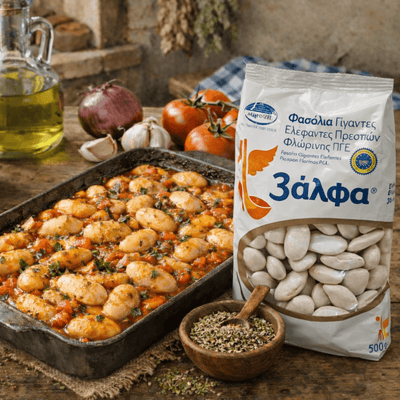
5. Legumes (Ospria)
The Secret to Longevity.
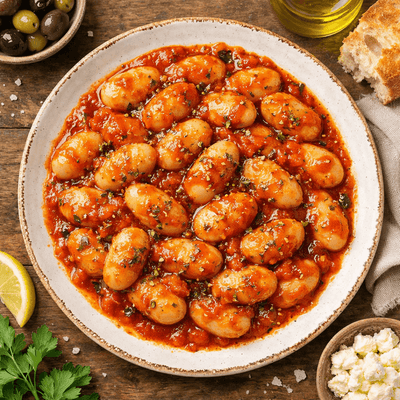
- Gigantes: giant white beans. Meaty and filling.
- Fakes (Lentils): rich in iron, quick to cook.
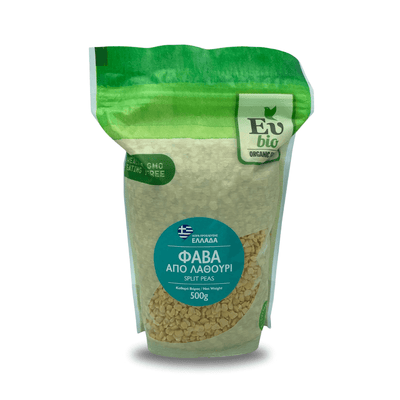
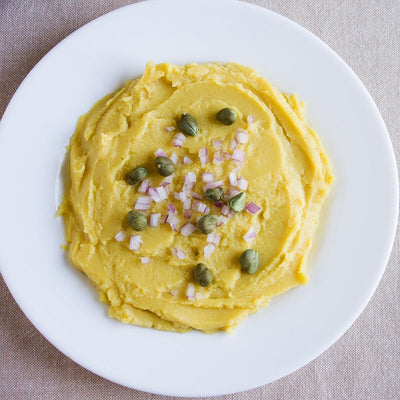
- Greek Fava: yellow split peas, reduced to a puree similar to hummus.
The Rule: Buy dry legumes whenever possible. Soaking them overnight reduces lectins and improves digestibility.
Part III: The 30-Day Journey
This is not an abrupt change, but a gradual path. The next 30 days can be experienced as a natural progression, where the body adapts step-by-step to new habits.
- Days 1–3: Lightning Phase. An initial moment to reduce excess, particularly sugars and heavier foods. Focus on vegetables, light soups, and herbal teas, temporarily postponing dairy.
- Days 4–10: Restart Phase. In this phase, you can start gradually reintroducing more structured foods, such as fermented foods (e.g., yoghurt and olives), simple legumes, and broths, always listening to your sensations.
- Days 11–20: Balance Phase. This is the moment when nutrition can become more complete, including good fats (like feta and nuts), complex carbohydrates (like barley rusks), and fish, to sustain energy and vitality.
- Days 21–30: Awareness Phase. Those who wish can experiment with light forms of intermittent fasting and rediscover the pleasure of a convivial weekly meal, such as the traditional "Sunday Feast".
This path is not a cure nor a rigid protocol, but a proposal for a flexible lifestyle, to be adapted to your needs, your pace, and, if necessary, integrated with professional support.
Part IV: Beyond Day 30
This path was not born to become a rigid rule to follow forever, but to help you build solid and sustainable habits capable of accompanying you naturally over time.
After day 30, it can be useful to take inspiration from a 90/10 Rule:
- 90% of the time, we can continue to choose simple, authentic foods in line with the 10 Rules, placing respect for our body at the centre.
- 10% of the time, there is space for life to happen: travel, parties, weddings, a slice of cake, an extra toast.
The point is not perfection, but balance. And balance works best when it is not accompanied by guilt, which often weighs more than the food itself.
Are you ready for the reset? Let's begin.
Yamas to a new life.


1 comment
Interessante