 Skip to content

Discover everything there is to know about Greece’s most iconic cheese: its rich history, traditions, everyday uses and how to recognise genuine PDO Feta. This guide will walk you through what makes real Greek feta truly unique, from the regions where it’s born to the tables where it’s enjoyed.
Inside, you’ll learn how feta is made, how to use it in cooking (in salads, in baking, and much more), what it contains per 100 g, and why only "authentic feta", produced under Protected Designation of Origin (PDO) rules, delivers the real Mediterranean experience.
Understanding how to identify true Greek feta isn’t just about labels and brands; it’s about taste, texture, origin, and cultural heritage. Choosing the real thing means supporting local Greek producers, preserving traditional methods, and bringing home that unmistakable balance of creaminess and tang that only PDO feta can offer.
Whether you're a foodie, a home cook, or simply curious about Mediterranean eating, this guide will help you elevate your dishes, eat more consciously, and connect with one of the most beloved ingredients in Greek culinary tradition.
Take the first step into the authentic world of Greek feta, and your taste buds (and your dinner guests) will thank you.

Overview: What is Greek Feta?
Greek Feta is far more than just an exquisite white cheese; it’s a living symbol of Hellenic culture, tradition, and everyday Mediterranean life. It is recognised as one of the oldest cheeses in the world, and its origins trace back thousands of years, with references even in Homer’s "Odyssey". Thanks to this poem, we are able, for example, to understand that ancient Greeks were already producing a version of this cheese using raw sheep’s milk, curdled naturally and aged in clay pots or wooden barrels, a method still used today by traditional producers.
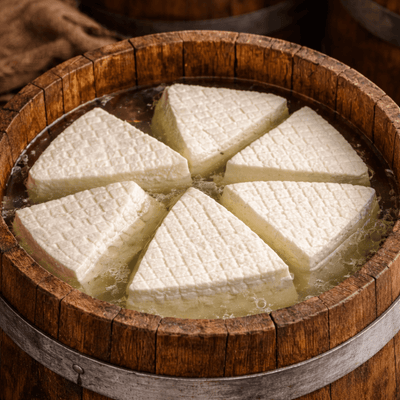
Authentic Greek feta is made primarily from sheep’s milk, sometimes blended with a small amount of goat’s milk (but no more than 30%). This combination gives feta its characteristic and unique tangy flavour and rich, creamy texture. The cheese is typically aged for at least three months, traditionally in wooden barrels, a process that allows it to develop complex aromas and a slightly firmer, more crumbly texture. Today, many PDO-certified producers still adhere to this age-old method, particularly in regions such as Epirus, Thessaly, and Lesvos.
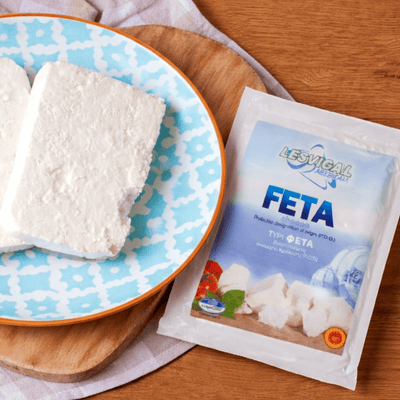
Feta is always preserved in brine, which not only extends its shelf life but also enhances its sharp, salty profile and maintains its fresh, slightly acidic bite. This brining process is part of what sets feta apart from other white cheeses. It gives it structure, intensity, and soul.
Beyond its heritage, feta is a versatile ingredient that can elevate nearly any Mediterranean dish: it crumbles perfectly over fresh salads, holds its shape when baked, softens when grilled, and pairs effortlessly with both savoury and sweet ingredients. In Greek households, feta is a staple, a centrepiece, and a daily connection to a way of eating rooted in simplicity and authenticity.
Feta PDO: A Mark of Authenticity
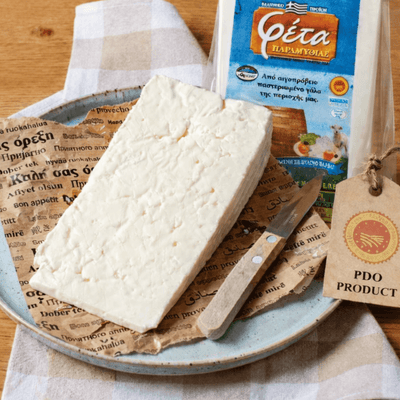
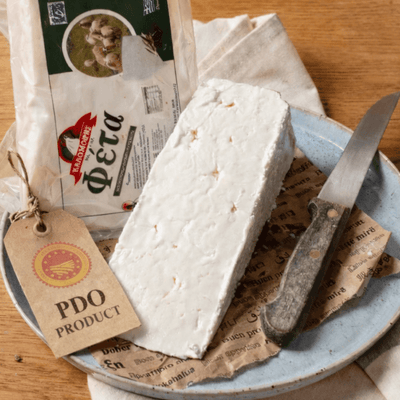
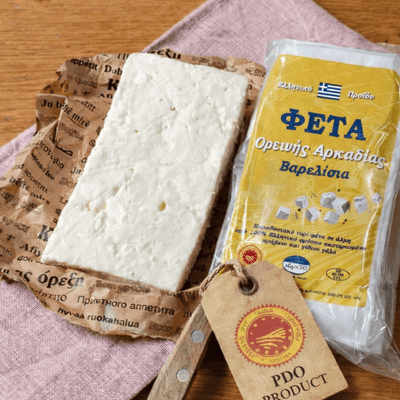
Since 2002, after a long legal and cultural battle that began in 1994, Greek feta has been officially recognised by the European Union as a Protected Designation of Origin (PDO) product. This designation means that only cheese made in specific geographical areas of Greece, using time-honoured methods and local milk, can legally be labelled as “feta”. It’s a matter of authenticity, tradition, and strict production standards that preserve the real identity of this iconic cheese.
To qualify as PDO feta, production must follow specific guidelines:
- The milk must come exclusively from sheep and goats raised in Greece.
- The cheese must be made and matured within the designated PDO zones.
- Traditional techniques must be followed, including salting, brining, and ageing, often in wooden barrels.
The PDO Regions of Greek Feta
Feta PDO can only be produced in the following areas of mainland Greece and select islands, regions where the microclimate, flora, and grazing practices contribute directly to the flavour of the milk and, ultimately, the cheese:
- Macedonia (Western and Central)
- Thrace
- Epirus
- Thessaly
- Central Greece (Sterea Ellada)
- Peloponnese
- The island of Lesvos (Mytilene)
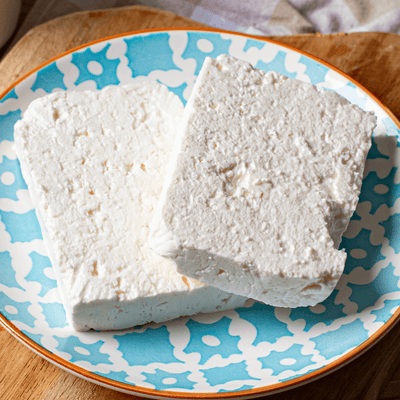
Each of these areas has a long-standing pastoral tradition and rich biodiversity, which influences the diet of the sheep and goats, resulting in milk with exceptional aromatic properties. That’s why feta made in these regions has a distinctive character: salty yet balanced, tangy yet creamy, with a texture that crumbles but never dries.
🔗 Learn more: How to recognise genuine PDO Feta
🍽️ Culinary Uses for Feta
Here are some of the most beloved ways to enjoy feta cheese:
- 🥗 Classic Greek salad
- 🍳 Baked feta with cherry tomatoes and oregano
- 🍯 Fried feta with honey and sesame seeds
- 🍕 Crumbled on pizzas and flatbreads
- 🥪 In Mediterranean-style sandwiches
- 🥙 Inside pita, gyros or souvlaki wraps
🔗 Read more: Cooking feta – grill, pan, oven

A Brief History of Feta Cheese
The word “feta” comes from the Italian "fetta" (slice), but the cheese’s roots run much deeper:
- 📜 Mentioned in Homer’s Odyssey (8th century BC)
- 🐑 Traditionally aged in caves or wooden barrels
- 🧂 Preserved in brine long before refrigeration existed
It’s a true staple of the original Mediterranean diet: simple, natural, and full of flavour. Producing authentic feta cheese is a labour of love, and you can taste it in every bite.
🔗 More on this: The history of Greek feta
Feta Nutrition Facts
What makes PDO feta, and its average values per 100 g:
- 🐑 Made from sheep’s milk, or sheep’s milk with up to 30% goat’s milk
- 🧂 Matured in brine
- 📍 Produced only in designated regions of Greece
| Nutrients (per 100g) | Average Value for Feta Cheese |
|---|---|
| Energy | 265 kcal |
| Protein | 14 g |
| Total Fat | 21 g |
| Calcium | 493 mg |
🔗 Read more: Feta and the Mediterranean diet

Guide to Greek Feta Cheese: Related Articles
| Topic | Description | Link |
|---|---|---|
| 🧾 Feta Formats | Blocks, crumbled, brined | Read article |
| 🔍 Authenticity & PDO | How to identify real Greek feta | Read article |
| 🧊 Storage | How to keep feta fresh at home | Read article |
| 🍽️ Pairings | With wine, honey, nuts, and fruit | Read article |
| 🔥 Cooking Tips | Grilled, baked, or pan-fried | Read article |
| 🍯 Signature Recipe | Fried feta with honey | View recipe |
| 🧺 Feta Products | All feta varieties from Greek Flavours | Browse products |
Why Choose Greek Flavours
At Greek Flavours, we source only authentic PDO feta directly from local producers with fast, refrigerated delivery across the UK and Europe. All shipments containing feta cheese are sent by express air service, with delivery in Europe expected within 1-2 days of the date of shipment. 🌍
🛒 Explore our exclusive feta selection →


1 comment
Ich lasse immer ein Stück Feta in immer der selben Plastikschachtel von Eridanous in Salzlake für etwa zwei Monate reifen. Er bekommt dann eine Edelschimmelschicht und wird innen ganz weich, fast flüssig und entwickelt einen sensationellen Geschmack, mindestens so gut wie französischer Weichkäse aus der Normandie. Nur das Saure von der Michsäure und das Salzige der Lake erinnern an den weißen, krümeligen Feta. Ausprobieren lohnt sich 😊👍!