 Skip to content
















You might also love
-

Feta cheese PDO
Feta Cheese: The Authentic Taste of Greece Straight to Your Table If...
-

Greek Cheese
Discover Authentic Greek Cheeses Welcome to our curated collection of authentic Greek...
-

Greek Olives and EVOO
GREEK OLIVES AND OLIVE OIL: QUALITY, FLAVOUR AND CULTURE Greek olives and...
-

Greek Honey
Greek Honey: Pure Mediterranean Excellence Greek honey is one of the most...
-

Greek Coffee & Tea
Greek coffee, the flavor and ritual of tradition Greek coffee is one...
-

Dips & Spreads
SPREADS - The best part of the traditional Greek cuisine, as it is...
-

Greek Yogurt
Greek Yogurt: Authentic Taste, Thick Texture & High-Protein Goodness Looking for real...


Greek Flavours brings the Greek pantry to your door, shipped directly from Greece to the United States. This is the everyday larder of a Greek kitchen: extra virgin olive oil, Kalamata and green olives, thyme and pine honey, tahini and halva, dried legumes, traditional pasta, herbs and spices, jarred meze, and mastic from Chios. Everything here is sourced from Greek producers and chosen for how it tastes and cooks, not for how it looks on a shelf.
What a Greek delicatessen is
A Greek delicatessen is the shelf-stable heart of Mediterranean cooking. It is what a Greek cook reaches for every day: oil to finish a dish, olives and meze to open a meal, legumes and pasta for the main, honey and halva to close it. Because these products keep well outside the fridge, they ship from Greece to the US without a cold chain and form the base of everyday Greek cooking.
The core of the Greek pantry
Extra virgin olive oil
The most-used ingredient in Greek cooking, used raw over salads and pulses and for everyday cooking. Greek extra virgin olive oil, shipped from the producer. Explore the full range in Greek olive oil.
Kalamata and table olives
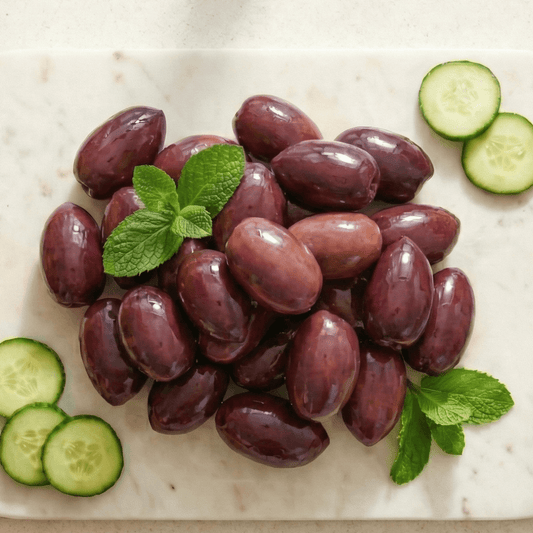
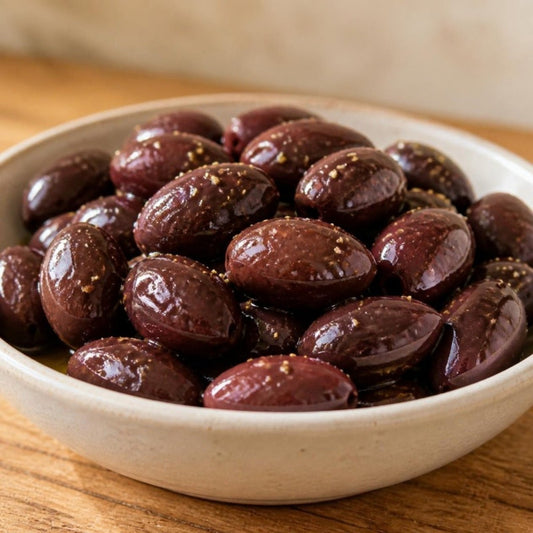
Kalamata olives from the Peloponnese and green olives from Chalkidiki, in brine or in oil. Whole or pitted, black Kalamata or cracked green, they open a meze table and go into Greek salad and slow-cooked dishes. See the selection in Greek olives.
Honey and spreads
Thyme, pine and wildflower honey, spooned over yogurt or used in baking, plus traditional spreads. Greek thyme honey, gathered from wild thyme, has a strong aroma and a firm set. Browse Greek honey.
Tahini and halva
Stone-ground sesame tahini for sauces and baking, and halva as a traditional sweet. Both keep for months in the cupboard.
Legumes and pasta
Gigantes beans, lentils, chickpeas and Greek pasta shapes such as hilopites and kritharaki. These are the base of everyday Greek home cooking.
Meze in jars
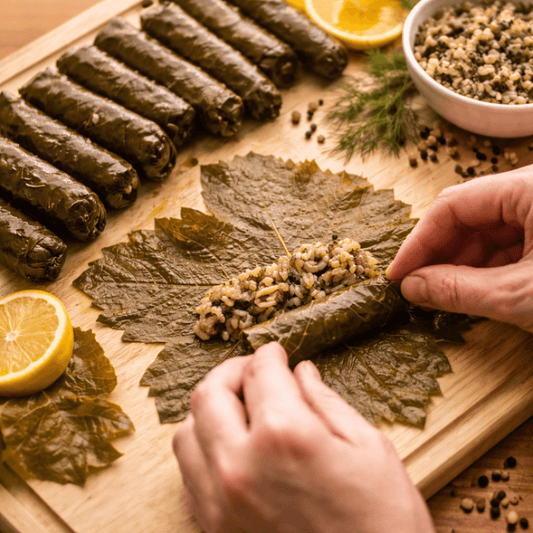
Dolmadakia, vine leaves stuffed with rice, gigantes in tomato sauce and other ready meze that go straight from the jar to the table.
Herbs, seasoning and mastic
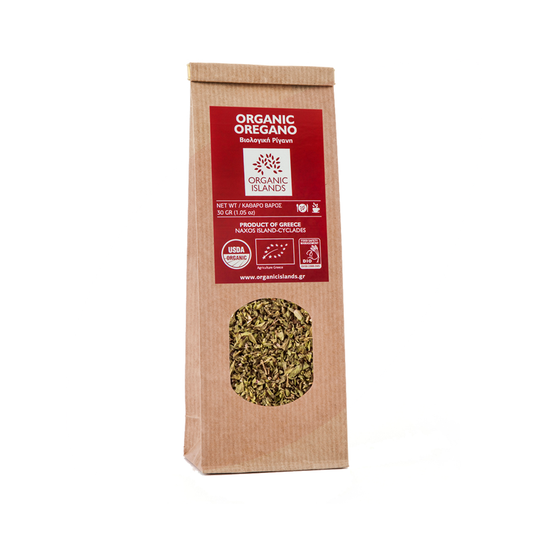
Greek oregano, mountain herbs, sea salt and spices, plus mastic from Chios, the resin used in sweets, drinks and baking.
How to build a Greek pantry
Start with one good extra virgin olive oil, a jar of Kalamata olives and one honey. Add tahini, a bag of gigantes or lentils and a Greek pasta shape for everyday meals. Keep a jar of dolmadakia and some oregano on hand for a quick meze or to finish a dish. From this base you can cook most Greek home recipes and set a meze table in minutes.
Frequently asked questions about the Greek pantry
What is in a traditional Greek pantry?
Extra virgin olive oil, Kalamata and green olives, honey, tahini and halva, dried legumes such as gigantes and lentils, Greek pasta, jarred meze like dolmadakia, oregano and other herbs, and mastic from Chios.
Do these products need refrigeration?
No. The Greek delicatessen range is shelf-stable and ships from Greece to the US without a cold chain. Store it in a cool, dry cupboard.
What are Kalamata olives good for?
Kalamata olives are a dark table olive from the Peloponnese. They are eaten on their own as a meze, added to Greek salad, chopped into tapenade, or baked into slow-cooked dishes. Once opened they keep in the fridge in their brine.
What is Greek mastic and how do you use it?
Mastic is a natural resin from the mastic trees of Chios. It is used in small amounts in baking, sweets, drinks and chewing gum, and adds a pine-like, slightly sweet aroma.
Which olive oil should I choose?
For raw use over salads and pulses, choose an extra virgin olive oil you like the taste of. For everyday cooking, a standard extra virgin oil works well. The full range is in Greek olive oil.
What can I make with Greek legumes?
Gigantes plaki, baked giant beans in tomato, fakes, lentil soup, and revithada, chickpea stew, are the classics. Most cook from dried in one pot with olive oil, onion and herbs.
How long does delivery take?
Orders are prepared in 2 to 4 working days and then shipped from Greece, with transit time added on top. Pantry products travel at room temperature, so there is no cold-chain constraint.


