



Skip to product information
1 of 4

Olea Las

Olea Las Organic Extra Virgin Olive Oil – Koroneiki from Laconia (1L Tin)

Olea Las Organic Extra Virgin Olive Oil – Koroneiki from Laconia (1L Tin)
Regular price $41.51 USD
Regular price Sale price $41.51 USD
Sale Sold out
Tax included. Shipping calculated at checkout.

100 in stock

Visa
American Express
Mastercard
Maestro
PayPal
Google Pay
Apple Pay
Revolut
  • ECO delivery🌿 ECO DELIVERY — Tracked shipping across Europe · These products travel by ground courier, carefully packed for the journey from Greece. · 💶 Flat rate: €8.90 across Europe · 🎁 Free shipping on orders over €139 · ⏱️ Delivery in 3–5 working days from dispatch · 📦 Order preparation: 2–4 working days · 🤝 Our promise: if your order arrives damaged or not as described, contact us — we will find the right solution. · 👉 Full shipping details →
  • 17Organic
  • 14Peloponnese
  • CreteVegan

Product Description

An Organic Olive Oil That Comes With Its Results.

Olea Las Organic Extra Virgin Olive Oil is made from a single olive variety, Koroneiki, in Vrontamas, a village in Laconia in the south-east Peloponnese. It is certified organic, with the control body's code printed on the tin. Plenty of olive oils describe themselves well. This one has also been checked by an independent laboratory, and we have read the results.

In the glass, it is fresh and green, fruity on the nose, with a peppery tickle at the back of the throat and a light bitterness in the background. The producer describes notes of almond, pine and eucalyptus. At the Berlin Global Olive Oil Awards 2026, it won a Silver Award for sensory quality among organic oils.


What the laboratory found, in plain words

A label tells you the limits an oil has to stay within. Behind this tin there is also a report with the figures actually measured, from a laboratory recognised by the International Olive Council.

  • The olives were handled with care. Acidity shows how quickly and gently the fruit went from tree to mill. The law allows up to 0.8% for an extra virgin oil; this one measured 0.34%.
  • The oil is fresh. Peroxides rise as an oil meets air and starts to age. The limit is 20; this oil measured 5.3.
  • Nothing unwanted. The same sample was screened for 475 different pesticides, and none were detected.
  • Trained tasters found no defects and scored its fruitiness and pepperiness clearly above its bitterness.

The full figures, with the date of the analysis, are in the Nutritional Components tab.


One litre. How long does it last?

A household that cooks most days uses roughly a litre a month, so this tin is about a month of cooking. It is the right size to get to know an oil: enough to use it every day, on everything, and decide whether it is yours.

  • Keep it cool and dark, below 25°C as the label asks. Metal already keeps the light out.
  • Close it firmly after every use. Air is what ages an oil once the tin is open.

Found your oil?

The same oil comes in a 3-litre tin, which costs less per litre and lasts about three months. To try it first, or to take it with you, there is also a 100ml travel tin.


How it arrives

The tin travels inside an outer carton. Metal is the safest way to ship oil across Europe: no glass to break, and the oil stays in the dark the whole way. If your tin arrives visibly damaged, tell us and we will sort it out.

Perfect for:

  • Greek salad with feta, where the pepperiness of the oil meets the salt of the cheese.
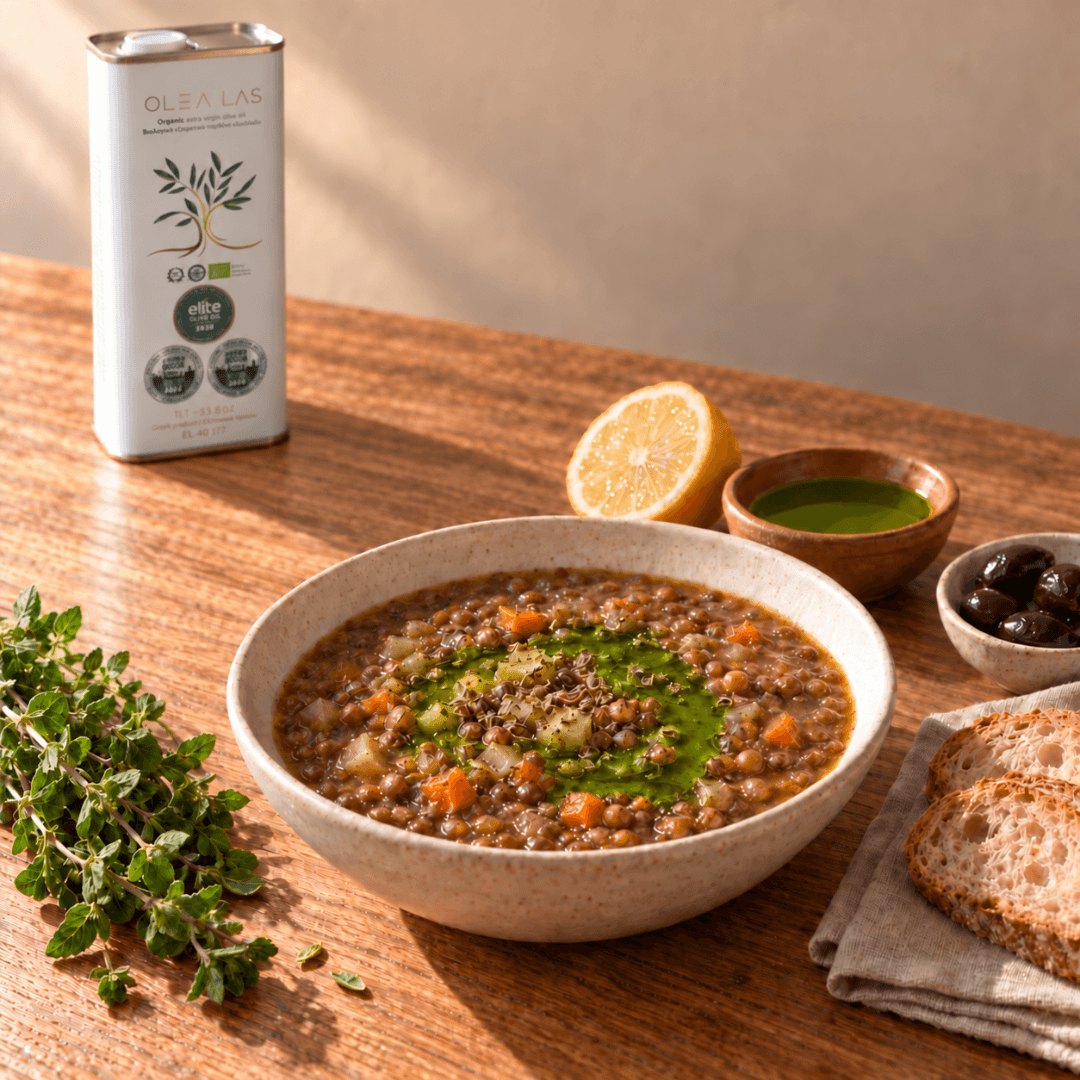
  • Beans, lentils and chickpeas, with a generous pour at the table.
  • Bread, with a pinch of salt and dried oregano.
  • Grilled vegetables and fish, finished with oil once off the heat.

"It is the best olive oil that we have tasted to date!" Stephanie S., verified review

An organic olive oil you do not have to take on trust.

Nutritional Components

What an organic Koroneiki olive oil is made of

Olive oil is a single-ingredient food, so what matters is which fats it contains and how carefully the olives were treated. This tin declares the first, and a laboratory report documents the second.

The fat breakdown, as declared on the label

  • Monounsaturated fat: 69.6 g per 100 ml, out of 91.6 g of total fat. It is the main type of fat in olive oil.
  • Saturated fat: 14.9 g per 100 ml.
  • Polyunsaturated fat: 7.1 g per 100 ml.
  • Nothing else: no carbohydrate, no sugars, no fibre, no protein, no salt.

What the laboratory measured

Analysis by Multichrom Lab, Athens, a laboratory recognised by the International Olive Council. Certificate Π-130819, analysed 13 to 19 January 2026. Each figure is shown next to the limit the law sets for extra virgin olive oil.

  • Acidity: 0.34%. Limit: 0.8%. A sign of how carefully the olives were handled.
  • Peroxide value: 5.3 meqO₂/kg. Limit: 20. A sign of freshness: it rises as the oil meets air.
  • K232: 1.912 · K268: 0.161 · ΔK: −0.005. Limits: 2.50, 0.22 and 0.01. Checks used to confirm the oil has not been refined or blended.
  • Pesticide residues: 475 substances tested, none detected at the laboratory's limit of 0.01 mg/kg.
  • Tasting panel: no defects. Fruitiness 4.7, pepperiness 4.5, bitterness 3.3.

The figures refer to the sample analysed by the laboratory.

Nutritional values per 100 ml

  • Energy: 3,449 kJ / 824 kcal
  • Fat: 91.6 g of which saturates: 14.9 g, monounsaturates: 69.6 g, polyunsaturates: 7.1 g
  • Carbohydrates: 0 g of which sugars: 0 g
  • Fibre: 0 g
  • Protein: 0 g
  • Salt: 0 g

Ingredients

Organic extra virgin olive oil.

Net content: 1 litre. EU organic farming, control body GR-BIO-01. Greek product. No allergens are present: olive oil contains none of the substances listed in Annex II of Regulation (EU) 1169/2011.

Useful Information

Storage guide: how to keep a one-litre tin at its best

Olive oil has three enemies, in this order: light, heat, and air. The tin removes the first one entirely. The other two depend on where you keep it and how you close it.

How to store it correctly

  • Cool and dark, below 25°C: that is what the label asks for. A cupboard or a pantry, not the worktop next to the hob.
  • Closed firmly after every use: each opening lets air in, and air ages an oil faster than time does.
  • Never refrigerate: olive oil turns cloudy in the cold. It is harmless and reverses at room temperature, but there is no reason to cause it.

Freshness timeline

  • Unopened, stored as above: until the best-before date printed on the tin.
  • Opened, kept closed and cool: a household that cooks usually finishes a one-litre tin in about a month.

Product details

  • Format: metal tin, net content 1 litre
  • Producer: Marielena Markakou, Olea Las, Laconia, Greece
  • Origin: Vrontamas, Laconia, Peloponnese
  • Variety: Koroneiki, single variety
  • Certification: EU organic, control body GR-BIO-01 (DIO)
  • Awards: Berlin Global Olive Oil Awards 2026, Silver (Sensory Quality · Organic) and inclusion in the Elite Olive Oils 2026 index; Bronze 2025, awarded to the producer's previous harvest
  • Tasting notes, as described by the producer: almond, pine, eucalyptus
  • Allergens: none
  • Ingredients: organic extra virgin olive oil
  • Category: superior category olive oil obtained directly from olives and solely by mechanical means

What the tasting panel looks for

Every extra virgin olive oil has to pass a tasting by a trained panel, not only a chemical test. The tasters look for defects first, such as musty, winey, or rancid notes, and an extra virgin oil must have none. Then they score the good qualities: fruitiness, bitterness, and pepperiness. Bitterness and a peppery catch are not faults. They are what a fresh olive tastes like.

Why a tin, and not a bottle

The taste, colour and freshness of an olive oil keep longer in a sealed metal tin than in glass, because metal lets no light through at all. A tin is also safer to transport. The tin is not the cheapest format of olive oil. It is how Greek kitchens have always kept it.

View full details

Customer Reviews

Overall rating: 5.0 / 5 from 12 reviews.