Skip to content

In autumn, Greek home cooking moves from the plate back to the pot. The summer table is assembled from things that need no heat; the October table is simmered. Legumes cook slowly in tomato and olive oil, vegetables braise in oil until they are soft enough to cut with a spoon, soups are thickened with trahanas, and pasta finishes in the same pot as its sauce. None of this depends on technique. It depends on a short list of pantry staples and an hour on a low flame, which is why a kitchen stocked with dried legumes, trahanas, a Greek pasta or two and enough olive oil can cook most of the Greek autumn repertoire without a special shop.
This guide covers the five families of Greek pot cooking and what each one asks of you, how much time and effort they really take, what a month of this cooking uses from the pantry, and a working week built around one Sunday pot. It assumes a household of four and ordinary weeknights, not a cook with a free afternoon every day.
Why Greek cooking changes in October
Greek kitchens have a word for this food: mageirefta, literally "cooked things". It is what a taverna sets out in trays at lunchtime and what a family eats from Monday to Friday once the heat breaks. In summer, very little of the table needs a pan. From October, almost all of it comes out of a pot, a katsarola, or a baking tin.
The change is practical before it is sentimental. The garden gives way to the store cupboard, the evenings shorten, and a dish that improves overnight is worth more than one that has to be eaten the moment it is made. Most Greek pot dishes are better on the second day, which is exactly the property a working week needs.
There is also a calendar reason. A large share of this repertoire is nistisimo, food suitable for the Orthodox fasting days, cooked without meat or dairy. That is why so much of Greek autumn cooking is built on legumes, vegetables, grains and olive oil, and why those dishes are generous and full of flavour rather than austere.
The five families of Greek pot cooking
Almost every dish a Greek household cooks between October and March belongs to one of five families. Knowing which family a dish belongs to tells you what it needs and how long it will take.
Legumes: the centre of the plate
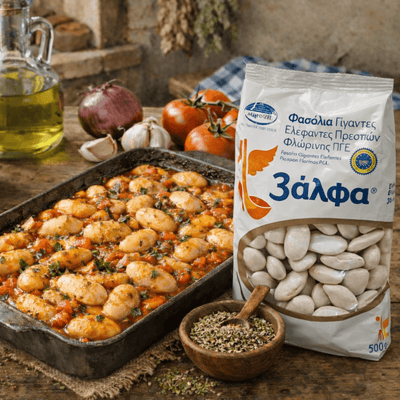
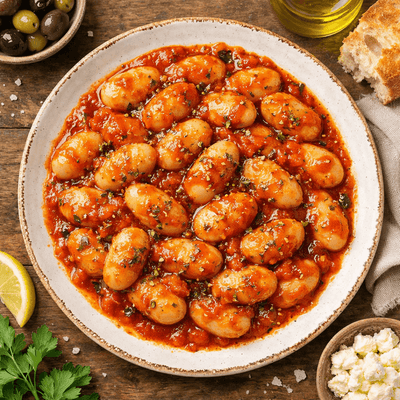
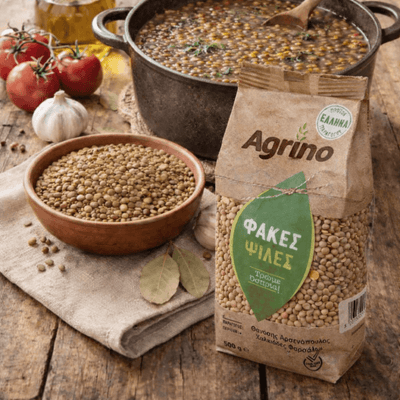
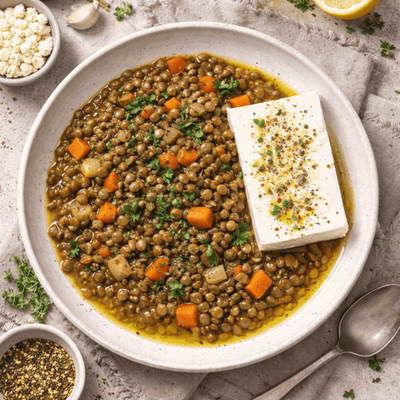
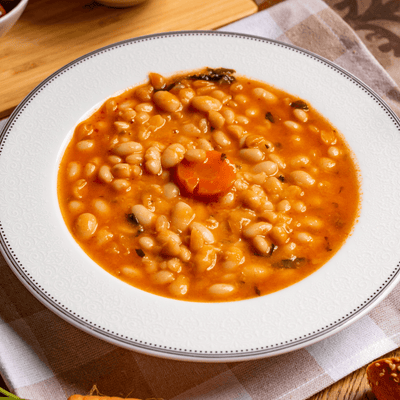
Fasolada, the white bean soup often called the national dish, fakes, the lentil soup finished with a splash of vinegar, revithada, chickpeas baked slowly with onion and lemon, and gigantes baked in tomato and oregano. In Greece these are dinners, not side dishes, and they are portioned that way.
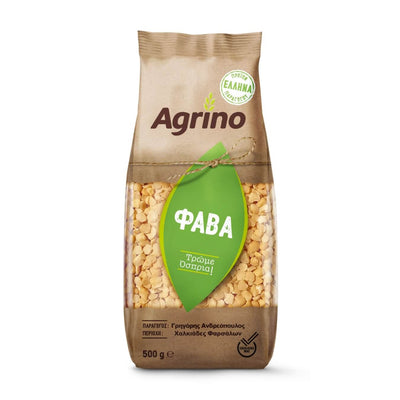
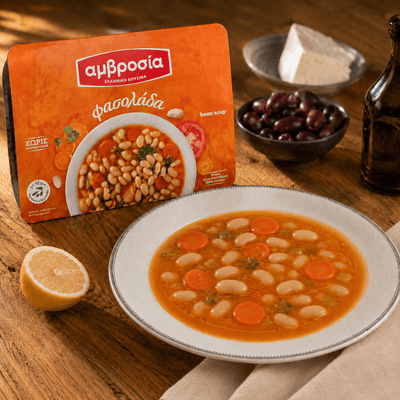
The practical question is dried or ready, and it has its own guide: Greek legumes on a weeknight. The short version is that lentils and fava need no soaking, gigantes and chickpeas need a night in water, and a ready format covers the evenings that were never planned. See the Greek legume range, dried and ready together.
Ladera: vegetables cooked in oil
The name comes from ladi, oil, and it is a literal description. Green beans, okra, peas, courgettes or artichokes are braised slowly in olive oil, usually with tomato, onion and herbs, until the vegetables are completely tender and the oil and juices have become the sauce. Ladera are served warm or at room temperature, with bread for the sauce and a piece of feta on the side.
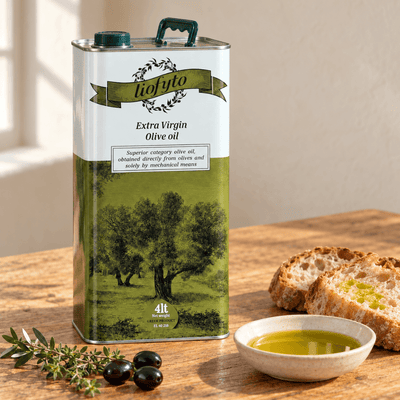
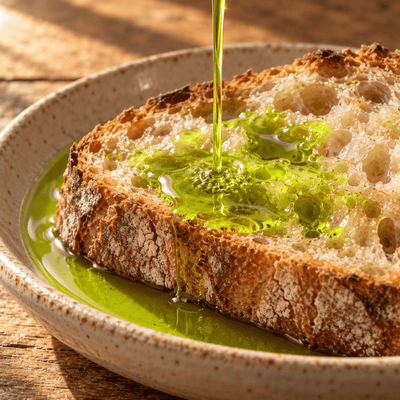
The one rule is the oil. Ladera are meant to be generous with it, commonly around half a cup for a pot that feeds four, and halving the quantity does not give you the same dish with less oil. It gives you watery vegetables. This is the family that explains why a Greek kitchen buys olive oil by the tin, and why the choice of oil matters as much as the vegetables. Explore Greek extra virgin olive oil.
Soups built on a pantry grain
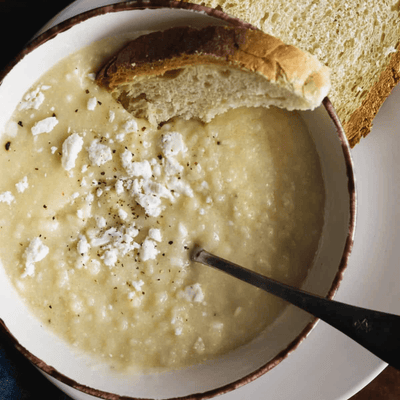
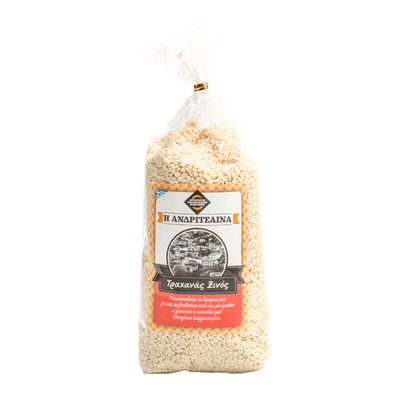
Trahanas is the Greek pantry's answer to a cold evening. It is made from flour and milk, dried and crumbled into small grains, and it comes in two styles. Xinos, the sour one, is made with sheep's yogurt and has a gentle tang. Glykos, the sweet one, is made with milk only and is milder. Both cook into a thick soup in about twenty minutes, often with a little tomato or a piece of feta melted in at the end.
Kritharaki, the rice-shaped pasta, does the same job in a vegetable or chicken broth. Neither needs planning, which makes this family the weekday reserve of the Greek autumn.
Pasta cooked with its sauce
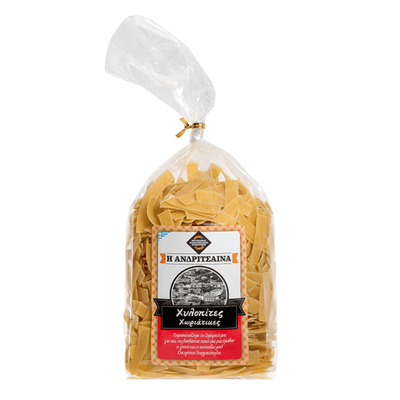
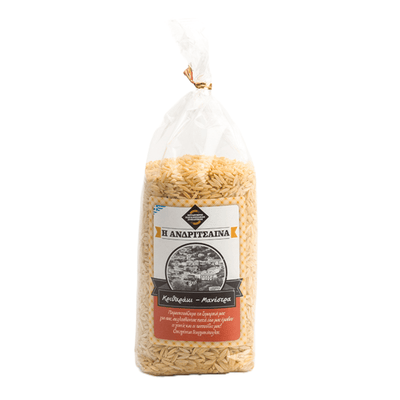
Greek pasta dishes rarely boil the pasta separately. Giouvetsi bakes kritharaki in the oven with meat and tomato until the pasta has absorbed the sauce. Kokoras me hilopites, rooster with egg pasta, finishes the small square hilopites in the braising liquid of the meat. In Crete, skioufikta, a small twisted pasta, is dressed with olive oil and grated mizithra. The pasta is part of the dish, not a base under it, and its shape is chosen for the way it takes up liquid. Browse Greek traditional pasta, trahanas included.
Slow braises
Kokkinisto, meat braised red in tomato, and stifado, meat cooked slowly with small whole onions, bay and warm spices, are the Sunday dishes of the family. The pantry contribution is modest, olive oil, spices and tomato, and the rest is time. They matter here because their leftovers, and the sauce in particular, carry the pasta dishes of the following days.
How much time each family really takes
Pot cooking has a reputation for being slow. Most of the time is unattended, and the table below separates the minutes at the stove from the minutes the pot looks after itself. Times are approximate and assume a pot for four.
| Dish | Hands-on / total | Best evening |
|---|---|---|
| Trahanas soup Grain soup |
10 min / 25 min |
Any weekday |
| Fakes (lentils) Legumes, no soak |
15 min / 50 min |
Weekday, started early |
| Green beans in tomato Ladera |
20 min / 1 h |
Cook one day, eat the next |
| Giouvetsi Pasta with sauce |
20 min / 1 h 15 min |
Weekend or a free evening |
| Baked gigantes Legumes, soaked |
25 min / 2 h 30 min, plus overnight soak |
Sunday |
| Stifado Slow braise |
30 min / 2 h 30 min |
Sunday |
Read the table by its hands-on minutes. The slowest dishes cost the least attention, and the fastest, trahanas, is the one that needs you at the stove, stirring so it does not catch.
What a month of pot cooking uses from the pantry
The planning question is not what to cook but how much to keep. The table below assumes a household of four cooking two pot dishes and one soup a week, which is a realistic rhythm rather than an ambitious one.
| Pantry item | Per dish for four | For a month |
|---|---|---|
| Dried legumes | One 500g packet, with leftovers | 4 packets, two kinds |
| Trahanas | About 150 to 200g | 1 to 2 packets of 500g |
| Greek pasta (kritharaki, hilopites) | About 400 to 500g | 2 packets of 500g |
| Extra virgin olive oil, pot dishes only | About 100 ml, more for ladera | About 1.2 to 1.5 litres |
| Ready Greek dishes | One portion per person | For the evenings nobody cooks |
The oil line is the one that surprises people. Three pots a week at around 100 ml each comes to roughly 1.3 litres a month before a single salad has been dressed or an egg fried. At that rate a one-litre bottle lasts about three weeks, which is why the four-litre tin, not the bottle, is the format Greek households keep for the cooking months.
A week built on one Sunday pot
The system that makes Greek pot cooking sustainable is simple: one long cook at the weekend, short cooks during the week, and leftovers that are planned rather than tolerated.
- Saturday evening. Put the gigantes or chickpeas in plenty of cold water. Two minutes of work, and the only planning the week needs.
- Sunday. Bake the gigantes in tomato, onion, oregano and olive oil, or cook a stifado. Make enough for two meals.
- Monday. Sunday's pot, better than on the day. Bread and feta are all it needs.
- Tuesday. Fakes. Lentils straight from the packet, a bay leaf, tomato, oil, and vinegar stirred in at the table.
- Wednesday. A ready dish, a fasolada or a pastitsio, warmed through. This is the evening the week would otherwise lose.
- Thursday. Trahanas soup in twenty-five minutes, with a piece of feta melted in at the end.
- Friday. Ladera, cooked in the evening and at their best on Saturday at room temperature.
Nothing in this week asks for a recipe beyond the one written on the back of the packet, and nothing is cooked twice for no reason. When a household says it has stopped cooking Greek food in the week, the missing step is almost always the Saturday soak.
Where to buy the Greek pot pantry
Everything in this guide is sold by Greek Flavours and shipped from Greece. The dried legumes include gigantes with PGI status from Prespes and Kastoria and lentils from Farsala on the Thessalian plain, alongside ready-to-heat legume dishes. Shop Greek legumes.
Trahanas, both sour and sweet, hilopites, kritharaki and Cretan skioufikta sit in the traditional pasta range, three of them from Andritsaina, a village in the western Peloponnese. Shop Greek traditional pasta.
For the evenings that do not happen, a range of traditional Greek dishes, fasolada, spanakorizo, gemista and pastitsio among them, travels fresh and needs only warming. See the Greek dishes range.
And for the oil, the tins that suit a cooking household, including PDO Kalamata and oils from Laconia and Arcadia, are in the olive oil range. If you are choosing between an oil for the pot and an oil for pouring, the guide to agoureleo and everyday olive oil explains the difference. Delivered across Europe.
Frequently asked questions about Greek autumn pot cooking
What do Greeks cook at home in autumn?
Greek autumn cooking is built on dishes cooked in one pot or one baking tin. The main families are legume dishes such as fasolada, fakes and baked gigantes; ladera, vegetables braised in olive oil and tomato; thick soups made with trahanas or kritharaki; pasta cooked together with its sauce, such as giouvetsi; and slow braises such as stifado. Most of them improve on the second day, which is why they are cooked in quantity.
What does ladera mean in Greek cooking?
Ladera, from ladi, oil, are vegetable dishes braised slowly in olive oil, usually with tomato, onion and herbs. Common examples are green beans, okra, peas and artichokes. The oil and the vegetable juices become the sauce, so the dish is generous with oil by design, commonly around half a cup for a pot that serves four. Ladera are eaten warm or at room temperature, with bread and feta.
What is trahanas and how is it cooked?
Trahanas is a traditional Greek pantry grain made from flour and milk, dried and broken into small crumbs. The sour style, xinos, is made with sheep's yogurt and has a light tang; the sweet style, glykos, is made with milk and is milder. It is cooked into a thick soup in about twenty minutes, stirred so it does not stick, and often finished with a piece of feta or a spoonful of tomato.
Which Greek pot dishes need no soaking or planning?
Lentil soup, fava, trahanas soup and the pasta dishes need no soaking at all, because lentils, split peas, trahanas and pasta go straight from the packet into the pot. Gigantes and chickpeas are the two that need an overnight soak. A household that keeps at least one no-soak item in the cupboard can always produce a pot dish on a weekday.
Are traditional Greek pot dishes vegetarian?
Many of them are. A large part of the repertoire is nistisimo, cooked for the Orthodox fasting days without meat or dairy, so legume dishes and ladera are traditionally made with vegetables, legumes, herbs and olive oil only. Feta served on the side is a common addition outside fasting days. Stifado, kokkinisto and giouvetsi are the main meat-based dishes of the family.
How much olive oil does Greek pot cooking use?
More than most people expect. A pot dish for four typically uses around 100 ml of olive oil, and ladera often use more. A household cooking three pot dishes a week goes through roughly 1.2 to 1.5 litres a month for those dishes alone, before salads and everyday cooking. This is why Greek kitchens usually keep olive oil in three- to five-litre tins during the cooking months.
Can you cook these dishes with extra virgin olive oil?
Yes, and in Greece that is the normal practice. Greek home cooking uses extra virgin olive oil for braising, baking and frying as well as for dressing. The oil that suits the pot is an everyday extra virgin with a rounded flavour, bought in a tin. The intensely green, cloudy oil of the first weeks of the harvest, agoureleo, is usually kept for pouring raw, where its character can be tasted.
Is Greek pot cooking part of the Mediterranean diet?
It is what the traditional Mediterranean diet looks like on an ordinary Greek weekday: legumes, vegetables, grains and olive oil cooked at home and eaten together. The Mediterranean diet is inscribed on the UNESCO list of the Intangible Cultural Heritage of Humanity, with Greece among the countries that inscribed it, and the recognition is of a way of cooking and eating rather than of single foods.