Skip to content

A working Greek shelf carries legumes in two forms, and they are not competing versions of the same thing. Ready formats are finished dishes that need about two minutes of heat, and they exist for the weeknights when cooking was not planned. Dried legumes need soaking and an hour or more of low heat, and they give the better result on a Saturday. Most households pick one and then quietly stop eating legumes, because the one they picked did not fit the evening they actually had.
This guide covers what each format is, which five dried legumes are worth keeping in a Greek kitchen, and how to read the labels so that a jar of beans is not confused with a cooked dish. It is the companion to the return shelf, where legumes are the category most households leave out of the September restock.
Why legumes carry the Greek autumn
In Greece, legumes are not a side dish. Fasolada, the white bean soup, is routinely called the national dish, and gigantes, fava, and lentils appear as the centre of the plate rather than next to it. That distinction matters when you shop, because a portion sized as a side will disappoint as a dinner.
The nutritional case is the same one that makes them a staple of the Mediterranean diet: plant protein and fibre in the same food, at a cost per serving that nothing else on the shelf matches. A dish of gigantes with bread and a piece of feta is a complete dinner, not a virtuous compromise.
The ready formats, and what they actually are
The word "ready" covers two different things on a Greek shelf, and the difference decides what you can do with them.
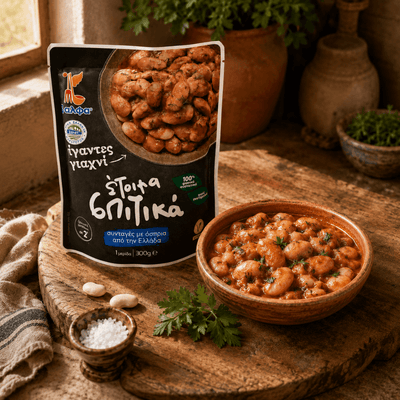
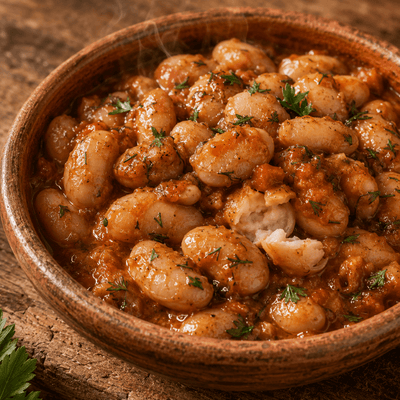
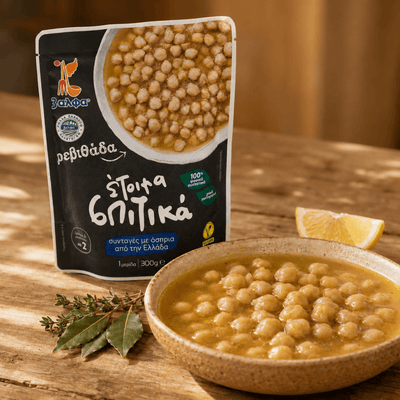
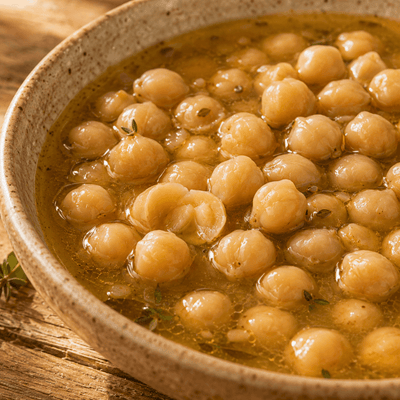
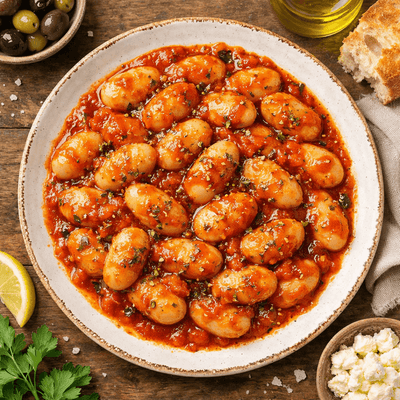
Cooked dishes. Gigantes yahni is giant beans slow-cooked in tomato with olive oil, a finished recipe in a 300g format that needs warming through and nothing else. Revithada is the same idea from Sifnos, where chickpeas are baked slowly overnight in a clay pot with onion and lemon. Both are dinners. Add bread and something sharp, and the plate is done.
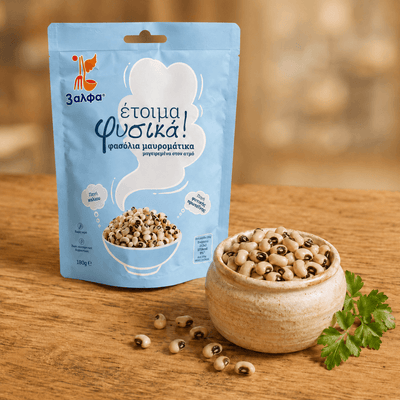
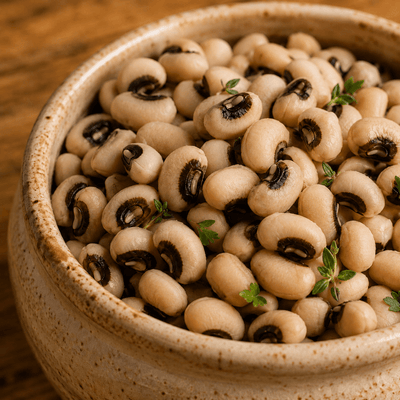
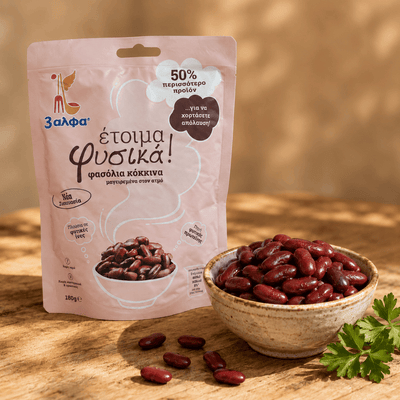
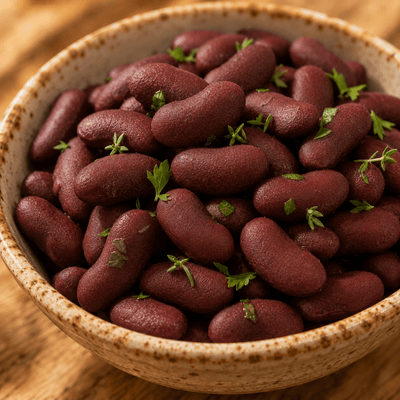
Cooked bases. Steam-cooked black-eyed beans and red kidney beans come in 180g portions with nothing added: no sauce, no salt, no dish attached. They are the legume equivalent of having the rice already boiled. They go into a salad with olive oil and lemon, into a soup that needs body, or under something roasted. Treating them as a dish is the most common way to be underwhelmed by them.
Neither format is a compromise on the ingredient. What you give up against dried is the control of texture: a bean cooked in a factory is cooked the same way every time, which is exactly what you want on a Wednesday and exactly what you would rather decide yourself on a Sunday.
Browse the legume range, ready and dried together.
The five dried legumes worth keeping
Five cover almost everything Greek home cooking does with legumes. Anything beyond them is a preference, not a gap.
| Legume | What it is | Soaking | The dish it exists for |
|---|---|---|---|
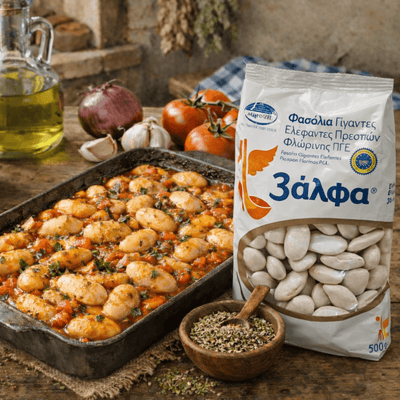
| Gigantes | Giant white beans, PGI from Prespes and Kastoria | Overnight | Baked in tomato, oregano, and olive oil |
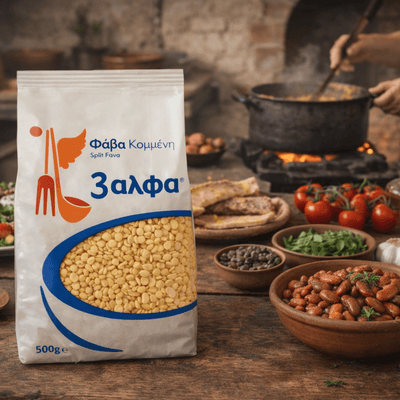
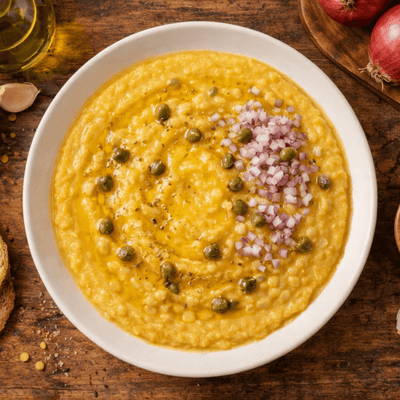
| Fava | Yellow split peas, despite the name | None | Purée with raw onion, lemon, and oil |
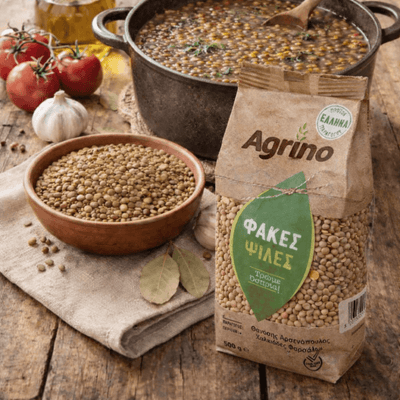
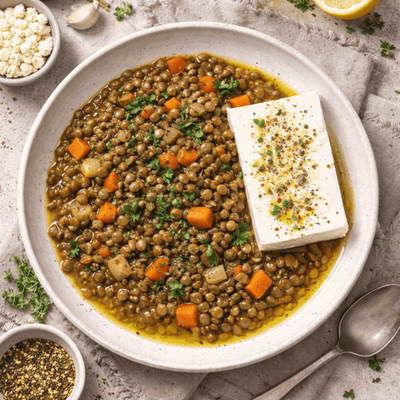
| Lentils | Small brown lentils, the Farsala plain being the reference | None | Fakes, the soup finished with vinegar |
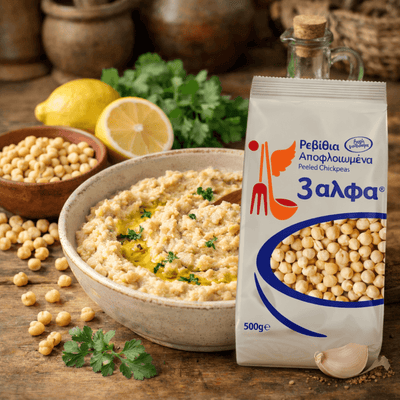
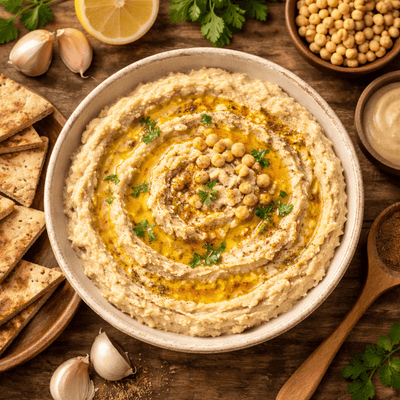
| Chickpeas | Whole or skinless, the skinless ones for smooth results | Overnight | Revithada, hummus, thick soups |
| Black-eyed beans | Small, quick, forgiving | None | Warm salad with herbs and olive oil |
Two of the five need no soaking at all, which is the fact that usually changes people's minds. Lentils and fava go from the packet to the pot, and fava in particular is close to effortless: it collapses into a purée on its own, and the work is in the onion and the oil that go on top.
How to read a Greek legume label
Three things are worth checking, and none of them is the price.
Whether it is a dish or an ingredient. A tomato sauce in the ingredient list means a finished recipe. Water and salt, or nothing at all, means a base. Both are useful, and buying one expecting the other is the single most common disappointment.
Where it comes from. Gigantes from Prespes and from Kastoria carry a PGI, which ties them to a defined production area in northern Greece where the climate produces the large, thin-skinned bean the dish is built on. Farsala, on the Thessalian plain, is the reference origin for lentils. These are not decorative labels: the skin thickness and the cooking behaviour genuinely differ.
Whether the chickpeas are skinless. Skinless chickpeas cook faster and purée smooth, which matters for hummus and for a soup you want velvety. Whole ones hold their shape and are better in a baked dish.
A week where legumes carry two dinners
The practical target is not to eat legumes every day. It is to have two dinners a week that do not require a decision.
Midweek, a ready format: gigantes yahni warmed through, with pita and a piece of feta PDO that cuts the sweetness of the tomato. Five minutes, no planning, and it is a real plate rather than a rescue.
At the weekend, the dried version of the same bean: soaked the night before, baked slowly in tomato and oregano, and better than the ready one because you controlled the salt and stopped the oven when the beans were exactly right. The leftovers are lunch, and they improve overnight.
That is the whole system. One shelf for the evenings you did not plan, one for the mornings you did.
Frequently asked questions about Greek legumes
Are ready-to-eat Greek legumes as good as dried ones?
They serve different evenings rather than competing on quality. A ready format such as gigantes yahni or revithada is a cooked dish that needs about two minutes of warming, and it exists so that a weeknight without a plan still produces a proper plate. Dried gigantes, chickpeas, and lentils give you control over salt and texture, and a better result, at the cost of soaking and an hour or more of cooking. A working Greek shelf carries both.
Do Greek lentils and fava need soaking?
No. Lentils and fava, which is made from yellow split peas rather than broad beans, go straight from the packet into the pot. Gigantes and chickpeas do need soaking, ideally overnight, because they are large and thick-skinned. This is why lentils and fava are the two dried legumes that fit a weekday if you start early enough.
What makes PGI gigantes different from ordinary large white beans?
The PGI ties the beans to defined production areas in northern Greece, around Prespes and Kastoria, where altitude and climate produce a large bean with a thin skin. That skin is the practical difference: it softens without splitting during long baking, which is exactly what the classic tomato-baked dish needs. A thicker-skinned bean tends to break apart before the inside is creamy.
How much dried legume do I need per person?
Around 80g to 100g of dried weight per person for a main course, which roughly doubles once cooked. A 500g packet therefore covers a dinner for four with leftovers for lunch, and legume dishes generally improve on the second day, so cooking the full packet is rarely wasted effort.
Is fava the same thing as broad beans?
No, and the name causes real confusion. Greek fava is made from yellow split peas, not from broad beans, and the most prized version comes from Santorini. It cooks without soaking, collapses into a purée on its own, and is served with raw onion, lemon, and a generous pour of olive oil. Broad beans are a different plant and a different dish entirely.