Skip to content

A Greek dinner at home does not need to be complicated. The heart of the table is simple: good olives, warm pita, a few meze, fresh cheese, something grilled, and dishes made to share. If you have ever sat at a table in Greece — by the sea, in a courtyard, on a terrace — you already know what this feels like. The goal here is not to replicate a restaurant. It is to bring that same ease, that same generous informality, to your own home.
This guide answers one practical question: how do you organise a Greek dinner at home with friends? You will find a full menu, a shopping list, guidance on quantities, a simple timeline, and suggestions for where to buy authentic Greek products online.
The easiest Greek dinner menu for friends
The Greek table is not structured around a single main course. It is built from layers: small plates that arrive together, shared without ceremony, eaten with bread, with wine, with conversation. This is meze logic, and it is the simplest framework you can follow when hosting at home.
For 4 to 6 people, a simple Greek dinner menu could include:
- Warm pita bread
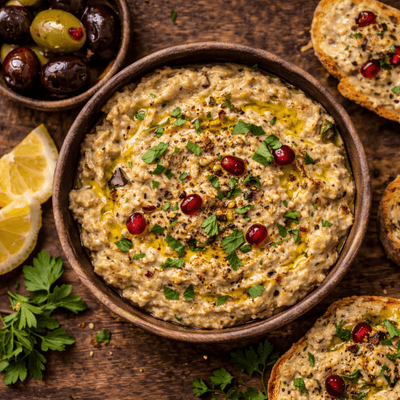
- 2 or 3 Greek dips — tzatziki, melitzanosalata, or tirokafteri
- Mixed Greek olives
- Feta or grilled halloumi
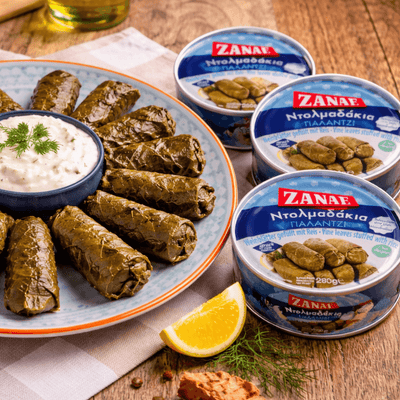
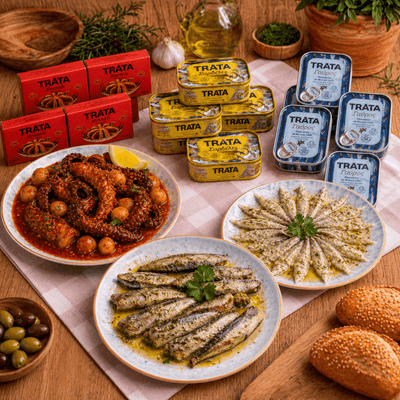
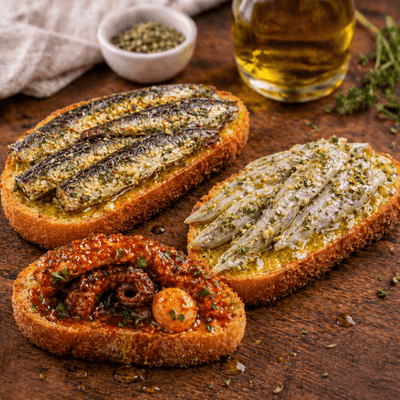
- Dolmadakia (stuffed vine leaves), a seafood meze, or a meat meze
- A fresh Greek salad with tomatoes, cucumber, red onion, feta, and oregano
- One warm main dish, optional — grilled meat, baked fish, or a vegetable dish
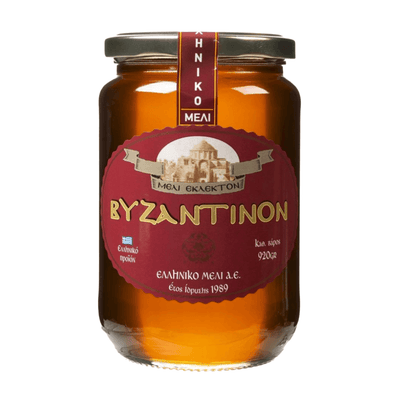
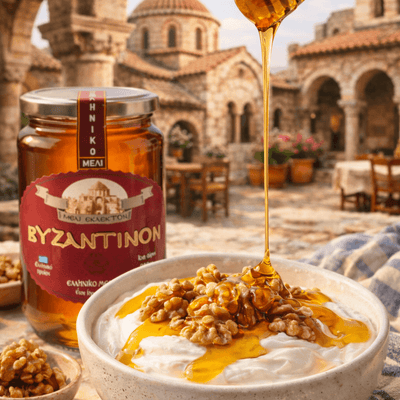
- Greek yogurt with honey or a spoon sweet for dessert
The key principle: serve everything at the table at the same time, or in two relaxed rounds. Greeks do not wait for each plate to be finished before bringing the next. The table should feel full, generous, and alive.
Start with meze: the Greek way to bring people together
Meze is not a course. It is a way of eating. Small dishes, placed at the centre of the table, shared by everyone, eaten slowly, without rigid order. Building a meze table is the most reliable way to host a Greek dinner well, because almost nothing needs to be cooked to order, and the variety creates its own abundance.
These are the four elements every meze table should have.
Greek olives
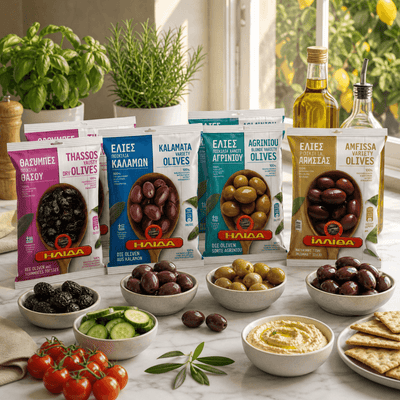
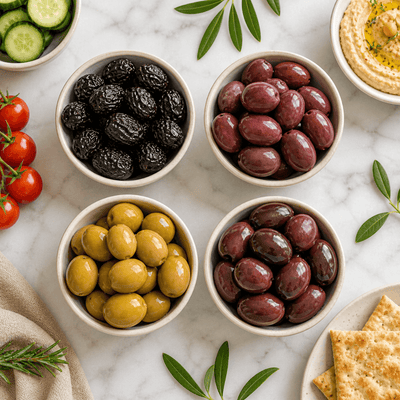
Olives are not a side note on a Greek table. They are the first thing you reach for, the thing that anchors a glass of wine, the element that makes the table feel already complete before anything else arrives. Greek varieties offer a wide range of flavour and texture: Kalamata olives are fleshy and full, with a characteristic sharpness from the brine; Halkidiki olives are large and mild, ideal for stuffing or serving plain; Throumbes are dry-cured, wrinkled, and intensely concentrated in flavour.
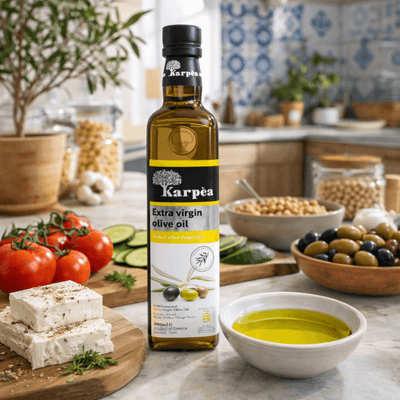
For a dinner table, serve two or three varieties together in small bowls with a drizzle of Greek extra virgin olive oil and a pinch of dried oregano. No further preparation needed.
Explore Greek olives from Greek Flavours — shipped directly from Greece.
Pita bread
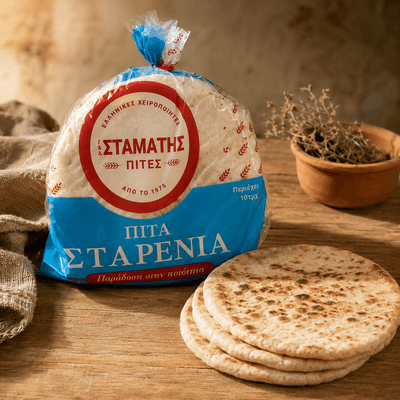
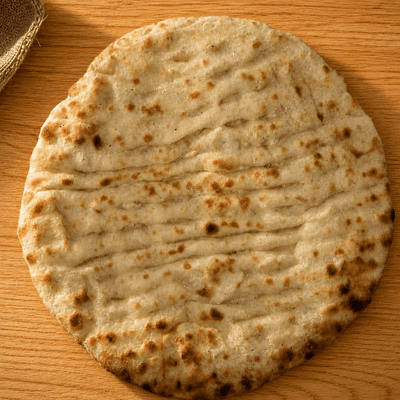
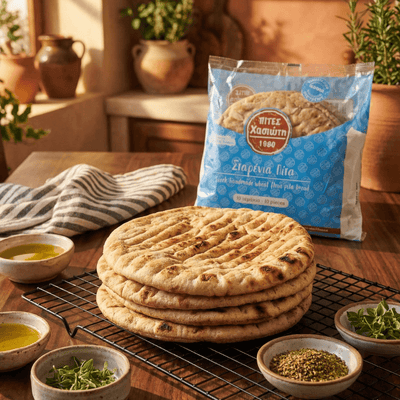
Greek pita is not a wrapper or a side dish. It is the connective tissue of the meze table. It travels between the dips, the cheese, the olives, and the salad. It makes the meal informal, tactile, and generous. A warm pita pulled apart by hand, dragged through tzatziki, loaded with a piece of feta — this is the gesture that makes a Greek dinner feel like a Greek dinner.
Warm the pita directly on a dry pan or grill for 30 to 60 seconds per side, or wrap in foil and heat in the oven for 8 minutes at 180°C. Serve immediately, wrapped in a linen cloth to keep warm. Cut into wedges or leave whole and let your guests tear.
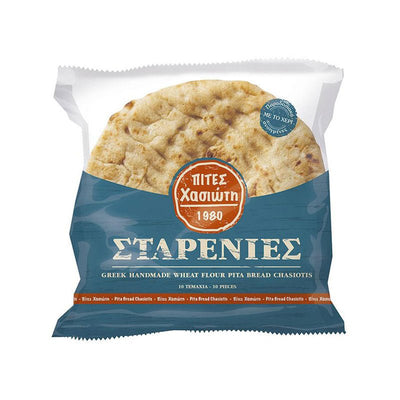
Find authentic Greek pita bread from Greek Flavours, delivered across Europe.
Greek dips and spreads
Dips are where the meze table gets its depth. Each one has a distinct character, and serving two or three together immediately creates variety without any cooking complexity.
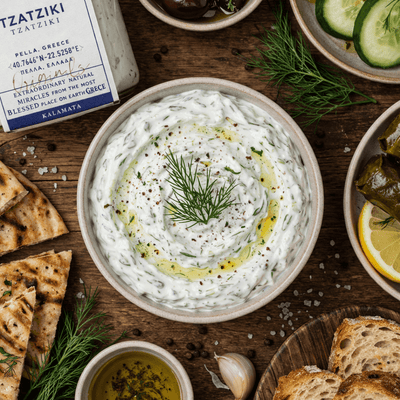
- Tzatziki — yogurt, cucumber, garlic, dill. Cool, light, the classic entry point for anyone new to Greek food.
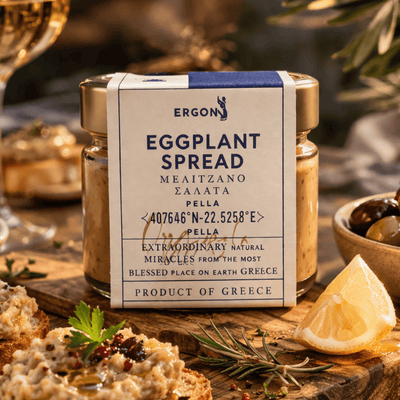
- Melitzanosalata — roasted aubergine, garlic, olive oil. Smoky, earthy, rich without being heavy.
- Tirokafteri — spicy whipped feta with chilli. For those who want heat and intensity.
- Taramosalata — fish roe, lemon, bread. Smooth, savoury, distinctly Greek. A natural companion to olives and pita.
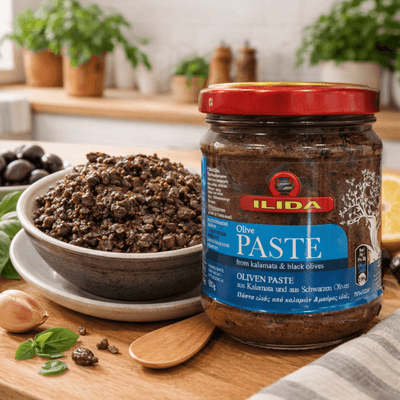
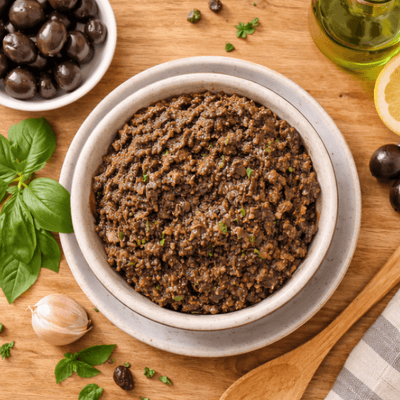
- Olive paste — blended Kalamata olives, a few capers, olive oil. Spread directly on pita or bread, no further work needed.
Ready-to-serve dips and spreads are available in the Greek meze collection and the Authentic Greek Pantry on Greek Flavours.
Cheese and small plates
Feta PDO is the cornerstone. Serve it in a block, drizzled with olive oil, scattered with dried oregano, and a few olives. Do not crumble it before serving — letting guests break into it themselves is part of the ritual.
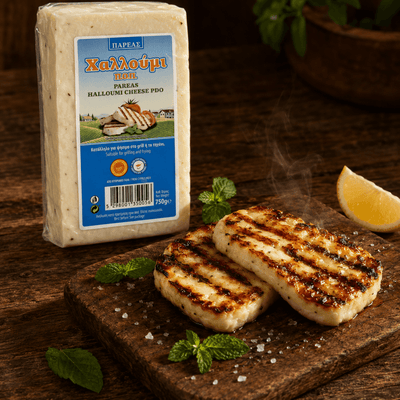
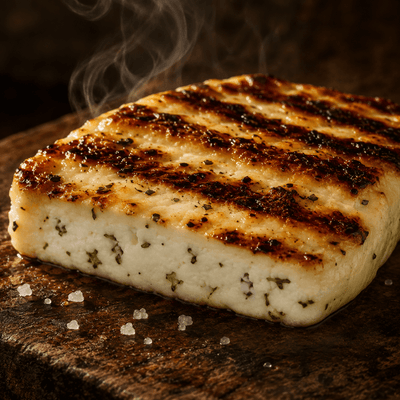
Halloumi is the easiest cheese to prepare warm. Slice it 1cm thick, grill on a very hot dry pan for 90 seconds per side until golden and just softened inside. Serve immediately with a wedge of lemon. The contrast between the charred exterior and the elastic, salty interior is one of the most reliable pleasures of a Greek dinner.
Graviera — a semi-hard aged cheese from Crete or Naxos — can be served sliced or cubed alongside the other meze, with no preparation at all. Its mild sweetness balances the saltier elements on the table.
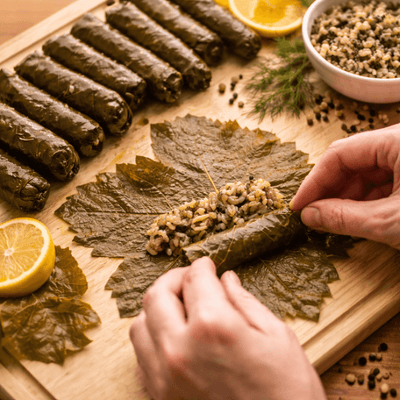
Dolmadakia (vine leaves stuffed with rice, herbs, and lemon) are an ideal ready-to-serve addition. They hold well at room temperature, require no cooking, and add a vegetarian element that works alongside everything else.
Greek dinner menu by effort level
Not every Greek dinner at home needs to be the same. The table scales up or down depending on time, energy, and occasion. Here are three versions, each built on the same meze logic.
| Effort level | Best for | What to serve |
|---|---|---|
| No-cook Greek dinner | Spontaneous evening, aperitivo with friends | Olives, pita, 2 dips, feta with olive oil, dolmadakia, sliced tomatoes, and cucumber |
| Easy Greek meze night | Relaxed dinner for 4 to 6 | Warm pita, 3 dips, grilled halloumi, olives, seafood meze, Greek salad |
| Full Greek dinner | More structured occasion, larger group | Meze starter round, Greek salad, one warm main dish (grilled meat or fish), yogurt with honey and walnuts for dessert |
The no-cook version is not a compromise. In Greece, a table of olives, pita, feta, and a few meze is considered a complete and satisfying meal. The quality of the products matters far more than the number of dishes.
Shopping list for a Greek dinner at home
The practical question underneath every Greek dinner plan is always the same: what do I actually need to buy? This list is divided into three groups to make shopping straightforward.
Essential Greek pantry products
- Greek extra virgin olive oil — for dressing, serving, and cooking
- Greek olives — at least one variety, ideally two
- Pita bread — allow 1 to 2 pita per person as a starting estimate
- Feta PDO — one block, approximately 200g per 4 people
- Halloumi — for grilling; firm, salty, ideal for a warm element on the table
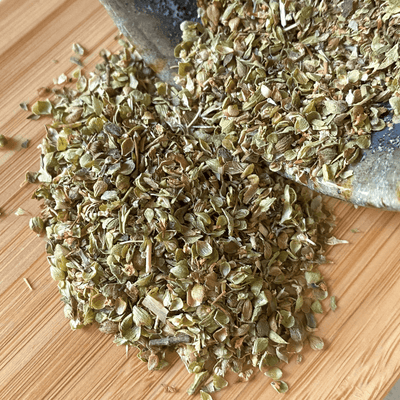
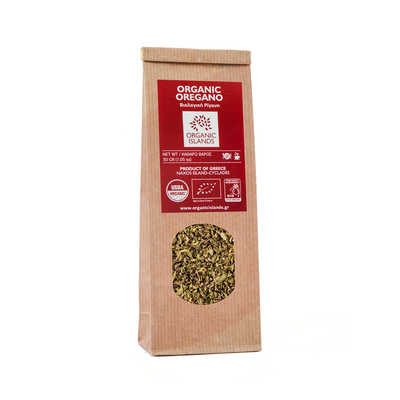
- Dried Greek oregano — for the salad, the cheese, the olives
- Honey or a Greek spoon sweet — for dessert, with yogurt
Fresh products to buy locally
- Tomatoes — ripe, firm, ideally vine-grown
- Cucumber
- Red onion
- Lemon — for the grilled cheese and the salad dressing
- Fresh parsley or dill, if serving fish meze or taramosalata
Ready-to-serve meze
- 2 or 3 dips — tzatziki, melitzanosalata, tirokafteri, taramosalata, or olive paste
- Dolmadakia
- Seafood meze, if relevant — octopus, anchovies, or marinated fish
- Olive spread or tapenade
You can build the pantry and meze parts of this shopping list directly from the Authentic Greek Pantry, the meze collection, the olive collection, and the pita collection on Greek Flavours — all shipped from Greece across Europe.
How much food do you need for 4, 6, or 8 people?
Quantities for a Greek meze dinner are always approximate — the table should feel generous rather than precisely portioned. These figures are a useful starting point, not a strict calculation. Greeks tend to err on the side of more, not less.
| Guests | Pita | Olives | Dips | Cheese | Meze plates |
|---|---|---|---|---|---|
| 4 people | 4–6 pita | 250–350g | 2 dips | 300–400g | 2–3 plates |
| 6 people | 6–8 pita | 400–500g | 3 dips | 500–600g | 3–4 plates |
| 8 people | 8–10 pita | 600–700g | 3–4 dips | 700–800g | 4–5 plates |
If you are also serving a warm main dish, reduce the meze quantities slightly. If the meze table is the entire meal, lean toward the higher end of each range. Olives and dips keep well, so there is no real downside to buying more than you think you need.
A simple timeline for hosting a Greek dinner
One of the practical advantages of a Greek meze dinner is that almost nothing needs to be done at the last minute. Most of the preparation happens before guests arrive, and the final steps take fifteen minutes at most.
The day before
- Order or confirm all Greek pantry products are in stock
- Prepare any home-made dips if you are making them from scratch
- Chill white wine, rosé, or anything you plan to serve cold
- Check that pita, meze, and olives are ready to serve
- Prepare dessert if needed — Greek yogurt keeps refrigerated, spoon sweets need no preparation
2 hours before guests arrive
- Remove feta from the fridge and place it in a serving dish with olive oil and oregano
- Open jars of dips and transfer to small bowls
- Arrange olives in a bowl
- Slice tomatoes and cucumber for the Greek salad — do not dress until serving
- Set out all the serving dishes, bowls, and plates you will need
15 minutes before guests arrive
- Warm the pita on a dry pan or in the oven
- Dress the Greek salad with olive oil, a pinch of salt, and dried oregano
- If serving grilled halloumi, heat the pan now — it takes 3 minutes total and should be served immediately
- Add a drizzle of olive oil to the dips
- Bring everything to the table at once
The Greek dinner table does not need a host who disappears into the kitchen. The ideal is to be seated with your guests from the moment they arrive. That is the whole point.
Where to buy authentic Greek products online
Building a Greek dinner table at home starts with one practical decision: where to buy products that are genuinely Greek, not approximations.
When shopping for Greek food online, three things matter. First, origin: look for products that clearly state they come from Greece, with a producer or region identified. Second, ingredients: the list should be short and recognisable, with no unnecessary additives or fillers. Third, certification: products like Feta PDO carry a Protected Designation of Origin status, which guarantees the production method and geographic origin are legally defined and verified.
Greek Flavours ships authentic Greek food products directly from Greece to customers across Europe. The range includes olives, meze, pita, pantry staples, and Greek cheeses sourced from producers across Greece.
- Authentic Greek Pantry — olive oil, honey, herbs, condiments, and pantry essentials
- Greek Olives — Kalamata, Halkidiki, Throumbes, and flavoured varieties
- Greek Meze — dips, dolmadakia, seafood meze, olive spreads, and ready-to-serve small plates
- Greek Pita Bread — authentic Greek-style pita, shipped from Greece
Frequently asked questions about hosting a Greek dinner at home
What do you serve at a Greek dinner party?
A Greek dinner party is built around meze: small shared plates placed at the centre of the table. The core elements are warm pita, Greek olives, two or three dips (such as tzatziki, melitzanosalata, or tirokafteri), feta or grilled halloumi, dolmadakia, and a Greek salad. A warm main dish is optional. Dessert is typically Greek yogurt with honey, or a spoon sweet served with coffee.
What are the best Greek meze for friends?
The most reliable meze for a dinner with friends are tzatziki, Kalamata olives, feta with olive oil and oregano, dolmadakia, and grilled halloumi. These cover a range of flavours and textures, require minimal preparation, and are consistently enjoyed by people who are unfamiliar with Greek food as well as those who know it well.
Can I host a Greek dinner without cooking?
Yes. A no-cook Greek dinner is a completely legitimate and satisfying option. Olives, ready-to-serve dips, a feta block dressed with olive oil, dolmadakia, and warm pita make a full and generous table. The only preparation involved is warming the pita and slicing fresh vegetables. Greek food is designed for ease and informality — not every dinner needs a hot oven.
How much pita do I need per person?
As a starting guide, allow 1 to 2 Greek pita per person. If pita is the primary bread on the table and you are serving several dips, lean toward 2 per person. If you are also serving other bread or the meal includes a substantial main dish, 1 pita per person is usually sufficient. Pita can be warmed in batches, so it is easy to add more during the meal if needed.
What olives should I serve with Greek meze?
Kalamata olives are the most widely recognised Greek variety and a natural starting point. For more variety, add Halkidiki olives — larger, milder, and a good contrast in texture. Throumbes are a third option: dry-cured and intensely savoury, they suit guests who prefer stronger flavours. Serving two varieties in separate bowls, both dressed with a little olive oil, is all the preparation required.
What is an easy Greek menu for 6 people?
For 6 people, a practical and complete Greek menu includes: 6 to 8 warm pita, 400 to 500g of mixed olives, 3 dips, 500 to 600g of feta or halloumi, dolmadakia or a seafood meze plate, and a Greek salad. This covers the full meze table without requiring any complex preparation. Add a warm main dish if the occasion calls for something more substantial.
Where can I buy Greek meze online?
Greek Flavours offers a range of authentic Greek meze shipped directly from Greece across Europe, including dips, dolmadakia, seafood meze, and olive spreads. You can explore the full Greek meze collection here.
What dessert should I serve after a Greek dinner?
The simplest and most authentic option is Greek yogurt with a drizzle of honey and a few walnuts. A spoon sweet (glyko tou koutaliou) served alongside Greek coffee is also traditional — a small, intensely flavoured fruit preserve that ends the meal without heaviness. If you want something more substantial, baklava or galaktoboureko works well for larger groups.