Skip to content

You do not need to cook to set a Greek summer table. In Greece, the summer table is assembled rather than cooked: bowls of olives, a dish of something to dip into, good bread, cheese, a generous pour of olive oil, and time. If you have ever eaten on an island in July, with the heat finally lifting and the table filling up plate by plate, you already know the format. This guide shows you how to recreate that table at home, with almost nothing that needs a stove.
What follows is the full no-cook playbook. What goes on the table, how much to buy for two or for eight, how to build it in layers, and a twenty-minute plan to bring it all together. Everything here keeps well and travels, so you can build a Greek summer evening from the pantry and the fridge on any night you choose.
What a Greek summer table actually is
The Greek summer table is not a sequence of courses. It is a spread of small dishes, the mezedes, that arrive together and stay on the table for the length of the evening. Nobody is plating mains in a hot kitchen. The work, where there was any, happened earlier or belongs to the producer. The olives were cured months ago. The cheese was aged in a cellar. The dip was made in the cool of the afternoon. By dinner, the cooking is already behind you, and the table simply fills up.
This is exactly why the format suits summer, and why it travels so easily to a balcony in Milan or a garden outside Lyon. The heat that makes cooking unbearable is the same heat for which the mezedes table was built. You assemble, you sit down, you let the evening stretch out. The skill is not cooking. It is choosing well and laying it out generously.
The no-cook Greek summer table, built in layers
A good mezedes table is built in four layers: the bread, the olives and the oil, the dips and cured things, and the cheese. Get those four right, and the table is already complete. Everything else is a bonus.
The base: the bread
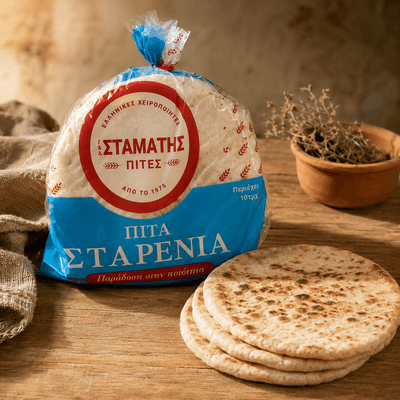
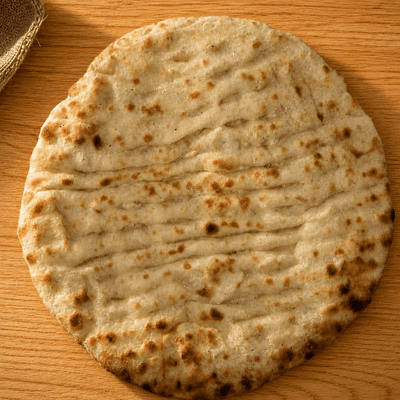
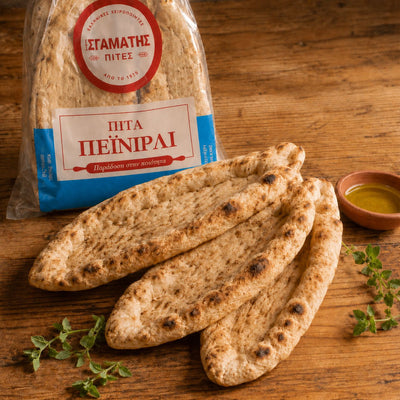
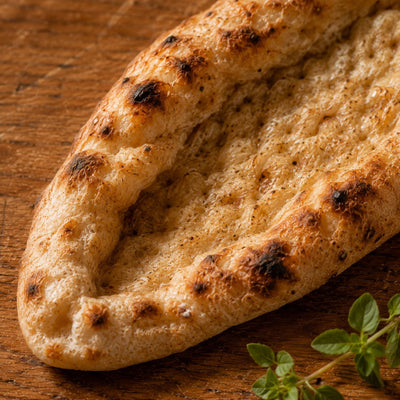
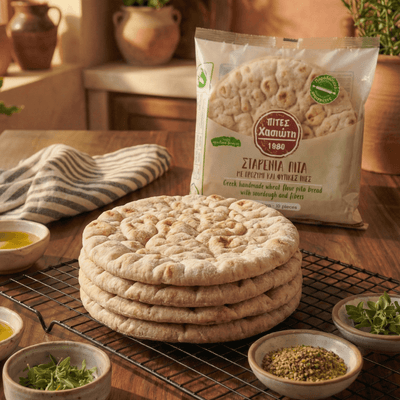
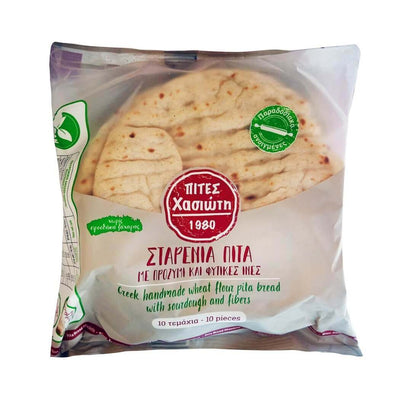
Greek pita is the foundation of the table, the thing every dip and every slice of cheese ends up on. This is not the dry pocket bread sold in most supermarkets. Proper Greek pita is soft, slightly chewy, and meant to be warmed for thirty seconds before it reaches the table. The pita from bakers like Stamatis and Chasiotis is the closest thing to what you would be handed at a taverna, and it is the one warm element worth the small effort of a hot pan.
Warm it briefly, cut it into wedges, pile it in a basket, and let it do the heavy lifting all evening. You can browse authentic Greek pita here.
The olives and the oil
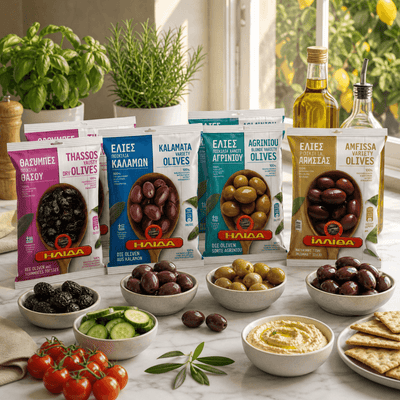
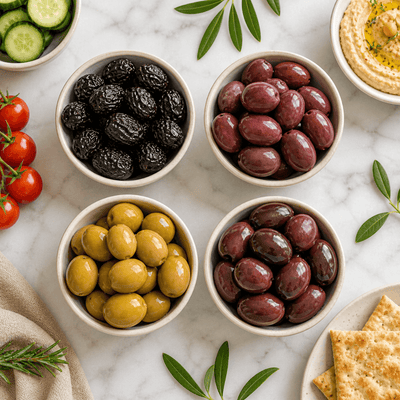
Olives are the heartbeat of the table, and on a Greek table, they are never an afterthought. A bowl of glossy Kalamata olives, dark and almond-shaped, sits next to the bread before anything else arrives. If you want a second bowl, the large green Halkidiki olive gives you a milder, meatier contrast. Buy them with the stone in when you can. The texture is firmer, and the flavour holds.
The olive oil is not a condiment hiding in the kitchen. It comes to the table in a small jug and gets poured over the dips, the cheese, and the bread without restraint. A good Greek extra virgin oil, grassy and a little peppery at the back of the throat, is the single ingredient that ties the whole table together. Start with the Greek olives and pair them with a bottle of Greek olives and extra virgin olive oil.
The mezedes that need no stove
This is the layer that makes the table feel abundant, and almost none of it requires cooking. A thick fava purée, the silky yellow split pea spread from Santorini, is a no-cook hero: you spoon it from the tub, smooth it onto a plate, top it with raw onion and a thread of oil. The ready fava from the Paltsidis line is exactly this dish, made and chilled so it lands on your table the way it would on a Cycladic one.
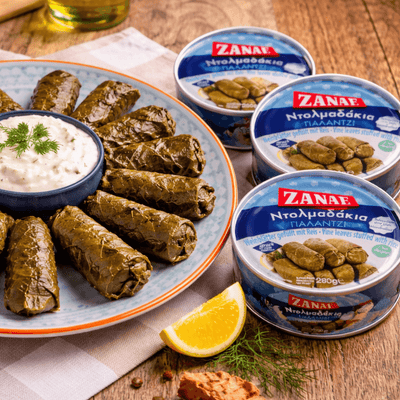
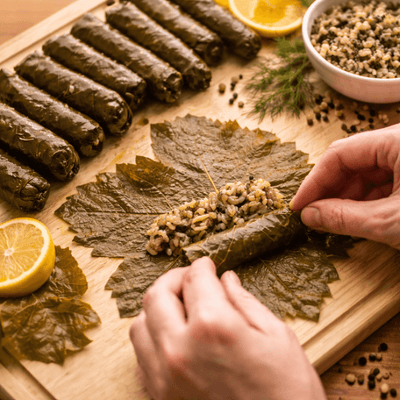
Around the fava, you build outward. Stuffed vine leaves, the dolmades, come ready and ask nothing of you but a squeeze of lemon. Sweet peppers stuffed with cheese, roasted red peppers in oil, marinated mushrooms, sun-dried tomatoes: all of these arrive in a jar and go straight to a small dish. This is the part of the table that rewards variety, three or four little plates rather than one large one. You can assemble it from the Greek meze and preserves, and the curated Greek meze and aperitivo selection.
The cheese
One block of real feta, white and firm, broken into rough pieces rather than cubed, drizzled with oil and dusted with dried oregano, is enough on its own. It is the cheese everyone reaches for. If you want a second, a wedge of a harder, aged cheese gives the table a sharper, saltier note to chew on slowly. For an evening with a little more occasion, a slab of halloumi seared in a dry pan for two minutes a side is the one cooked extra worth making, golden outside and squeaky within.
Something cool and raw
The Greek table always has something fresh and unfussed alongside the jars and the bread. Thick slices of ripe tomato with salt and oil. Cucumber. A handful of capers. These come from your local market rather than from Greece, but they belong on the table, and they are the reason the spread feels like summer and not like a cheese board. Five minutes of slicing is all they ask.
Three tables, three levels of effort
The same building blocks scale from a quick weeknight plate to a full evening with friends. Pick the row that matches the night you are having.
| The table | Roughly | What is on it |
|---|---|---|
| The ten-minute table | 10 min, no heat | Olives, feta with oil and oregano, one dip, pita, a drizzle of EVOO |
| The relaxed spread | 20 min, warm the pita | The above, plus dolmades, stuffed peppers, a second dip, sliced tomato, and a hard cheese |
| The full mezedes evening | 30 min, one pan | The above plus seared halloumi, extra breads, more small jars, honey, and fruit to finish |
How much to buy
The most common mistake is buying too little of the bread and the olives and too much of everything else. As a rule, the bread, the olives, and the oil run out first. These quantities give a comfortable spread with a little left over, not a banquet.
| Item | Per person | Table of 4 | Table of 8 |
|---|---|---|---|
| Pita | 1 to 2 | 6 | 12 |
| Olives | 50 g | 200 g | 400 g |
| Dips and spreads | 2 to 3 tbsp | 2 tubs | 3 to 4 tubs |
| Feta and cheese | 70 to 80 g | 300 g | 600 g |
| Jarred meze (dolmades, peppers) | 3 to 4 pieces | 1 to 2 jars | 2 to 3 jars |
| Extra virgin olive oil | to pour freely | 1 bottle on the table | 1 bottle on the table |
Putting it together: a twenty-minute plan
The table comes together in one short stretch of work, most of which is simply taking things out and arranging them. The only rule worth remembering is the first one: cold cheese and cold olives taste of very little, so let them warm up before you serve.
- Thirty minutes before, take the feta, the olives, and the dips out of the fridge so they come to room temperature.
- Open the jars: dolmades, peppers, and any marinated meze, and spoon each into its own small dish.
- Spread the fava or your main dip across a plate, hollow the centre, and pour oil into the dip.
- Break the feta into rough pieces, lay it on a plate, drizzle with oil, and scatter dried oregano.
- Slice the tomatoes and cucumber, salt them, and add oil.
- Warm the pita for thirty seconds in a hot, dry pan, cut into wedges, and pile in a basket.
- If you are searing halloumi, do it last, two minutes a side, and bring it to the table hot.
- Put the bottle of olive oil and a dish of lemon wedges within everyone's reach, and sit down.
Where to buy a Greek summer table
Almost everything on this table stays in the pantry or the fridge, which is what makes it the easiest kind of summer entertaining to plan ahead. The bread, the olives, the oil, the cheese, and the jarred mezedes are all shipped from Greece and delivered across Europe, so a single order can stock several evenings rather than one.
Start with the staples that run out first, the Greek pita and the Greek olives, then build out the table from the Greek meze and aperitivo selection. For everything else that stocks the shelf, the cheeses, the spreads, the oil, the authentic Greek pantry holds it in one place.
Frequently asked questions about the Greek summer table
Can you make a Greek dinner without cooking?
Yes, and a great deal of Greek summer eating is built exactly this way. A mezedes table is a spread of small dishes that mostly come ready: cured olives, feta, jarred dips and stuffed vegetables, good bread, and olive oil. The only element worth heating is the pita, warmed briefly, and an optional pan of halloumi. Everything else is assembled, not cooked.
What is a Greek meze table?
A meze table, or mezedes, is a collection of small savoury dishes served all at once and shared, rather than a sequence of separate courses. It is the everyday format for a relaxed Greek meal, especially in summer. The dishes stay on the table for the whole evening, and people graze slowly while they talk.
What no-cook Greek foods keep well in the pantry?
Olives, extra virgin olive oil, jarred dolmades, roasted peppers in oil, marinated vegetables, sun-dried tomatoes, honey, and many spreads all keep unopened for months. Feta and ready dips keep in the fridge. This is why a Greek summer table is so easy to plan: a single delivery can stock the shelf for several evenings.
How many dishes do I need for four people?
For a comfortable table of four, aim for the bread, two kinds of olives, two or three dips or spreads, a block of feta, and two or three jarred mezedes such as dolmades and stuffed peppers. That is roughly six to eight small dishes, which feels generous without becoming a banquet. Add a plate of sliced tomato to round it out.
Do I need to warm the pita?
It is worth it. Proper Greek pita is soft and chewy and comes alive in thirty seconds in a hot, dry pan or a few minutes in a warm oven. Served cold, it is fine; served warm, it is the difference between supermarket bread and a taverna basket. If you keep your pita in the freezer, there is no need to thaw it first: warm it straight from frozen, giving it an extra minute in the pan or the oven. It is the one small piece of heat that the table really benefits from.
Which olives are best for a Greek table?
The Kalamata olive, dark and almond-shaped, is the classic choice and the one most people picture. For contrast, the large green Halkidiki olive is milder and meatier. Having both on the table, in two separate bowls, gives you the range that a single variety cannot. Buy them with the stone in for firmer texture and fuller flavour.
What can I prepare in advance?
Almost all of it. The shopping can be done days ahead because the ingredients keep. On the day, the only live tasks are opening jars, breaking the feta, slicing the tomatoes, and warming the bread, which together take about twenty minutes. Take the cheese and olives out of the fridge half an hour before serving so they reach room temperature.
Does Greek Flavours deliver across Europe?
Yes. The pita, olives, oil, cheeses, and jarred mezedes are shipped from Greece and delivered across Europe, so you can build a complete summer table from a single order. Pantry items keep well, which makes it simple to stock up for more than one evening at a time.