Skip to content

Greek pita bread is not a side dish. It is not an afterthought placed in a basket at the edge of the table. In Greece, pita is the reason the table works — the thing everything else is built around. Warm pita with olives, dips, cheese, and whatever else is on the table is not a starter: it is a complete way of eating. This guide explains how Greeks actually serve pita, which pairings work best, and how to recreate that same logic at home.
Whether you are planning a meze table, a simple outdoor lunch, or an informal dinner with friends, understanding how pita functions in Greek food culture changes how you use it.
What Greek pita bread actually is
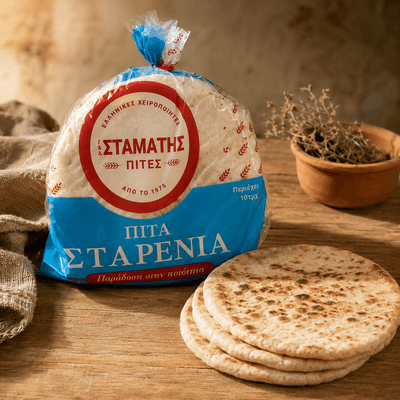
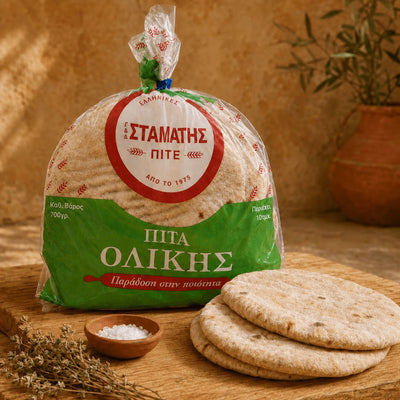
The pita that most of Europe knows from supermarkets is a pale imitation of the original. Greek pita — real pita, the kind used in souvlatzidika across Athens and in home kitchens throughout Greece — is softer, thicker, and made by hand with a short list of real ingredients: flour, water, yeast, olive oil, salt. No stabilisers, no long shelf-life improvers, no industrial shortcuts.
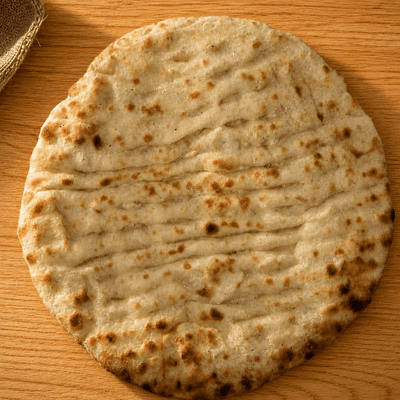
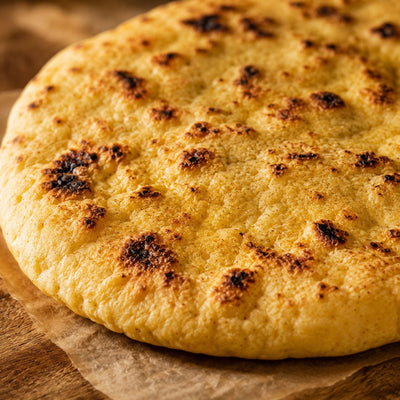
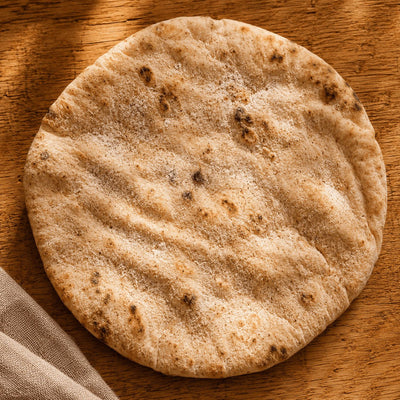
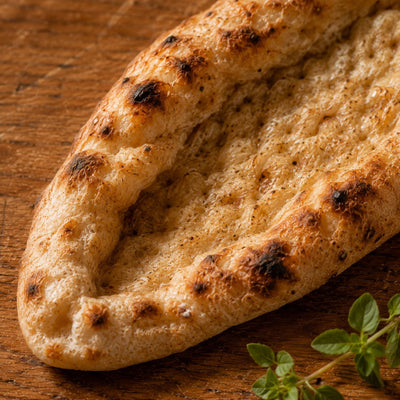
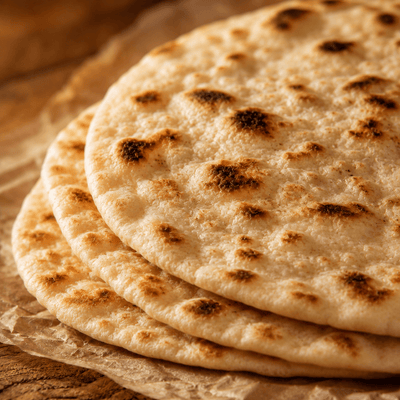
Handmade pita has a texture and pliability that machine-produced versions cannot replicate. Each piece is shaped individually, which means the thickness is slightly uneven, the surface chars a little differently on the pan, and the interior has an open, irregular crumb rather than the uniform density of factory bread. That variability is not a defect — it is what makes it work as a table bread. The uneven surface catches dips differently, and the crumb absorbs olive oil in a way that a pressed industrial pita never does.
The flavour is mild and deliberately so. Greek pita is a vehicle and a companion — its job is to carry, scoop, and absorb, not to dominate. The slight chew from the yeast and the faint richness from the olive oil are enough.
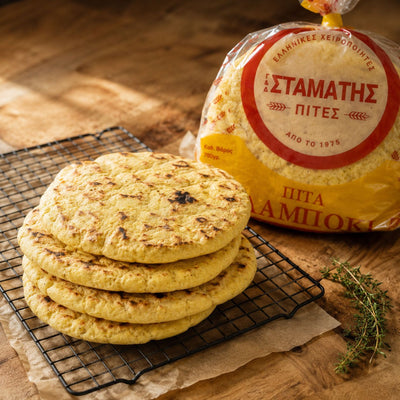
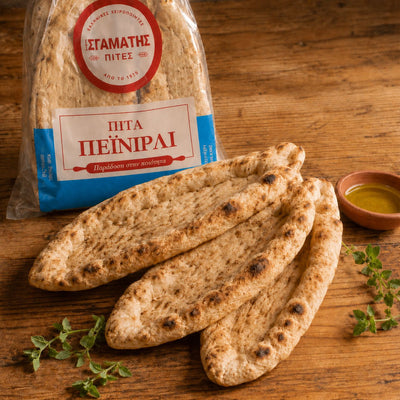
There are two main formats: the round, flat pita used for wrapping souvlaki and gyros, and the slightly thicker version served open on the table as part of a meze spread. Both follow the same logic — they are best served warm, and they are always better shared.
How to heat Greek pita bread
Heating pita correctly is the single most important step. Cold or reheated pita from a microwave is a completely different product. Here are the three methods that work, in order of preference.
| Method | How | Result | Best for |
|---|---|---|---|
| Cast iron or dry pan | 1–2 minutes per side on high heat, no oil | Light char marks, soft interior, slight crispness on the edges | Meze table, wraps, souvlaki |
| Direct flame (gas hob) | 30–40 seconds per side directly on the flame, turning with tongs | Blistered surface, smoky edge, very soft inside | Closest to the charcoal-grill effect from a Greek kitchen or outdoor barbecue |
| Oven | Wrap in foil, 180°C for 8–10 minutes | Uniformly soft and warm, no char | Heating multiple pitas at once for a larger group |
Avoid the microwave unless there is no alternative. It softens pita correctly for about thirty seconds, then turns it rubbery. If you must use it, wrap the pita in a damp paper towel and keep the timing short.
A tip from an Athenian pita maker: how to freeze and reheat correctly
Greek Flavours pita arrives fresh, not frozen — which is the right way to experience it when you can. But there is a technique passed directly from a pita producer in Athens that is worth knowing, because it changes what you can do with a full delivery.
When the pita arrives, you can put the entire pack straight into the freezer without opening it. Frozen this way from fresh, the pita keeps well for up to twelve months. When you want to use it, do not defrost it first. Take the pita directly from the freezer and place it straight onto a hot, dry pan or directly over a gas flame, frozen solid. The result is pita with a lightly crisp exterior and a soft, yielding interior — arguably a better result than defrosting and reheating, which produces a stiff, dry bread closer in texture to a cracker than a pita.
The reason this works is simple: the heat hits the frozen surface fast and creates a brief contrast — a slight crust forms on the outside while the interior steams and softens from within. Defrosting first eliminates that contrast and leaves you with a limp, then an overheated piece of bread. Frozen straight to the pan is the correct sequence. This is not a workaround. It is how Athenian producers suggest storing and using fresh pita if you are not consuming it within a few days of delivery.
The classic Greek pairings: what goes with pita bread
In Greek food culture, pita is never eaten with just one thing. The table is always a combination — several small dishes that work together, with the pita moving between them. Here are the pairings that define how pita is actually served in Greece.
Dips and spreads
Tzatziki is the obvious starting point: cold, thick, garlicky, with the cucumber providing texture and the olive oil doing most of the flavour work. Alongside it, melitzanosalata — a smoky roasted aubergine dip — works as a counterweight, richer and more complex than tzatziki. Taramosalata, the cured roe spread, is saltier and denser, and a small amount goes a long way. Together, three dips on the table with warm pita and a carafe of something cold is a complete way to start an evening.
These are not exotic combinations. They are what Greeks eat on a Tuesday night when no one wants to cook properly.
Olives and preserved vegetables
A bowl of Kalamata olives or Halkidiki olives next to warm pita is one of the simplest and most satisfying combinations in Greek food. The olives provide salt, fat, and intensity; the pita absorbs and balances. Pickled peppers, sun-dried tomatoes, and marinated artichokes follow the same logic — they are acidic, textured, and sharply flavoured, and they need something mild to anchor them.
Explore the Greek meze and aperitivo collection for the spreads, dips, and accompaniments that work best alongside pita.
Feta and Greek cheeses
A block of feta, broken into rough pieces and dressed with a little olive oil and dried oregano, is arguably the most natural companion pita has. The creaminess of feta and the chew of pita are made for each other. Graviera, the harder aged cheese, works well too — sliced thin and eaten with a piece of pita and an olive, it is a complete mouthful. In many Greek homes, this combination — pita, feta, olive, a glass of wine — is dinner.
Grilled meat and souvlaki
The wrap format: pita grilled directly on the flame, laid flat, then loaded with pork or chicken souvlaki, tzatziki, tomato, and onion. The pita is folded around everything and held together as tightly as possible while it immediately starts to fall apart, because it always does, and that is part of it. This is street food logic applied at home, and it works just as well on a kitchen table as it does standing outside a souvlatzidiko in Monastiraki at midnight.
Pita as part of a meze table
The most versatile version of pita is the open format — not wrapped around anything, but placed at the centre of a table full of small dishes, ready to be torn and used as needed. This is the meze logic: no main course, no single focus, just a sequence of small things that keep arriving and a piece of warm pita to move between them.
A simple meze table with pita might look like this:
| Dish | Role on the table |
|---|---|
| Tzatziki | Cool, acidic base — the table needs this first |
| Kalamata olives | Salt and fat — small and intense, eaten between bites |
| Feta with olive oil and oregano | Protein and richness — the most substantial piece on the table |
| Melitzanosalata or taramosalata | Depth and complexity — a second spreading option |
| Warm pita (2–3 pieces per person) | The constant — keeps moving between every dish on the table |
This is not a starter. It is a complete meal, and it is probably the easiest way to recreate a genuine Greek table at home without cooking anything complicated. You can find the full approach — menu, quantities, and what to buy — in the guide on how to host a Greek dinner at home.
Where to find authentic Greek pita bread
The difference between a real Greek pita and a supermarket version is significant enough to matter. Authentic pita is handmade with a minimal ingredient list, has the right texture and pliability when warm, and does not collapse or turn cardboard-dry after a few minutes. If you have eaten pita in Greece — at a souvlatzidiko, at a beach taverna, at a family lunch — you already know the difference.
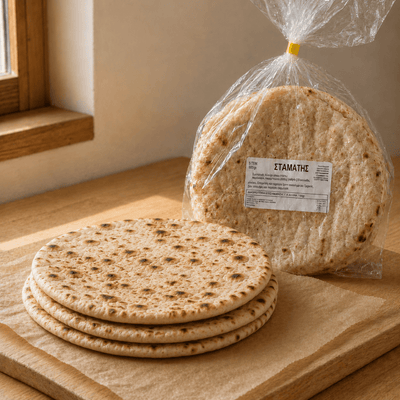
The Greek pita bread collection includes fresh handmade pita shipped directly from Greece, including Stamatis pita — the brand used by street food shops and souvlatzidika across Athens. This is the pita that Greeks actually buy, not a version made for export markets.
Frequently asked questions about Greek pita bread
What is the difference between Greek pita and Lebanese pita?
Greek pita is softer, thicker, and more pliable than Lebanese pita, which is thinner and designed to puff up into a pocket. Greek pita is meant to be wrapped around fillings or torn and used for dipping — it does not have a pocket and is not designed to be split open. The ingredient lists are similar, but the texture and the way they are cooked and served are quite different.
How many pitas do I need per person?
For a meze table with several dishes, two to three pitas per person is a reasonable starting point. For a wrap meal — souvlaki, grilled meat — one to two pitas per person is usually enough, depending on what else is on the table. Pita disappears faster than expected when the table is full of good dips and cheese, so it is better to have more than you think you need.
Can Greek pita be frozen?
Yes, and the correct method makes a significant difference. Put the pack straight into the freezer when it arrives — without opening it — and it keeps well for up to twelve months. When ready to use, do not defrost first: place the frozen pita directly onto a hot, dry pan or over a gas flame. This produces a lightly crisp exterior with a soft interior. Defrosting before reheating gives the opposite result — a stiff, dry bread with none of the original texture. This is the method used and recommended by the producers themselves.
Is Greek pita bread healthy?
Handmade Greek pita made with traditional ingredients — flour, water, yeast, olive oil, salt — is a straightforward Mediterranean staple with no additives or industrial improvers. It is not a low-calorie food, but in the context of a meze table with olive oil, olives, vegetables, and feta, it forms part of a genuinely balanced Mediterranean meal. The key difference from much industrial flatbread is ingredient simplicity, handmade production, and the absence of preservatives.
What do you dip Greek pita into?
The most common pairings in Greece are tzatziki, melitzanosalata (roasted aubergine dip), taramosalata (cured roe spread), and good olive oil with dried herbs. Outside of dips, pita is torn and eaten alongside olives, feta, grilled vegetables, and any preserved or marinated item on the table. There is no wrong answer — the logic is always the same: pita and whatever is in front of you.