Skip to content

The best Greek meze for sharing are the ones that require almost no preparation and invite people to stay at the table. Kalamata olives, tzatziki, taramosalata, dolmadakia, feta with olive oil, tirokafteri, halloumi, and a warm plate of pita: these are the dishes that appear on Greek tables before any main course arrives, and often before anyone has even decided there will be a main course. If you have eaten in Greece, you already know the format. This guide helps you recreate it at home.
Greek meze is not a starter in the traditional European sense. It is a way of eating that builds a table out of small things, each one complete in itself. You do not need a recipe. You need the right products, a good arrangement, and the patience to let people graze.
What makes a good Greek meze table
The Greek meze table works through contrast and abundance. There should always be something briny, something creamy, something warm, something with texture. Olives provide the salt and the oil. Dips provide the softness. Cheese provides the density. Bread, in the form of pita or paximadia, ties everything together and gives people something to do with their hands.
The number of dishes matters less than the variety. Three or four well-chosen meze make a better table than eight mediocre ones. The goal is that no two items feel the same in the mouth.
The meze you need: a practical selection
Olives — the one non-negotiable
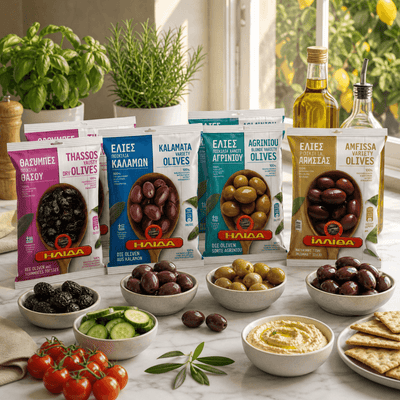
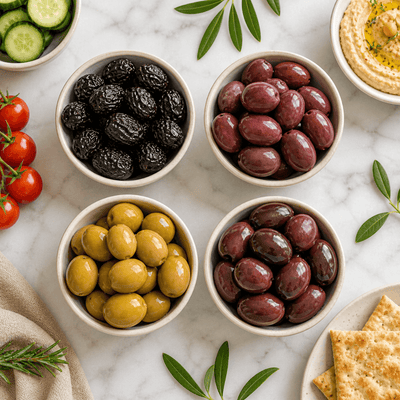
No Greek meze table exists without olives. Kalamata olives are the standard: firm, fruity, with a clean acidity that cuts through the richness of cheese and dips. Halkidiki olives, green and meaty, offer a milder, more buttery alternative. If you want the table to feel genuinely Greek rather than generically Mediterranean, put two varieties on it. They do not compete. They complement.
Olive tapenade or marinated olive preparations work particularly well when you want to extend the olive category without adding another bowl. A Kalamata tapenade on a piece of toasted bread is one of the simplest things you can serve and one of the most satisfying.
Explore the Greek olive collection to find the varieties that suit your table.
Tzatziki — the anchor dip
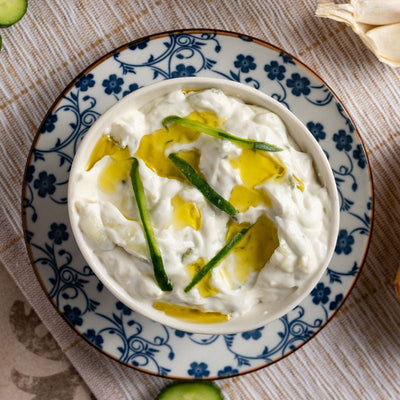
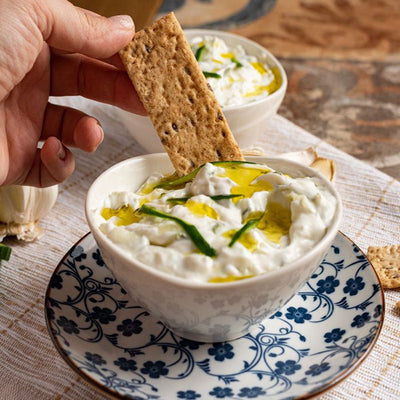
Tzatziki is cold, smooth, and slightly sour from the yogurt. It is the dip that everyone at the table will return to throughout the meal. Made properly, with strained Greek yogurt, cucumber, garlic, dill, and good olive oil, it has a density and a freshness that industrial versions rarely achieve. If you are buying it ready-made, look for products that list yogurt first in the ingredients and avoid those with stabilisers or thickeners.
Taramosalata — the one that surprises people
Taramosalata divides people the first time they try it. It is made from fish roe, bread, lemon juice, and olive oil, and it has a pale pink colour and a flavour that is simultaneously rich and briny. In Greece, it is a staple of the meze table during Orthodox fasting periods, but it appears year-round and pairs particularly well with warm pita. Start with a small portion for guests who have not tried it before. It tends to convert people quickly.
Tirokafteri — the dip for those who want heat
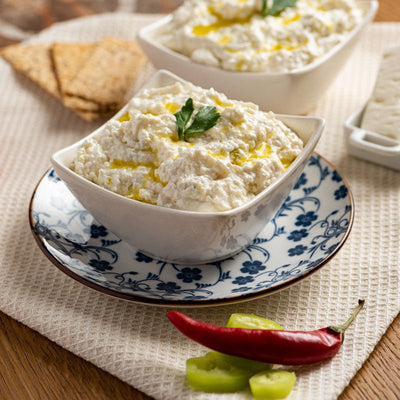
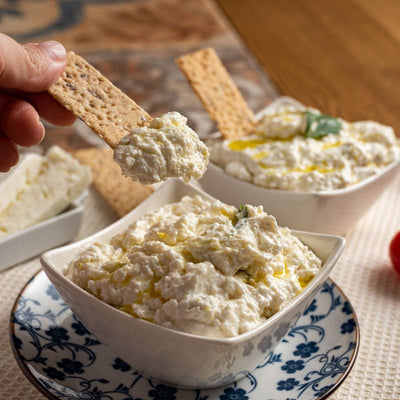
Tirokafteri is a whipped cheese dip made with feta, roasted red pepper, and chilli. It has a heat that builds slowly rather than arriving immediately, and the feta gives it a creaminess that makes it spreadable without being heavy. On a meze table that already has tzatziki, tirokafteri provides the counterpoint. It is not subtle, and it is not meant to be.
Dolmadakia — the meze that takes its time
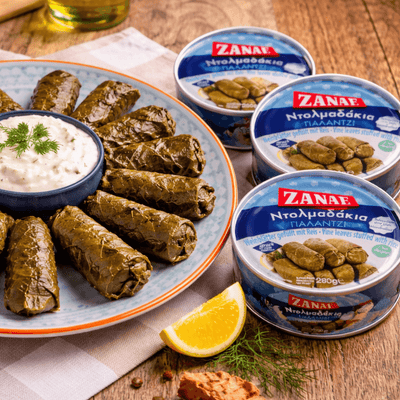
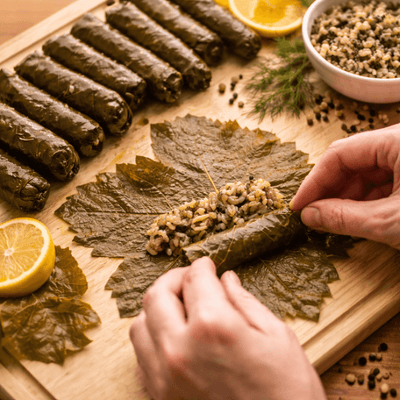
Dolmadakia are small vine leaves stuffed with rice, herbs, and sometimes a little lemon. They are eaten cold or at room temperature and have a texture that is both tender and slightly resistant from the vine leaf wrapper. They take a moment longer to eat than an olive or a piece of cheese, which is exactly the point: they slow the table down. In Greece, they appear on almost every taverna meze order, and their presence signals that the meal intends to last.
Good dolmadakia are made with vine leaves that are not too thick, rice that is cooked through but not mushy, and enough lemon to brighten the whole thing. Avoid preparations where the rice dominates, and the herb flavour disappears.
Feta PDO — not a salad ingredient, a meze piece
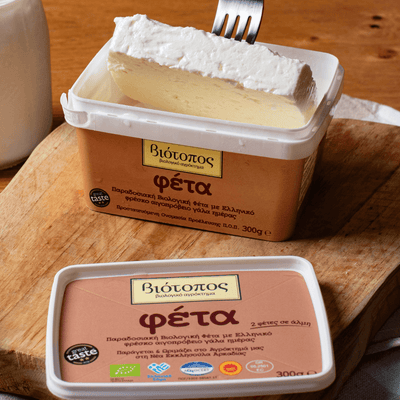
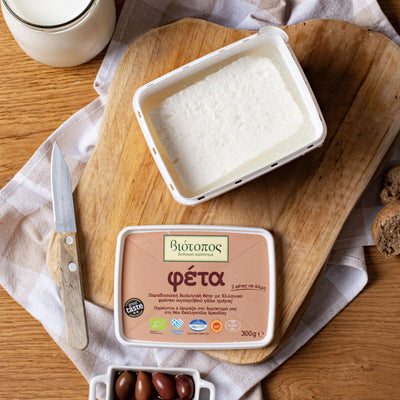
Feta on a meze table is not salad feta. It appears as a piece, drizzled with olive oil, scattered with dried oregano, and sometimes with a few dried chillies. It is eaten with bread, not as a base for vegetables. The PDO designation matters here: Feta PDO is produced exclusively in specific Greek regions from sheep's milk and a small proportion of goat's milk. The texture is firmer and the flavour more pronounced than non-PDO alternatives, which makes it a presence on the table rather than a background element.
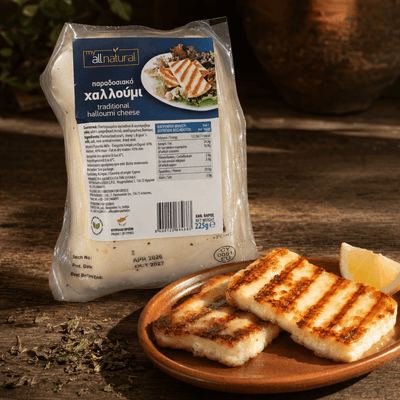
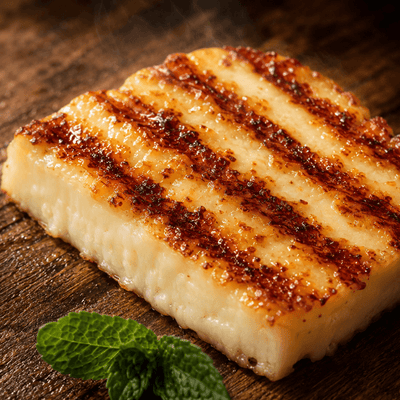
Halloumi — the meze that needs heat
Halloumi is the one meze that requires brief cooking: two minutes in a hot pan, nothing more. It develops a golden crust on the outside and a soft, yielding centre, with a slight resistance when you bite through it. Squeezed with lemon immediately after cooking, it is one of the most immediately satisfying things on a Greek table. It does not keep warm, so it should be the last thing you prepare and the first thing people reach for.
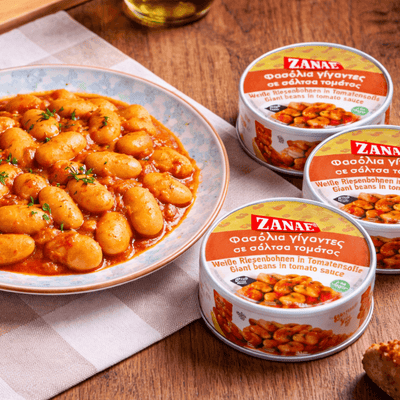
Gigantes beans — the meze that anchors the table
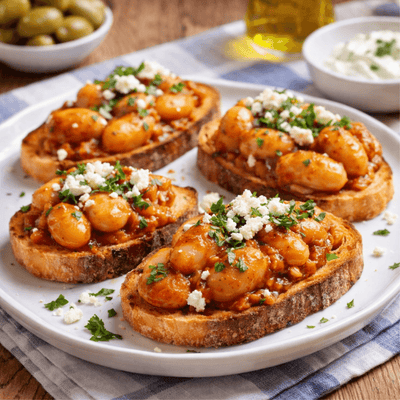
Gigantes are large white beans baked in a tomato and olive oil sauce. They are soft, substantial, and deeply savoury in a way that no other meze quite matches. On a table that is otherwise made up of cold preparations, a portion of warm gigantes creates a different register entirely. They work particularly well as a bridge between the lighter dips and the cheese, and they are the warm, slow-cooked heart of the spread, which gives the rest of the table more time to be enjoyed slowly.
How to arrange a meze table
| Category | Item | Serves (4 people) | Preparation |
|---|---|---|---|
| Olives | Kalamata + Halkidiki | 150–200 g combined | None. Decant into a bowl. |
| Cold dip | Tzatziki | 200 g | None. Drizzle olive oil before serving. |
| Cold dip | Taramosalata or Tirokafteri | 150 g | None. Serve at room temperature. |
| Stuffed vine leaves | Dolmadakia | 8–12 pieces | None. Serve at room temperature with lemon. |
| Cheese | Feta PDO | 100–150 g | Slice. Add olive oil, oregano, and optionally chilli. |
| Grilled cheese | Halloumi PDO | 100–150 g | 2 min each side in a hot pan. Squeeze lemon. Serve immediately. |
| Warm dish | Gigantes beans | 150–200 g | Warm gently. Serve with bread. |
| Bread | Greek pita or paximadia | 2–3 pita per person | Warm briefly in the oven or pan. No butter. |
How many meze do you need for a dinner with friends?
For four people, five to six meze dishes is a complete table. Two dips, one olive preparation, one or two cheeses (one cold, one grilled), one warm dish, and bread: this is enough to keep the table full for two hours without anyone going hungry. If the meze is the whole meal rather than a prelude to a main course, add one more warm dish, more bread, and more olives.
The mistake most people make with meze is underestimating quantities. Meze is eaten slowly, over conversation, and people return to the same bowls several times. Count 150–200 g per person for dips and olives, slightly less for cheese.
Where to find the right meze products
The limiting factor in recreating a Greek meze table outside Greece is usually the quality of the ingredients. Supermarket olives are often too mild, dips often contain stabilisers that affect texture, and feta is frequently the Danish imitation rather than the Greek PDO original.
The Greek Meze and Aperitivo collection at Greek Flavours brings together the products that make the difference: olives cured in Greece, dolmadakia made with real vine leaves, dips and spreads prepared with Greek yogurt and olive oil, gigantes beans in traditional tomato sauce, halloumi PDO from Cyprus, and Feta PDO from Greek producers. All shipped directly from Greece across Europe.
If you are building a full Greek table, the pillar guide on how to host a Greek dinner at home walks through quantities, timing, and a complete shopping list.
Frequently asked questions about Greek meze
What is the difference between meze and antipasto?
Both are shared small dishes served before or alongside drinks, but the logic is different. Italian antipasto tends to be a defined first course that leads into the meal. Greek meze is more open-ended: it can be the whole meal, a prelude, or a two-hour affair between dishes that never formally arrive. The Greek table has no obligation to end. The antipasto does.
Can you prepare meze in advance?
Almost entirely, yes. Cold dips, olives, dolmadakia, and feta can all be prepared and arranged hours before guests arrive. Halloumi is the only meze that must be cooked to order. Gigantes can be warmed gently just before serving. This is one of the reasons meze works so well for entertaining: by the time guests arrive, the table is already set.
What do you drink with Greek meze?
In Greece, meze traditionally accompanies ouzo, tsipouro, or wine. Ouzo is the classic pairing for seafood-based meze and olives. A dry white wine, particularly a Greek variety like Assyrtiko from Santorini or Malagousia from Macedonia, works well with the full spread. For those who prefer something non-alcoholic, cold still water with a slice of lemon is what most Greeks actually drink through a long meze session.
How do you serve pita with meze?
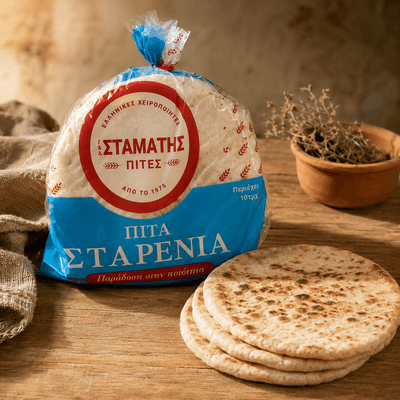
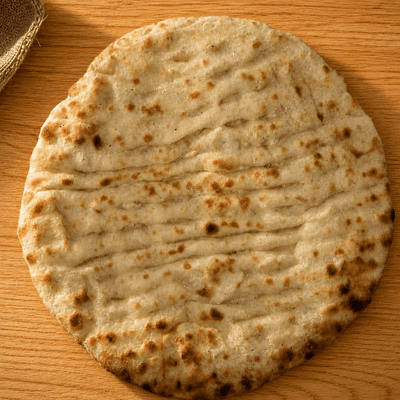
Greek pita for meze should be warm but not crispy. Heat it briefly in a dry pan or oven until it is pliable and slightly toasted on the outside. It is torn rather than sliced, placed on the table without a side plate, and used to scoop dips and accompany cheese. There is no formal way to eat it. The informality is the point.
Is halloumi a Greek or Cypriot product?
Halloumi is a Cypriot product with PDO status. It is not traditional Greek meze in the same way that dolmadakia or tzatziki are, but it has become a fixture on Greek tables throughout the Aegean and is now produced and consumed across the region. Its texture when grilled, the way it holds its shape rather than melting, makes it one of the most distinctive things on a shared table.