







You might also love
-

Feta cheese PDO
Feta Cheese: The Authentic Taste of Greece Straight to Your Table If...
-

Greek Cheese
Discover Authentic Greek Cheeses Welcome to our curated collection of authentic Greek...
-

Greek Olives and EVOO
THE MANY HEALTH BENEFITS OF GREEK OLIVES AND OLIVE OIL Greek olives...
-

Greek Honey
Greek Honey: Pure Mediterranean Excellence Greek honey is one of the most...
-

Greek Coffee & Tea
GREEK COFFEE, THE FLAVOURS AND SCENTS OF THE TRADITION Greek coffee is...
-

Dips & Spreads
SPREADS - The best part of the traditional Greek cuisine, as it is...
-

Greek Yogurt
Greek Yogurt: Authentic Taste, Thick Texture & High-Protein Goodness Looking for real...


Halloumi PDO Cheese – The Mediterranean Grilling Cheese from Cyprus
Halloumi PDO cheese is one of the most iconic cheeses of the Mediterranean diet and one of the few cheeses in the world that can be grilled or fried without melting. Originally from Cyprus, halloumi has been officially recognised by the European Union as a PDO (Protected Designation of Origin) cheese, guaranteeing its authentic origin and traditional production methods.
Produced from a blend of sheep’s milk and goat’s milk, halloumi is a white, semi-firm cheese with a distinctive texture and a pleasantly salty, aromatic flavour, often enhanced with fresh mint leaves.
Why Halloumi PDO Is So Unique
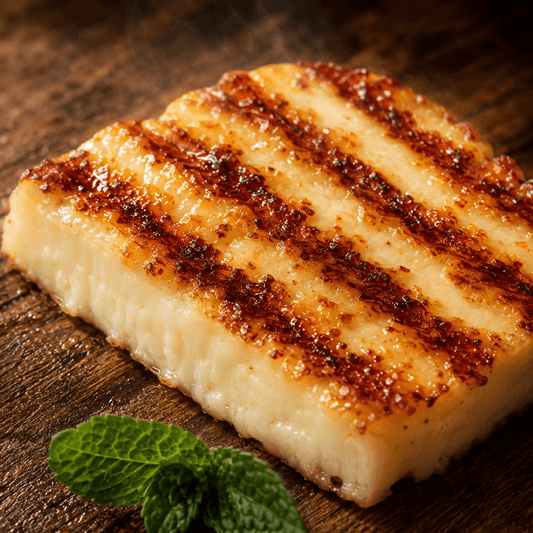
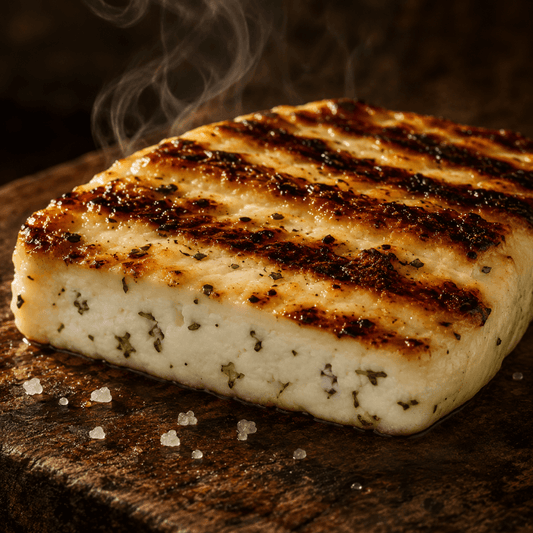
What makes halloumi truly special is its high melting point, which allows it to be grilled to perfection with a golden crust while staying soft inside. It’s also perfect for pan-frying as an alternative to classic saganaki, and it keeps its shape whether served warm or cold.
- Grill-ready: golden crust, soft interior
- Pan-fry friendly: a tasty saganaki-style option
- Structure stays firm: no melting, no mess
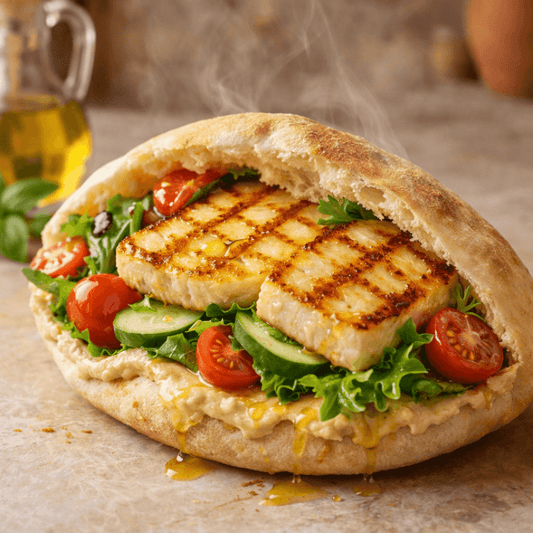
- Great in burgers & wraps: a delicious meat alternative
Once cooked, halloumi develops its famous “squeaky” texture, a hallmark of authentic PDO halloumi cheese.
Halloumi in the Mediterranean Diet
Halloumi is widely used across the Mediterranean thanks to its versatility and ease of pairing. It fits naturally into a balanced diet and works beautifully in everyday recipes.
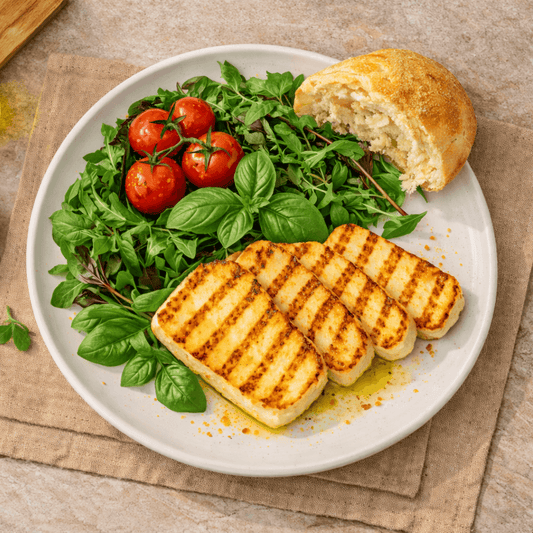
- Mediterranean salads with vegetables and extra virgin olive oil
- Grilled vegetables and oven-baked dishes
- Halloumi burgers, especially with red onion and herbs
- Breakfast ideas with honey or seasonal fruit
Fresh halloumi can also be cut into cubes or strips and added directly to salads for a quick, flavour-rich meal.
Authentic Halloumi PDO, Delivered to Your Home
In this collection, Greek Flavours selects only authentic Halloumi PDO cheese from Cyprus, made according to tradition and ideal for grilling, frying, salads and creative Mediterranean recipes.
If you’re looking for a cheese that delivers flavour, texture and versatility, halloumi PDO is the right choice.


