














You might also love
-

Feta cheese PDO
Feta Cheese: The Authentic Taste of Greece Straight to Your Table If...
-

Greek Cheese
Discover Authentic Greek Cheeses Welcome to our curated collection of authentic Greek...
-

Greek Olives and EVOO
THE MANY HEALTH BENEFITS OF GREEK OLIVES AND OLIVE OIL Greek olives...
-

Greek Honey
Greek Honey: Pure Mediterranean Excellence Greek honey is one of the most...
-

Greek Coffee & Tea
GREEK COFFEE, THE FLAVOURS AND SCENTS OF THE TRADITION Greek coffee is...
-

Dips & Spreads
SPREADS - The best part of the traditional Greek cuisine, as it is...
-

Greek Yogurt
Greek Yogurt: Authentic Taste, Thick Texture & High-Protein Goodness Looking for real...


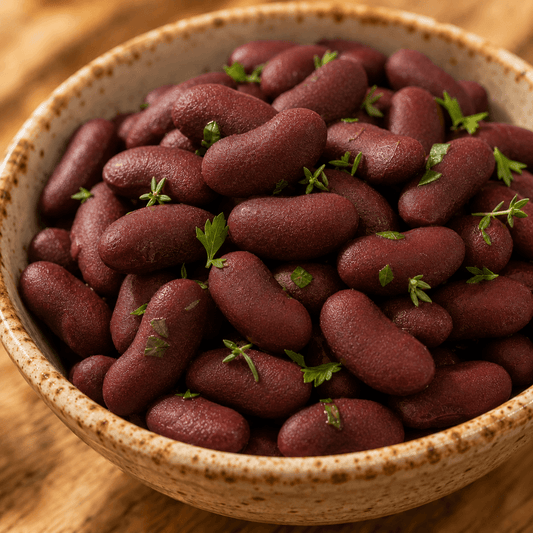
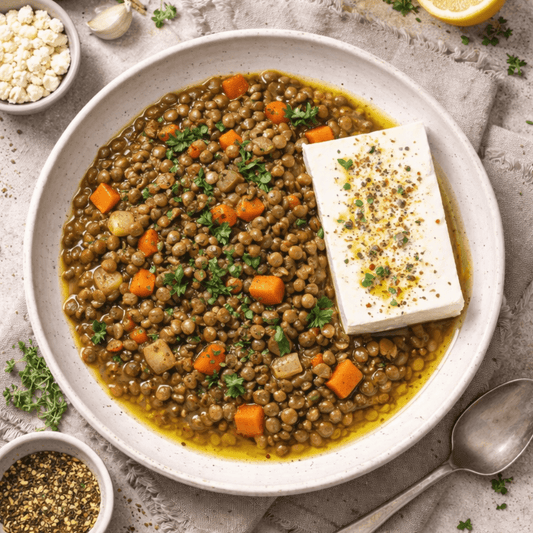
Greek cooking has relied on legumes for as long as it has relied on olive oil. Beans, lentils, chickpeas, and fava are not a side note in the Greek kitchen: they are the base of the weekly table, simmered with tomato and oil, or dressed with lemon, onion, and herbs. This collection brings together the pulses we source from Greek growers, from PGI Gigantes beans of Prespes and Kastoria to Farsala lentils, split fava and peeled chickpeas. All of them travel from Greece to your kitchen.
What Greek legumes are
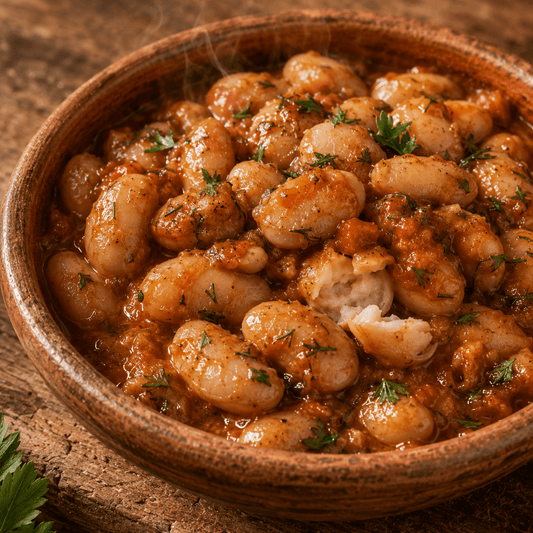
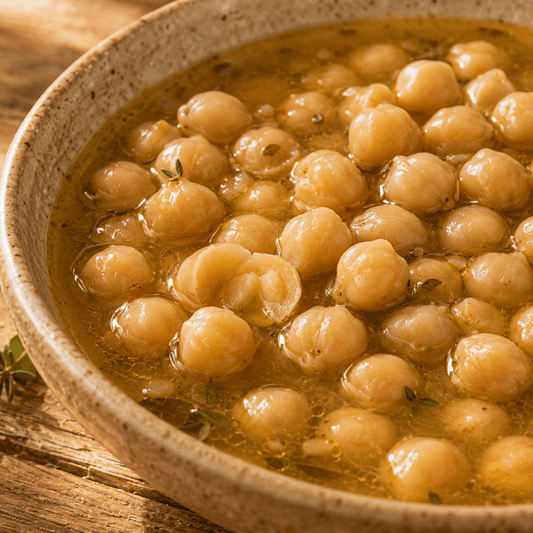
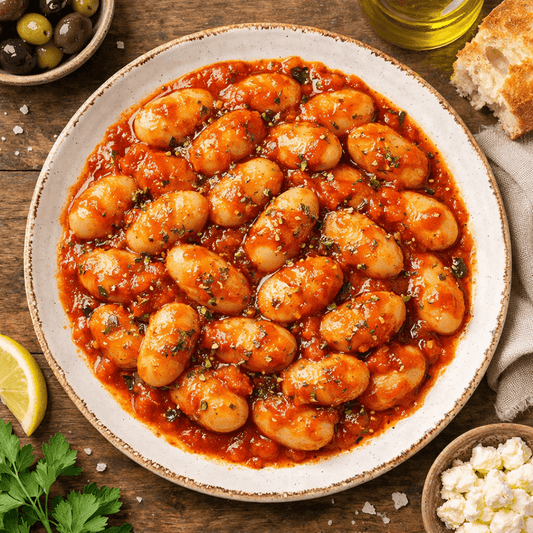
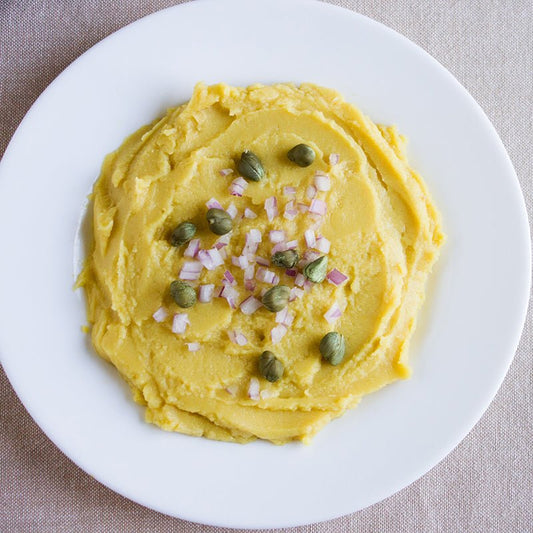
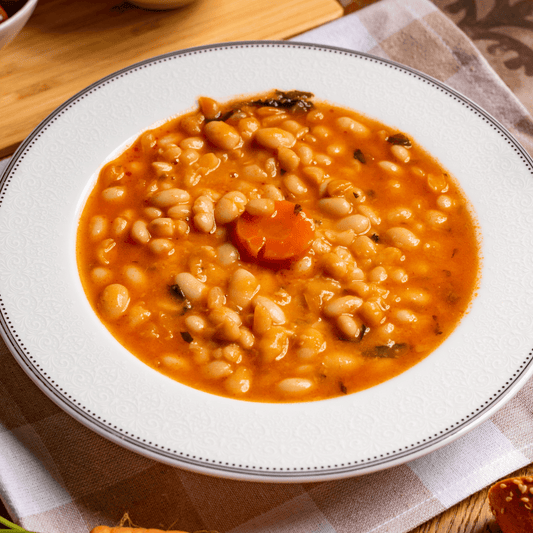
Ask a Greek what the national dish is, and a fair number will answer fasolada, a white bean soup with olive oil, carrot, and tomato. Legumes carry that weight in Greek food culture. Gigantes plaki, the large white beans baked in tomato sauce, is the dish that comes out of the oven at Sunday lunch. Revithada, the chickpea stew of Sifnos, was traditionally left overnight in the village baker's oven and eaten the next day. Fava, the yellow split pea puree of the Aegean, is served warm with raw onion and a thread of olive oil.
There is a practical reason behind all of this. The Orthodox calendar has a long list of meatless days, and Greek cooks built an entire repertoire of satisfying, protein-rich dishes around pulses. That repertoire is now one of the pillars of the Mediterranean diet: a plant-based source of protein and fibre, eaten regularly rather than occasionally, and cooked with olive oil rather than despite it.
Two ways Greece eats legumes
Dried legumes for slow cooking
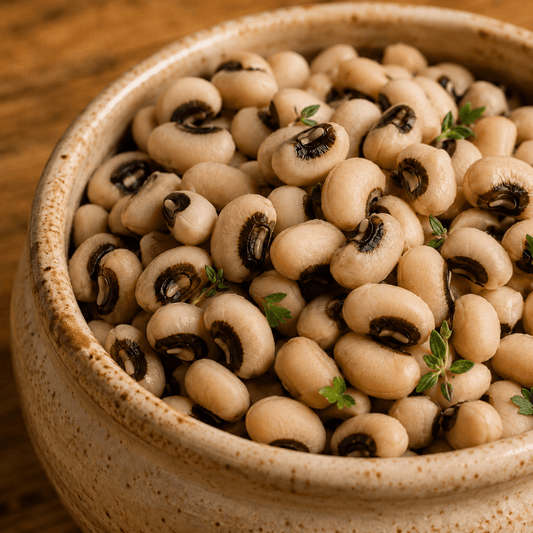
This is the traditional pantry: beans, lentils, chickpeas, and split fava, dried and stored. They ask for an overnight soak and an unhurried simmer, and they give back a depth of flavour that no shortcut reproduces. The gigantes we carry are PGI beans from Prespes and Kastoria in northern Greece, where the cold nights and the altitude give a thin skin and a floury interior. The lentils and the fava come from Farsala, in Thessaly. We also carry an organic line and a mixed legume and buckwheat blend for one-pot cooking.
Ready-to-eat legumes
The second way is newer in the shops and older in the logic: legumes already cooked, ready to be warmed or eaten as they are. In Greece, these come either as a finished dish, gigantes in tomato sauce or revithada, steam-cooked and sealed, or as plain steamed pulses with nothing added, used cold in salads and grain bowls. They do the same job as the dried pantry on the days when there is no time to plan a meal, and they keep the routine going through a working week.
How to cook Greek dried legumes
Soak the beans and the chickpeas in cold water overnight, then drain and rinse before cooking. Lentils and split fava need no soaking. Salt goes in towards the end, not at the start, or the skins stay tough. Gigantes are usually parboiled until just tender, then finished in the oven with tomato, onion, olive oil, and parsley until the sauce thickens. Fava is simmered with onion until it collapses into a puree and is served warm, with raw onion, lemon, and olive oil on top. Chickpeas take the longest and reward the most: a slow oven, a lemon, a bay leaf.
Frequently asked questions about Greek legumes.
What is the difference between Greek gigantes and ordinary white beans?
Gigantes are a large white bean grown in northern Greece, protected as PGI in Prespes and Kastoria. Compared with a standard white bean, they are noticeably bigger, with a thinner skin and a softer, floury centre, which is why they hold up to the long bake in tomato sauce that the plaki recipe asks for.
Do Greek dried legumes need to be soaked?
Beans and chickpeas do: cold water, overnight, then drained and rinsed. Lentils and split fava do not. Soaking shortens the cooking time and makes the legumes easier to digest.
How long do dried legumes keep?
Kept sealed, in a dry cupboard away from light, dried legumes keep for a long time. The best before date is printed on each pack. Older legumes stay safe to eat but take longer to soften, so it is worth cooking through the pantry rather than storing them indefinitely.
Are ready-to-eat Greek legumes already cooked?
Yes. They are cooked and sealed in the pack, so they need only warming, and the plain steamed pulses can be used cold straight from the pack. Preparation details are given on each product page.
Are Greek legumes suitable for a vegan diet?
Dried legumes are the plant protein of the Greek kitchen and are naturally suitable for vegan cooking. Ready-made dishes vary by recipe, so check the ingredient list on the product page of the item you are buying.
How are legumes shipped from Greece?
Legumes are shelf-stable and travel as standard parcels, with no refrigeration involved. We prepare the order in Greece and ship across Europe. Delivery times and free shipping thresholds are shown at checkout.
Where can I find the rest of the Greek pantry?
Legumes sit inside our wider pantry range. See Greek Delicatessen for the full selection, and Authentic Meze for the ready Greek dishes served at the start of the table.


