Skip to content


Olive oil poured over warm bread, a pot of beans simmering with tomato, grilled fish shared at a long table by the sea: the Greek Mediterranean diet is, first of all, a way of eating together. In Greece it is not a regime but everyday life, shaped by the seasons, by what the land and the sea offer, and by the habit of sitting down to eat with family and friends.
The Mediterranean diet, also called the Greek or Cretan diet, is the traditional way of eating in many countries of the Mediterranean basin. Of course, there are differences from one country to another, related to local produce and to the customs and traditions of each place.
How did the term “Mediterranean diet” come about?
The expression became known around the world in the second half of the twentieth century, when the everyday cooking of Crete, Greece and southern Italy began to attract international attention. Behind the name, however, lie centuries of rural life: wheat, olive trees and vines, the so-called Mediterranean triad, have fed these lands since antiquity.
On 16 November 2010 the Mediterranean diet was inscribed by UNESCO on the Representative List of the Intangible Cultural Heritage of Humanity, at the request of Greece, Italy, Spain and Morocco. In 2013 Cyprus, Croatia and Portugal joined the inscription. UNESCO describes it as a set of skills, knowledge, rituals and traditions that go from the field to the table: crops, harvesting, fishing, preserving, cooking and, above all, sharing food.
The Mediterranean diet pyramid: what is on the table?

The Mediterranean table follows the rhythm of the seasons and of the week, and it is traditionally drawn as a pyramid: at the base the foods that are there every day, higher up those that arrive every week, and at the top those kept for a few times a month.
Every day
- Bread, rusks, pasta and rice, often made from local wheat and barley: from the Cretan paximadi to the hilopites of the village kitchen.
- Fruits and vegetables of the season, from summer tomatoes to winter wild greens, in salads, ladera and pies.
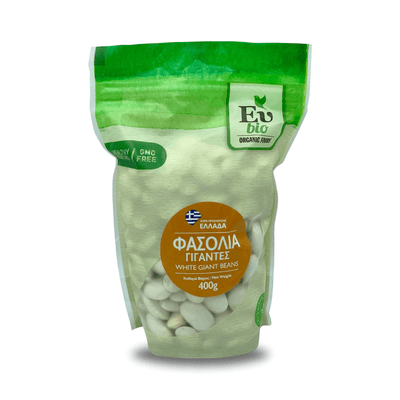
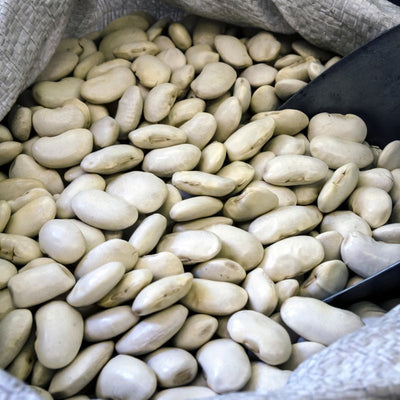
- Legumes and nuts: fasolada, fava, lentils and chickpeas, walnuts and almonds for the meze.
- Olive oil, the cooking fat and the dressing of almost every Greek dish.
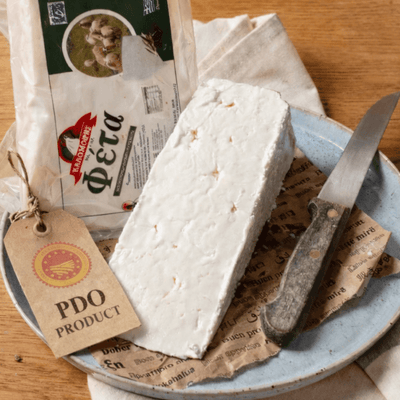
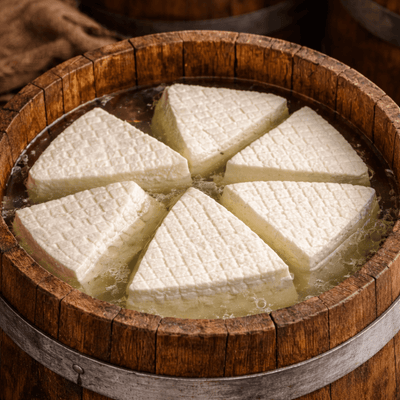
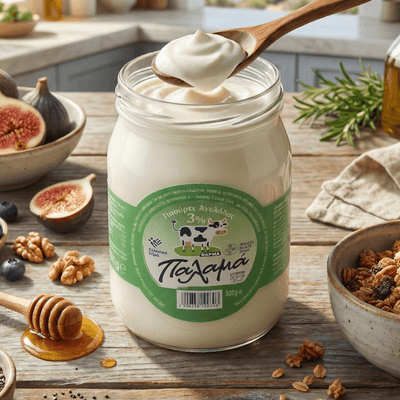
- Cheese and yoghurt: feta, graviera, strained yoghurt with a spoonful of honey.
Every week
- Fish and seafood, grilled with lemon and oregano or baked in the oven with vegetables.
- Poultry and eggs, in pies, soups and Sunday roasts.
- Sweets for special moments: spoon sweets, loukoumades and honey pastries.
A few times a month
- Red meat: lamb at Easter, beef stifado or pork with celery on feast days.
The Mediterranean table, a way of life

What makes the Mediterranean diet special is not a single ingredient but the way everything comes together: seasonal produce, simple recipes handed down from one generation to the next, small local producers, and olive oil at the centre of the kitchen.
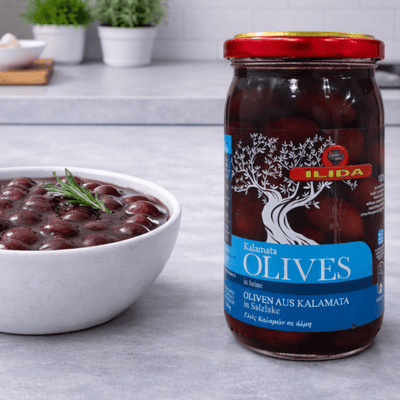
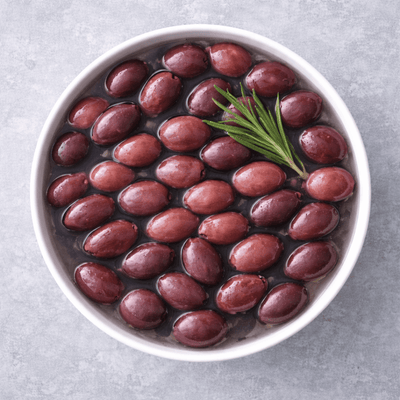
And then there is the table itself. Meze shared with friends, long Sunday lunches with the family, a plate of olives and a piece of bread in the shade of a tree: in Greece, food is meant to be enjoyed slowly and together.
How to bring the Greek Mediterranean diet to your table

- Cook and dress your dishes with extra virgin olive oil.
- Put a legume dish on the menu every week: fasolada, fava or lentil soup.
- Bring fish to the table regularly, grilled with lemon and oregano.
- Choose fruit and vegetables in season, and let them lead the menu.
- Discover barley rusks, village bread and traditional pasta such as hilopites and trahana.
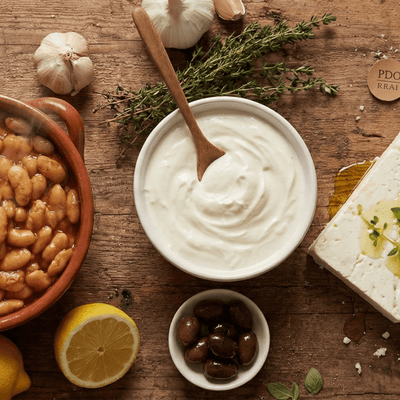
- Keep a piece of feta, a handful of olives and some nuts ready for an improvised meze.
- Above all, share the meal: Mediterranean food is meant to be eaten slowly, together.