In short
Melomakarona are Greek Christmas cookies made with sunflower and olive oil, orange juice, cinnamon and cloves, dipped hot into cold honey syrup and topped with walnuts.
This recipe makes about 80 cookies, with 45 minutes of preparation and 30 in the oven; ready-made ones, handmade in Athens by the Ipirotiko bakery, are in our Artisanal Pastry collection.
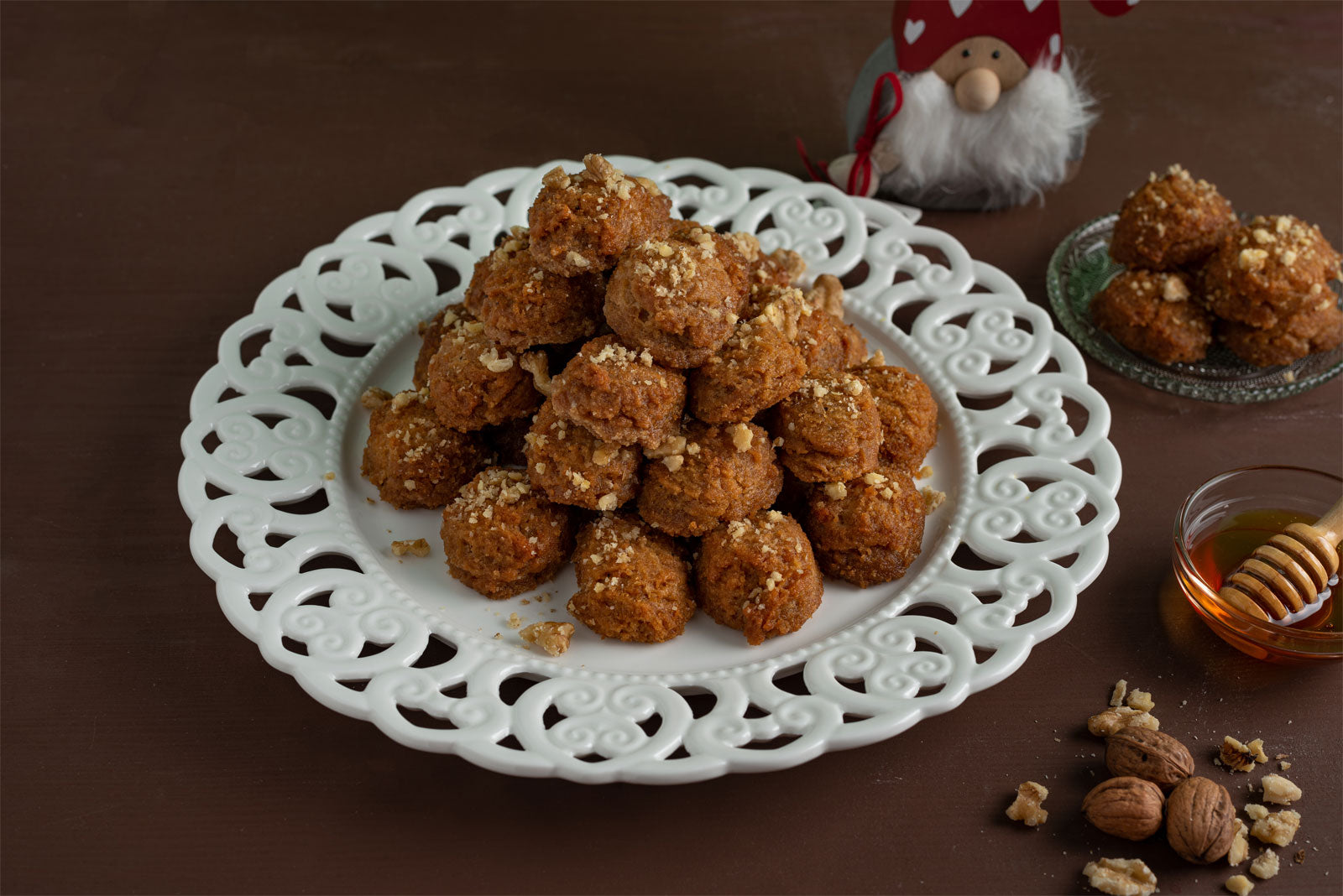
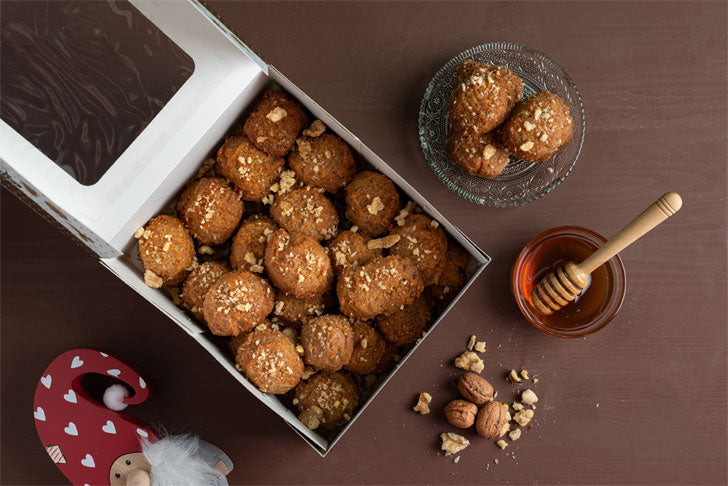
A plate of melomakarona on the table, glossy with honey syrup and topped with chopped walnuts, and the whole kitchen smelling of orange and cinnamon: in a Greek home, that is how Christmas starts. Melomakarona are Greek Christmas cookies made with sunflower and olive oil, orange juice, cinnamon and cloves. They go from the oven straight into cold honey syrup, then get a drizzle of honey and a handful of walnuts.
The recipe below makes about 80 cookies of 30g, with 45 minutes of preparation and 30 minutes in the oven: enough to fill a few tins and offer them to whoever rings the bell over the holidays.
-

Preparation time
00:45
-

Cooking time
00:30
-

Cuisine
Greek
Ingredients
Makes about 80 cookies of 30g.
For the syrup:
- 500g water
- 800g sugar
- 150g honey
- 3 cinnamon sticks
- 3 cloves
- 1 orange, cut in half
For the dough:
- 1kg flour
- 200g fine semolina
- 400g orange juice
- 400g sunflower oil (or another neutral seed oil)
- 180g extra virgin olive oil
- 50g icing sugar
- 1/2 teaspoon ground cloves
- 2-3 teaspoons cinnamon
- 1 teaspoon baking soda
- zest of 2 oranges
To finish:
- honey
- walnuts, finely chopped
Why do we eat melomakarona at Christmas?
It's not Christmas in Greece until the pastry chefs start stacking mounds of melomakarona and kourabiedes. And this divides Greek society into two groups: those who prefer melomakarona and those who prefer kourabiedes. But how did these sweet, honeyed Christmas cookies get their name?
The word "melomakarona" comes from the ancient Greek μακαρία (makaria), cakes that were offered after a funeral.
The Latins and later the Italians used the word μακαρωνία (makaronia) as maccarone, which eventually meant spaghetti.
Finally, as early as the Middle Ages in France and England, a type of almond biscuit was called "macaron" (today's macaron).
Today, with the prefix "melo", which means "honey", these cookies soaked in honey syrup have lost any connotation of mourning and rightly claim their place at the holiday table.
From the beginning of November, pastry shops across the country start baking fresh melomakarona, and the Christmas season officially begins, at least in the kitchen.
The melomakarona recipe in easy steps
- Prepare the syrup first: it has to be cold when the melomakarona go in.
- In a small saucepan, combine the sugar, water, cinnamon sticks, cloves and the halved orange. Let it boil for a few minutes, then remove from the heat.
- Add the honey, mix well and let the syrup cool completely.
For the cookies
- Preheat the oven to 190°C (fan).
- Put all the liquid ingredients in a large bowl and mix them with a whisk.
- In a second bowl, combine all the dry ingredients.
- Pour the liquid mixture into the dry one and mix very gently with your hands, for a very short time (10 seconds at most). Do not overwork the dough, or the oil will separate and the cookies will not be crisp.
- On a baking sheet lined with baking paper, shape the melomakarona into ovals 3-4cm across, 30g each (or use a cookie cutter). Prick them lightly with a fork.
- Bake for 30 minutes, until crisp and golden.
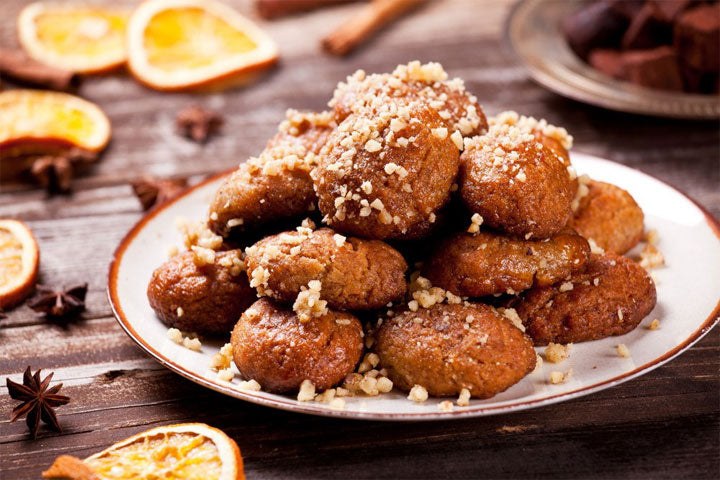
- As soon as they come out of the oven, put the hot melomakarona into the cold syrup and leave them for 10-15 seconds. Then drain them, drizzle with honey and sprinkle with finely chopped walnuts.
- Arrange them on a Christmas plate and enjoy!

Ready-made melomakarona, handmade in Athens
Plenty of Greek families buy their melomakarona at the pastry shop: from early November the trays are already in the window, and the cookies go straight from the box to the coffee table.
Ours are shaped by hand in Athens by the Ipirotiko bakery: soft honey cookies with walnuts, orange and cinnamon, the kind you put out with a Greek coffee when guests arrive.
- Melomakarona 500g, handmade in Athens
- Melomakarona 1kg, two 500g trays
The rest of our Greek sweets are in the Artisanal Pastry collection. Delivered across Europe.
Melomakarona: frequently asked questions
What is the difference between melomakarona and kourabiedes?
Melomakarona are made with sunflower and olive oil, orange juice, cinnamon and cloves, dipped in honey syrup and topped with walnuts. Kourabiedes are a butter dough with toasted almonds, sprayed with rose water and covered in icing sugar, with no syrup at all. Both are Greek Christmas cookies, and most Greeks have a favourite. The kourabiedes recipe is here: how to make kourabiedes.
Should the syrup be hot or cold for melomakarona?
The syrup is cold and the cookies are hot. Make the syrup first and let it cool completely, then dip the melomakarona into it as soon as they come out of the oven, for 10-15 seconds each. Drain them, drizzle with honey and finish with finely chopped walnuts.
What does the name melomakarona mean?
"Melo" means honey. "Makarona" goes back to the ancient Greek makaria, cakes offered after a funeral. Soaked in honey syrup, the cookies lost any link with mourning and became one of the Christmas sweets of Greek homes and pastry shops, together with kourabiedes and diples.
Can I buy melomakarona ready-made?
Yes. Greek pastry shops sell them from early November. Greek Flavours has melomakarona handmade in Athens by the Ipirotiko bakery, soft, with walnuts, orange and cinnamon, in a 500g tray and in 1kg (two 500g trays). You will find them in our Artisanal Pastry collection.



1 comment
Mi abuela las iso por años ers la cocinera d una griega ,y ya jubilada la llamaban para q fuera hacerlas ahora m toca hacerlas a mi stas galletas son parte d mi infancia